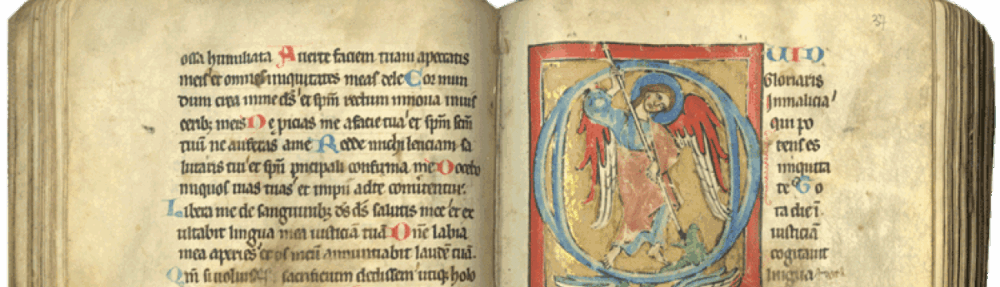
Throughout this class, I have learned and re-learned so many new things about The Book as a medium. It is more than just a single medium; if anything, it is an ever-changing form that reflects culture and society: “By bringing its interface into focus, they draw our attention to a deeper history of mutation and play with book form. Dick Higgins coined the term ‘intermedia’ to describe such works, a word that sounds to contemporary ears like a description of an augmented reality or touchscreen reading experience.”(Borsuk 257). These books are snapshots, time-capsules oozing with marginalia that speaks volumes of certain moments: culture, social and political climate etc…And what isn’t stressed enough is the remediation aspect of this medium. One doesn’t influence the other, it is a nature and process that is cyclical in form and content. It is at once dictated by the ones using but also birthed in the need that arises from mutation and evolution. Borsuk further quotes Higgins and his coined term: “Intermedia works, by his definition, involve ‘a conceptual fusion’ of the elements that constitute them. For him, the artist’s book is intermedial because its ‘design and format reflect its content-they intermerge, interpenetrate. … The experience of reading it, viewing it, framing it-that is what the artist stresses in making it.'”(257).
The importance of this notion is the fact that in recent years, audiobooks and podcasts have seen a surge in popularity as a new, fast, and easy way to digest information in whatever manner we crave, Borsuk writes, “Some scholars consider this period of textual fixity and enclosure the Guttenberg parenthesis, rather than the Guttenberg era, suggesting that we a re returning to a culture that values orality and ephemerality, no longer needing ideas bound between covers or owned in quite the same way.” (258). This new shift is once again posing us a question about what the book is. And the fact that we have so many scholars with different definitions not only speaks to its complexity but its malleability: “The term’s slipperiness, far from a liability, proves its greatest asset. It is a malleable structure through which we encounter ideas.” (Borsuk 258). It is almost paradoxical in the sense that the book as a medium, is so prevalent yet it is un-pinable as a singular definition, “-the book changes us as we change it, letter by letter, page by page.” (Borsuk 258).