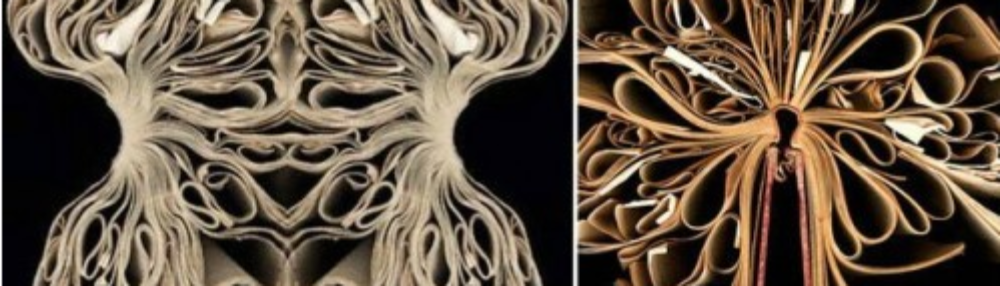
In Chapter 4, “Book as Interface,” Borsuk presents the book as not just an object, but as something we interact through, an interface which connects us to ideas. She explains that “the book is an idea we have of a bounded artifact… able to take any number of physical forms… It is, essentially, an interface through which we encounter ideas” (Borsuk, 197). I found it interesting how Borsuk sees the book as flexible and adaptable, yet still rooted in the habits we’ve built over centuries of reading. Even when we read digitally, we’re still basing it on “a history of physical and embodied interaction that has taught us to recognize and manipulate it” (Borsuk, 197). Even our digital reading experiences are shaped by how we’ve learned to hold and manipulate the physical, material book.
Borsuk points out that “the book accommodates us, and we accommodate to it” (Borsuk, 198). Borsuk presents the relationship between us and the book as not a one way relationship, but two. We shape how books are read, and they shape how we read. She brings in Lori Emerson’s argument that modern technology often hides its interfaces, “turning us into consumers rather than producers of content” (Borsuk, 198). Despite this, the physical book continues to influence how we think about reading, “the book is a model… for the way we think about reading in electronic spaces” (Borusk, 201). Our e-readers, kindles, and various digital readers still mimic the design and pages of what we view as the classic ‘book’, even though they don’t have to. With modern technology, we have nearly infinite ways to re-imagine reading, yet, the physical, material book still guides us.