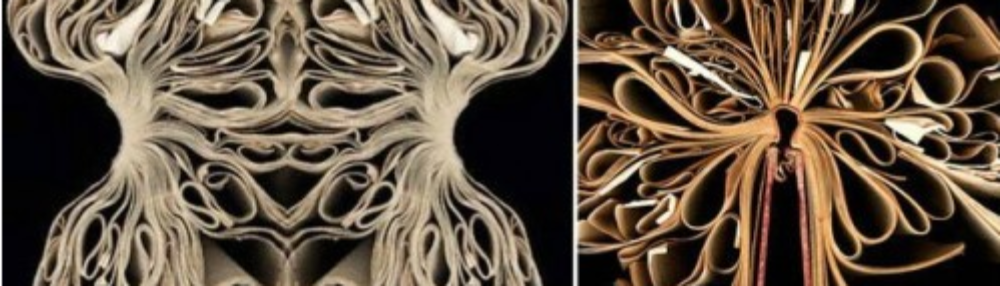
In chapter 3 of The Book, titled The Book As An Idea, we’re introduced to the “artist’s book”. The book defines the artist’s book as “a zone of activity by artists and writers who create books as original works of art that “integrate the formal means of [their] realization and production with [their] thematic or aesthetic issues.” Essentially, artist’s books are books that have been entirely designed by the creator, and can be anything. Through my studies, it’s clear by now that quality and customization in books has been reduced due to the mass production commercialization of books. That is known, and not surprising. So I find it interesting that these intentionally designed books are called artist’s books. In the modern day, if you want your book to be traditionally published you have to give up some artistic control over things such as the cover, bindings, or font. For these authors, the “book” is the text. I’ve always viewed books as works of art, so I don’t want to say that these books aren’t artistic, because they are! But a mass market paperback was made to be read, not to be displayed or to challenge the book as an object. There are quite a few authors, poets especially, that play with the page, or the letters. I don’t think the commercialization of books has killed books as art.
As the chapter continues, Borsuk writes “It represents a conceptual approach to bookmaking, and one that relies on the viewer’s interaction with the object to make meaning. For this reason Carrión called such works “anti books”—because they refuse the book’s function while interrogating its form, separating the idea of the book from the object.” I really like the phrase anti-book. These artist books have been meticulously designed to take advantage of every aspect of the physical book. But to say they’re anti-book? This is a direct result of books being about content. Reading, or understanding, these artist’s books require you to think more creatively. There are no page numbers telling you where you are, or table of contents pages so you can flip to your favorite chapter. You have to do more than read how you were taught. You have to be willing to do things wrong– and you have to accept that no way is right. You have to consider parts of the book that you had never gave a second thought, because you didn’t buy the book for its binding, or rather the glue along the spine. It is the job of the artist, and the writer is an artist, to push boundaries. And while you could consider artist’s books as going back to our roots of individualized books, I would say that going against the current status quo will always be necessary.
