The Relationship between Book and Reader

Following the advent of the printing press, the relationship between books and people slowly became something more akin to what we are familiar with now. The printing press allowed for faster production, standardized grammar, and the rise of credited authors, along with many other developments. With this, we see the emergence of the Book as a product and as a companion. More and more people are reading and collecting books, and so thus creates the start of the feverish book community.

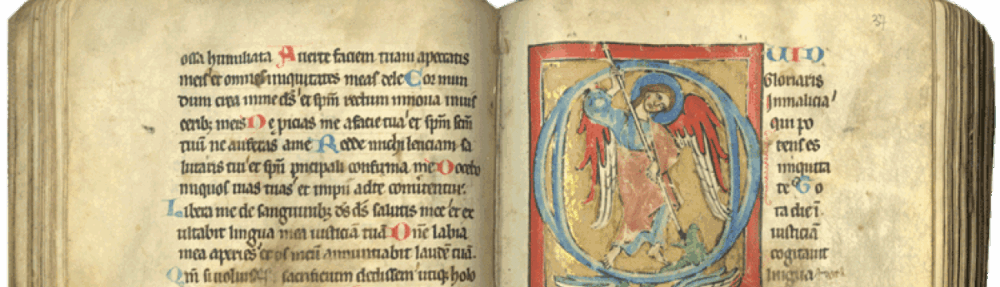
Throughout chapter two of Borsuk’s, “The Book,” she discusses the beginnings of the marketability of the Book. While explaining incunabula, Borsuk notes that printed books were designed to look like illuminated manuscripts in which people already recognized and were familiar with. With these design choices, books became more trustworthy and slowly earned their place within homes since they were fashioned after liturgical codices. These new books were not made to be revolutionary so that they remain familiar for their new audience.

Later, Borsuk goes on to explain the process of bookbinding and the physical body of the book. As the book evolves into what we have today, there is an increased rise in book ownership. Books are no longer a communal object but rather a personal device. In the section, “The Body of the Book,” Borsuk writes, “These modes of claiming a book point to a moment when ownership determined aesthetics, before books became uniform, mass-produced commodities whose bodies bear the marks of manufacturing standards, marketing, and bookselling.” This is an interesting period where people were able to decorate and emboss their books to their liking. This reminded me of videos I have seen where people ‘destroy’ their books in order to rebind them with a new cover or add new endpapers. Most of the time in these videos, those books are often fashioned in a style that brings to mind old books. They are typically embossed with gold foiling and sometimes have gilded or painted pages. To me, this shows that the marketability of the Book is cyclical. The books of the past have progressed to where we are now, however we try to revert to old practices.

Furthermore, in the section, “The Intimate Book,” Borsuk notes, “At this point they became the intimate spaces we now expect them to be, whether guiding one through the stations of daily devotion or conveying ancient thought on the structure of tragedy. While we currently enjoy many different kinds of reading experiences, in Western culture “the book” is almost universally seen through this intimate lens.” Books have become a private affair, where the reader is now able to have their own conversations with the book. In this new, intimate manner, readers were able to interact with their books in a deeper way. They use marginalia to mark up their books and are encouraged to “engage more deeply with their books and turn them into private spaces for dialogue.” This shows that reading was developing into something deeper. Readers were able to have conversations with the author, who was able to be credited for their work when printing became mechanized. From Amaranth Borsuk’s “The Book” it is clear that readers have always had an intimate bond with books that has flourished over the centuries following the widespread availability of books.

The Evolution of The Book

In chapter one of Amaranth Borsuk’s “The Book”, she details the extensive history of the book as it spans across cultures and people. There is no clear origin to writing since so many cultures have adapted different ways on how to keep records and expressing language. As a result, there are many different variations of the same technology, where the main differences lie in the resources that were available in those regions. While I was reading, I was fascinated by the trial and error that went into these new technologies such as the papyrus scroll in Egypt. Borsuk notes that in order to make scrolls, the papyrus needed to be laid in a specific fashion in order to prevent warping and cracking. As scrolls morphed into bound volumes, there was even trial and error in ink placement and binding. If inked pages were bound side back to back, the ink bled and it became illegible. While it may seem trivial to us now, figuring out how to bind pages together or place ink, was a crucial aspect in the creation of the book. We have become so distant from the newness of a book that we do not seem to realize the rich history behind it. Within Borsuk’s chapter, she is clear to express that the book is a form of technology. It has gone through countless revisions in order to reach the product that we have now. And as a form of technology, it has altered the way that we see the world. 

In her final section of the chapter, “Reading and Writing’s Shifts”, Borsuk includes the evolution of language and academics. As the book slowly takes shape throughout the centuries, language, writing, and learning also changes. Borsuk writes, “As scholar Walter Ong points out in Orality and Literacy, his study of the ways writing technologies restructure consciousness, the written word enabled Greek scholars to transcribe and codify effective rhetorical strategies… Writing, in fact, allowed rhetoric to flourish.” In this quote it is clear how fundamental and powerful the book was and still is. It has the power to alter the way that we see the world and how we respond to it. It has opened countless discussions that allow us to express ourselves and communicate with others. Furthermore, Borsuk goes on to include how the written word has improved vocabulary since people no longer needed to mentally store their vocabulary. The book has furthered human learning, communication, and perception in a way that its crucial to how we have reached today’s society. 

The Act of Reading

“The Broadview Introduction to Book History” by Michelle Levy and Tom Mole navigates an introduction that discusses the beginnings of books and the long history of how a book came to be what we know it today. When I was reading this introduction, I was fascinated by the history of reading. On page xvii, it states, “Just as the book has taken many forms, so has reading: silently or aloud, perusing many books or repeatedly returning to the same one, paying close attention or skimming.” I was immediately intrigued by this paragraph because it goes into detail about when silent reading was becoming a standard and how there are many different ways to read. I thought that this was interesting because the act of reading is never considered when discussing books. I have never thought about the way I consumed a book can correlate to a sign of power. Today, reading silently is a common practice and is an individual activity whereas in the past, reading was done with others due to the scarcity of books and reading skills. Reading has changed the way that communities interact. People are no longer seeking out others to read to them since so many people are able to read. Having a group of people gather to hear someone read must have generated discourse and establish a strange power structure in what is being read and what they are willing to hear. On the other hand, living in a society where mostly everyone can read on their own can alter how someone interacts with that text. They are more prone to forming their own opinions before going out to discuss them with others. I am curious to see how this has affected comprehension and the minute yet powerful dynamics of who is reading and who is being read to. Reading is a skill that once it is taught, you can never unlearn the skill. This shows how important the act of reading can be and how it can redefine power structures. 

Introduction: Dakota Goodman

Hello, I am Dakota, and I am a senior who is graduating in the spring and also pursuing the editing and publishing certificate. This is my second year here at SDSU since I transferred from Grossmont College. I hope to join the MFA program after I graduate. 

I grew up here in San Diego and have no plans of moving since I love this city. When I am not in class, I am working at an elementary school as a student helper, trying my best to convince fourth and fifth-graders to read more books. While I don’t want to become a teacher, I surprisingly love this job and the kids that I work with. I am always having the best conversations with ten-year-olds. They are the weirdest and funniest people that I know. In the future, I hope to be an editor working with a publishing house and help authors achieve their hopes and dreams. 

I have always been passionate about books since I was a child. I grew up reading Harry Potter with my parents and having long discussions about it during breakfast on the weekends. Even now, my parents will still listen to me rant about books. Books were what got me through my elementary and middle school years as a form of escapism. I was able to slip through the cracks and sink into whatever fantasy world I found comforting. Now the tables have turned, and I am the one who is creating worlds at my fingertips. I am currently writing the first book in a fantasy trilogy. It has been a passion project of mine for the past few years, which I hope to publish soon. 

To me, books are extremely precious and something to be cherished, which is why I am taking this class. I loved the idea of learning about the history of the book as a physical being and as an art medium. I think that it is easy to forget that books are an art form. It’s easy to boil them down to words on a page, so I have never really taken much thought into what makes a book a book. I hope that this class helps me reimagine books in a new way that reignites the love that I have for them. 

I look forward to working with you all in this class!