Week 5: Books Are Not Just For Reading

When I read Borsuk’s second chapter, it left me thinking about how drastically the world’s relationship with books has shifted over just a few centuries. The transition the author describes from medieval manuscripts as precious objects to Gutenberg’s mass produced volumes represents felt more than just technological advancement, it’s rather a fundamental reimagining of what knowledge can be and who gets to access it.

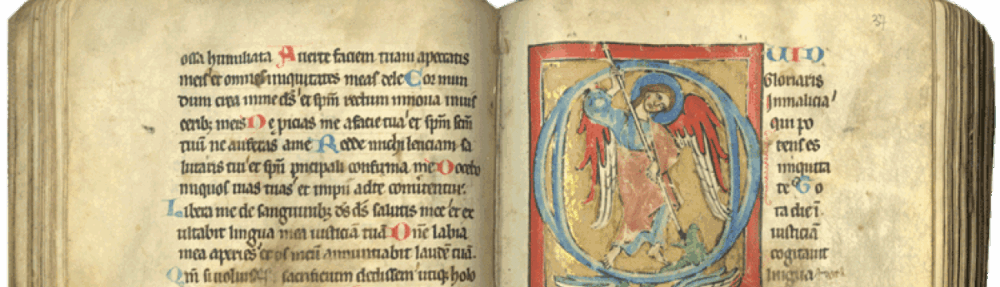
What struck out to me the most is how the printing press didn’t just change how books were made, but completely transformed their social function. In the days when monastic scribes copied texts by hand, books were essentially exclusive, even magical items. Not only were the illuminated manuscripts Borsuk depicts literature, but they were also artistic creations, status symbols, and sources of both worldly power. It showed that reading was a ceremonial activity that was frequently done in groups.

However, Gutenberg’s invention revolutionized writing in ways that at the time likely looked revolutionary (and dangerous). All of a sudden, books could be swiftly and affordably copied. The author became the primary creative authority rather than just one voice among numerous writers. In the digital era, this relates to the current discussions around authorship, who owns ideas when they may be duplicated indefinitely?

I’m particularly intrigued by Borsuk’s discussion of typography and design. The fact that early printers had to literally design and cast their own fonts really goes to show how technical and artistic considerations were inseparable. Every typeface was a deliberate choice that shaped how us readers experienced the text. This made me really think, in this day in age, do we take typography for granted today when we can change fonts with a click?

Additionally, the chapter poses pressing problems regarding physicality. The touch of parchment, the weight of the codex, and the striking visuals of illuminated letters were the first things that medieval readers recognized as books. This material motif survived even in the earliest printed books. However, we are reading more and more on screens, completely replacing the printed book. It seems to me that we are kind of moving on to the next phase that Borsuk mentions and that we might be losing something important. 

This chapter gave me even more questions from when I last read it. What new forms could occur that we are unable to envision yet if books have always been developing technology rather than static objects?

Week 4: So Many Books

When reading the first chapter of Amaranth Borsuk’s The Book, I was struck by how she forces us to reconsidered a thing that we often interact on a daily basis but rarely examine critically. The way her exploration of the book’s physical evolution really shows how our reading experiences have fundamentally shaped by material constraints and innovations throughout history.

What really fascinated me is Borsuk’s argument that a books form is not just a neutral case that has content, but is a object that actively contributes to the creation of meaning. The transition from scroll to codex is something I saw that wasn’t just a technological progress, but it also transformed how we engage with text. With the codex, it allowed for cross-referencing, access at random, and the evolution of modern techniques such as indexing and annotating. It made me really think, that what reading habits are we losing or gaining as we move toward digital formats?

Furthermore, the discussion of manuscript culture reminds me of current debates about textual authority. Borsuk mentions in the book how scribes were involved in the transmission of texts and occasionally changed them while doing so. In our digital age, where texts are becoming easier to modify, repurposed and collaboratively created through tools like wikis and shared documents, this cooperative concept of authorship appears unexpectedly applicable.

Additionally, I was really intrigued by her emphasis on the book as a movable source of human knowledge. Because of its portability, knowledge could transcend institutional borders and democratize education. However, I think about whether or not we are gaining or losing anything crucial about the accessibility of knowledge as we shift toward online storage and digital libraries?

I had a lot of questions about the text that I have never really thought about. Such as, how do we perceive a book’s intellectual weight in relation to its physical weight? Does the inability to pick up digital pages alter the way we highlight and recall key passages?

Through this text, I found that Borsuk’s method helps me recognize that reading books as objects is important for intelligently navigating our modern media ecosystem and is not just a academic exercise. When creating new digital reading experiences, we must think about not only the information we are keeping but also the embodied reading practices we may being losing and whether or not it has an impact on our learning and thought processes.

Week 3: The Intricate Dance of Old/New Media

When I read Jessica Pressman’s essay about old and new media, a quote from it that really stood out to me was “Media do not replace one another in a clear, linear succession but instead evolve in a more complex ecology of interrelated feedback loops.” (pg. 2) I felt that this observation really challenges a dominant cultural narrative that I see myself coming across a lot. That this idea that technological advancements follow a predictable path in which new technology eventually replaces older technology, making the former generation of technology outdated.

Another part of the reading that fascinated me was Pressman’s concept of “bookishness” as a response to the perceived danger of digital media to print culture. It seems that modern literature has started to fetishize books as a pleasing object to look at rather than just letting it fade away in the face of screens. I think that this type of occurrence shows how old media actively changes in response to new media, as it frequently becomes more strongly itself in the process rather than passively absorbing its effect.

Thinking about this dynamic, I can’t help but be reminded of vinyl records, in which it made a notable comeback right in the middle of the digital music streaming era. Vinyl’s very much focused more on its physical qualities, such as the album cover, the ritual of actually playing a record, and the cozy real sound. Rather than attempting to compete with the ease of digital technology. I found that vinyl records started to highlight their tactile, physical characteristics in ways that set them apart from their digital counterparts, much like Pressman’s bookish novels.

Furthermore, I thought that Pressman’s use of Hayle’s alternative term “intermediation” together with Bolter and Grusin’s concept of “remediation” raises significant issue regarding directionality and agency in the evolution of media. “Intermediation” better represents the ongoing, bilingual aspect of media influence that Pressman outlines, while on the other hand, “remediation” would imply a rather linear process of new media altering the old. The chain of feedback is an ongoing process of mutual modification rather than merely new things impacting old things.

This had me wondering, what more examples of “bookishness” or related trends may we uncover in the media world of today? For instance, how do established newspapers highlight their trustworthiness and materiality in the face of digital journalism? How do physical retail establishments renew themselves in the face of online shopping?

The Introduction of Delinda Souksavath

Hello! My name is Delinda Souksavath, 21 years old. I am currently an undergraduate student, majoring in English and Comparative Literature. What I hope to do with my education is to become an author. I was born and raised in San Diego, but my parents both come from Laos and immigrated. My mother was a student at SDSU but never got to finish her education, so I am also kind of going to school for her as well.

My hobbies consist of writing the stories I have stuck in my head, taking dance classes, going to the gym, cooking, and playing video games. I currently am obsessed with the game Peak, but I also like playing Marvel Rivals and Minecraft. I honestly like playing video games with friends more than by myself, I feel if I play by myself I kind of go crazy talking to myself.

My relationship with books has been very interesting, as funnily enough, I hated books and reading as a kid. I was a lot slower at learning than the other kids, which reflected in my reading comprehension skills and it frustrated little old me at the time. I had thought reading was no fun, until I discovered A Series of Unfortunate Events and it introduced me to the fiction genre. After that, I got sucked in. After finishing that, I read more of Lemony Snicket’s work and once I went through those I branched out to other books. Now, I love books and reading. With this class, I hope to expand my mind about books as a whole and what they do to our society and the impact they have!