what i’ve learned

It’s been interesting to see all the different ways that scholars have discussed the topic I plan to talk about. The topic of digital blackface is so broad that I found it useful to read sources that discuss digital blackface from multiple perspective. I’ve also appreciated how all the sources I’ve read stress an aversion to arguing based on purely moral grounds. I think that a common reaction to discussing digital blackface is to question its legitimacy and tangible harm, and the sources I’ve read are aware of that as well. For example, Tempest M. Henning discusses digital blackface from purely an argumentative and rhetorical perspective.

I think it’s also been helpful to see the way the sources I’ve read had built off of each other. Multiple sources I’ve read reference each other. Seeing how the authors of my sources have built on each other’s research has felt useful in figuring out how I want to build my own argument. Eric Lott’s Love and Theft: Blackface Minstrelsy and the American Working Class, felt particularly dense the first time I read it, but seeing how others summarize his findings made his work more comprehensible to me.

I think research has been different for me this for this writing assignment compared to previous ones. I feel like I am probably guilty of knowing the answer i want to find before I research, but that felt kind of impossible this time since the topic is so broad. It’s a little scary because of the fear of looking into something and investing time in it only for that source to be useless for the essay. But this process of researching has allowed me to observe the scholarly context of the topic I’m discussing first.

What I still need to know for the final project

I feel good about the ideas I’ve expressed in my thesis about digital blackface and archives. At this point, I still have some sources to read. I also need to look back on some of the sources we’ve read this year that discuss archives. I have a master document with all my sources and the notes I’ve taken as I’ve been reading. Once I’m done with reading I’m going to create an outline for my essay, which I plan to finish at the end of the week. I think I might be a little stuck on purpose, not because I think the essay has no purpose, but the purpose feels amorphous in my brain right now. I think this might be because I plan on tweaking my thesis a bit. I don’t feel like it fully expresses what I’m trying to get across as much as I’d like to yet.

Proposal: Digital Blackface and the process of archiving texts

Digital blackface describes non-black people’s emulation of what they perceive as blackness in a digital space—blackness itself encompassing aesthetics, language, fashion, and culture. This can be witnessed in the digital social media stage through memes, appropriation of black vernacular english, and the proliferation of black aesthetics in mainstream fashion and music. The use of digital blackface is so commonplace that many people are unaware of or deny its existence, even while engaging in the play of digital blackface. 

Joshua L Green, in “Digital Blackface: The Repacking of the Black Masculine Image,” examines the lineage of minstrelsy and its connections to digital blackface, as a form that creates and codifies “dominant ideologies about black people” in order to legitimize racial hierarchies. Green also describes the black body as text, something to be read and categorized. I want to extend Green’s thinking about the black body as a text and draw connections to the way that archives are categorized and organized. 

In my essay, I’d like to argue that the way that black people’s bodies are categorized in the digital space reflects the nature and function of archives—a constructed organization influenced by political systems of power. I will examine the relationship between digital blackface and minstrelsy and make comparisons between the auction block, minstrel performance, and the digital social media space as different stages or interfaces where blackness is materialized as a legitimate racial category through the construction of racial archetypes within blackness. 

I will argue that, in the same way that the construction and organization of archives limits access to information about a given subject, digital blackface is a type of categorical process that limits the viewer’s information about the black subject. I will examine several black ‘texts’ or subjects, the use of their image in the process of digital blackface, and how the circulation of their image contributed to the decontextualization of that subject for the sake of the general public’s entertainment. 

Bibliography

Blay, Zeba. “Digital Blackface Is Back in the Form of Black AI Influencers.” Teen Vogue, 6 Nov. 2025, www.teenvogue.com/story/digital-blackface-is-back-in-the-form-of-black-ai-influencers. 

Farrior, Christian, and Neal A. Lester. “Digital Blackface: Adultification of Black Children in Memes and Children’s Books.” MDPI, Multidisciplinary Digital Publishing Institute, 11 July 2024, www.mdpi.com/2076-0787/13/4/91.

Green, Joshua L. “Digital Blackface: The Repacking of the Black Masculine Image” 

“hide your kids, hide your wife pt.1.” Sixteenth Minute (of Fame), 7 May 2024, https://www.iheart.com/podcast/1119-sixteenth-minute-of-fame-172216473/

“hide your kids, hide your wife pt. 2.” Sixteenth Minute (of Fame), 14  May 2024, https://www.iheart.com/podcast/1119-sixteenth-minute-of-fame-172216473/

Jackson, Lauren Michele. “The Undeniable Blackness of Vine (RIP).” Wired, Conde Nast, 12 Nov. 2019, www.wired.com/story/excerpt-white-negroes-lauren-michele-jackson/. 

Kaur, Jasdeep. “The Embodying and Commodification of Black Culture and Aesthetics in the Digital Age.” Anthways, sites.gold.ac.uk/anthways/am-i-an-anthropologist-if-2022/undergraduate-course-essay-showcasethe-embodying-and-commodification-of-black-culture-and-aesthetics-in-the-digital-age/. Accessed 24 Nov. 2025. 

Lott, Eric. Love and Theft : Blackface Minstrelsy and the American Working Class, Oxford University Press, Incorporated, 2013. ProQuest Ebook Central, https://ebookcentral.proquest.com/lib/sdsu/detail.action?docID=1318298.

“The Americas.” National Museums Liverpool, www.liverpoolmuseums.org.uk/history-of-slavery/americas. Accessed 24 Nov. 2025. 

Institutions and Archives

Cloutier discusses the function of archives: “what capture really means is that a record’s information must be inscribed or seized in some kind of storage medium…this piece of paper then needs to be pulled into a records management system—which still requires a physical infrastructure—in order to be used and controlled” (8).

The organization of archives is political, influenced by the culture and systems of power that surround it. The organization of archives emphasizes the human touch and consideration involved in this ‘medium,” similar to the way the human touch is involved in all technological processes we might assume run themselves (book publishing, AI).

I’m currently in Dr. Y Howard’s trans and queer cultural studies class, and we’re having similar discussions about the limitations of archives. Last week, we read Andy Campbell’s Bound Together, specifically the chapter, “Yellow, or reading archives diagonally” in which Campbell observes that something like the Leather Archives and Museum is effected by social influences like stigma surrounding kink and BDSM. Due to this, people are less likely to donate possible archival material from deceased people who used to be in the leather community. With the limitations of the archive’s organization in mind, Campbell reads through the archives diagonally, creating his own methods of categorization (organizing by the color yellow in reference to the hanky code) in order to come to a different result than would have been available had he followed the normative or offered organization of the archive: “What emerges to return to Foucault’s comment, is not just a collection of objects, but a way of life, yielding… ‘intense relations not resembling those that are institutionalized'” (Campbell, 103).

Kleines Destillierbuch in Use

(Google doc version with photos.)

Liber de arte distulandi [sic] simplicia et composita: Das nüv Bůch der rechten Kunst zů distillieren is a collection of scientific work in German by Hieronymus Brunschwig. This book also contains contributions from Marsilio Ficino’s Das Buch des Lebens, translated by translator and physician Johannes Adelphus, and a treatise from Konrad of Strasbourg. There are multiple copies of this book, held in multiple archives with different covers. The copy in the San Diego State Special Collections and University Archives has a hard white cover made from pig skin and blindstamped with an ornate design patterned with florals and small profiles of human figures: presumably kings and knights based on the crown and helmet on top of their heads, respectively. The spine is dotted with small deep wormholes, on both sides of the cover. There is more insect damage at both ends of the spine, which are cracked and peeling. The cover has cracks along the surface, most notably around the spine, revealing a whiter, brighter color beneath the top layer of the pig skin. The cover is modern compared to the text of Liber de arte distulandi [sic] simplicia et composita, which was published in 1509 by publisher Johann Grüninger. 

On the inside of the cover, there is cursive handwriting indicating the title and author, and two rectangles of glued in printer paper. The glued in pieces of paper, seemingly written on a typewriter, summarize the content and physical state of the book. There are three names listed in the type and the handwritten text: Südhoff, Kristeller, and Schmidt. These names might indicate previous owners, but most likely, as their names are included with the publisher, it is likely that these are the names of people who have added additional elements to the text since print, such as the cover or restorations. For example, “Kristeller19” might be a reference to page 19 in the text, where a torn page has been repaired. The pages of Liber de arte distulandi [sic] simplicia et composita are printed on rag cotton paper in blackletter type, with multiple woodcut illustrations of plants and distillery practices. There is minimal water damage across the pages. 

Liber de arte distulandi [sic] simplicia et composita: Das nüv Bůch der rechten Kunst zů distillieren was first published in 1505 under the title Medicinarius. Das Buch der Gesuntheit. Liber de arte distulandi [sic] simplicia et composita is a collection including Brunschwig’s Liber de arte ditillandi de simplicibus book 1 and 2, also called Kleines Destillierbuch. Published in 1500, Liber de arte ditillandi de simplicibus was the first book published in the German language on the topic of distillation. This edition was widely read in Germany and beyond, as distilled waters were used for medicinal purposes (Taape 2). Liber de arte distillandi de simplicibus explains the process of distillation, plants that can be distilled, and the diseases they can treat. The book was published by Johann Grüninger, a prolific German printer in Strassburg during the Holy Roman Empire (Chrisman 34). Gruninger’s career included texts in Latin and German, liturgical texts, classics, woodcut maps, and exploration accounts. Many of the woodcuts used throughout Liber de arte distulandi [sic] simplicia et composita had been used in previous Gruninger works, including but not limited to Brunschwig’s Chirurgia, or Gruninger’s reprinting of the Hortus Sanitatis, a Latin natural encyclopedia, both printed in 1497 (Attenborough). 

According to Tillmann Taape, a researcher at the Institute for the History of Medicine and Ethics in Medicine at the Charité – Universitätsmedizin Berlin, Liber de arte distillandi de simplicia, was a widely read commercial success, going through sixteen editions between 1500 and 1568. This widespread use, circulation, and revision suggests a text that is invested in practical use. This is also reflected in Brunschwig’s detailing of practical techniques for distillation: “Brunschwig makes it clear that his approach to medicinal knowledge is firmly grounded in craft practice…His instructions show that he was familiar with the necessary manual tasks such as making bricks and building furnaces. But he also refers to other artisans who employ similar equipment or materials, and tells his readers to use the heat of a baker’s oven for certain types of distillation, or to have pots made from the same ‘white clay from which goldsmiths’ and assayers’ crucibles are made’” (Taape 9). Here Brunschwig emphasizes the importance of hands-on learning and using the tools available to the layman. He acknowledges the reader who will have to make the stove and who has access to one through artisanal means. Brunschwig himself had little to no university education. There’s further indication that this book is for beginners: “Rather than haphazardly running through the ‘many ways of distilling known to the alchemists,’ Brunschwig selects a useful subset and ranks them in a logical order, according to complexity and cost. He describes ten key processes, five ‘without a cost’ as they do not require a special furnace, and five which can only be performed ‘at a cost and with a fire’ (Taape 12). Brunchswig’s work is explicitly accessible to those who can not afford special equipment but who still want the medicinal benefits of distillery. Even though Brunschwig’s work within Liber de arte distulandi (both simplicia and composita) delves into complex alchemic theory, which had a major influence on the development of medical chemistry, his work is still grounded in his experience with his own practice. 

The water stains on the pages of San Diego State’s copy of  Liber de arte distulandi [sic] simplicia et composita seem darker in some areas, as if the liquid spilled on them was darker than just water. There are also several pages with greasy spots on them and at least one annotation in the margins of the book. All of these express use, not just in an academic context separated from the physical practice at hand, but use while engaging in the practice of distillation. It is slightly ironic that the contemporary cover that surrounds this book has metal clasps and embossed depictions of kings, which imply exclusivity and prestige, when the ethics in this book are so grounded in accessibility and self teaching. Liber de arte distulandi [sic] simplicia et composita is an early representation of widespread access to a kind of healthcare grounded in self education and plant medicine, which attempts to separate itself from institutional barriers. 

Works Cited

Attenborough, David. “Treasures of the Library : Ortus Sanitatis.” Cambridge Digital Library, cudl.lib.cam.ac.uk/view/PR-INC-00003-A-00001-00008-00037/1. Accessed 25 Oct. 25.

“Brunschwig, Hieronymus. [Kleines Destillierbuch (German)]. Liber de Arte Distillandi, De Simplicibus. Das Buch Der Rechten Kunst Zu Distilieren Die Eintzigen Ding. Strassburg: Johann (Reinhard) Grüninger, 8 May 1500.: Christie’s.” BRUNSCHWIG, HIERONYMUS. [Kleines Destillierbuch (German)]. Liber de Arte Distillandi, de Simplicibus. Das Buch Der Rechten Kunst Zu Distilieren Die Eintzigen Ding. Strassburg: Johann (Reinhard) Grüninger, 8 May 1500. | Christie’s, Christie’s , www.christies.com/en/lot/lot-2534322. Accessed 25 Oct. 2025. 

Brunschwig, Hieronymus, u. a. Liber de arte distulandi [sic] simplicia et composita : Das nüv Bůch der rechten Kunst zů distillieren. [Johan Grüniger], 1509.

Chrisman, Miriam Usher. “Lay Culture, Learned Culture : Books and Social Change in Strasbourg, 1480-1599 .” Internet Archive, New Haven : Yale University Press, 1 Jan. 1982, archive.org/details/layculturelearne00chri/page/34/mode/2up. 

“GRUNINGER, Johann.” Daniel Crouch Rare Books, crouchrarebooks.com/mapmakers/gruninger-johann/. Accessed 24 Oct. 2025. 

“Liber de Arte Distulandi [Sic] Simplicia et Composita : Das Nüv Bůch Der Rechten Kunst Zů Distillieren.” San Diego State University Library , csu-sdsu.primo.exlibrisgroup.com/discovery/fulldisplay?context=L&vid=01CALS_SDL%3A01CALS_SDL&search_scope=MyInst_and_CI&tab=Everything&docid=alma991011148489702917. Accessed 16 Oct. 2025. 

Taape, Tillmann. “Distilling reliable remedies: Hieronymus Brunschwig’s Liber de arte distillandi (1500) between alchemical learning and craft practice.” Ambix vol. 61,3 (2014): 236-56. doi:10.1179/0002698014Z.00000000060
Physicality in Digital Texts

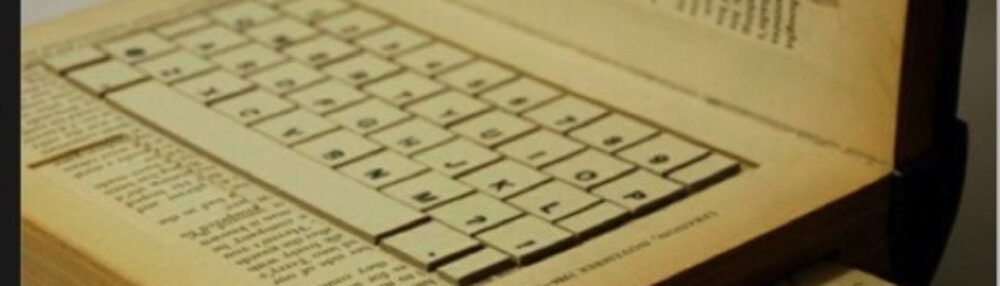
This final chapter of Amaranth Borsuk’s The Book discusses digital archiving initiatives such as The Internet Archive, Project Gutenburg, and Google Books. Crating digital texts still requires a hands on physical practice. The Internet Archive emphasizes the book as object by providing high resolution images of the pages in addition to web accessible files. These files and images fo not appear on the internet through digital means alone. They first require a physical process with a ” camera and cradle setup….while previous methods involved slicing off a book’s binding to facilitate auto feed of its pages though a scanner” (218).

The physicality of creating digital texts is also seen in the work of Andrew Norman Wilson, in Workers Leaving the GooglePlex and beyond: “[Wilson] has published images found among Google’s books that include the hands or fingers of these invisible scanners—a reminder of the relationship between the manual and the digital” (226). This relationship, as Borsuk implies, seems to be a imbalanced one, as the employees tasked with this scanning work (archival work) were mostly people of color who didn’t receive the same benefits as other employees. In this context, at least, we can see that the materiality of the book, and the labor involved in interacting with the object, is deemphasized and undervalued.

Maybe this is due in part to who digital archiving benefits the most: the underprivileged and under-resourced who “lack access to brick and mortar libraries (220). The relative accessibility of digital texts is threatening to publishers and those who profit off the commodification of the book. It seems that the further accessibility of digital texts tends to be hindered by the intervening of publishers. While I feel like I do buy into the perceived value of authorship (I feel like I would never pursue publishing if I didn’t) the publishing industry and copyright laws withhold text from the public in the name of capital.

What is ‘natural’ to the page?

In How the Page Matters, Bonnie Mak discusses the page as separate from the book, and the different forms it takes depending on its use and interaction. I was most struck by the detail of the papyrus scrolls and the way the paginae was formatted based on genre, with verse texts having wider columns than prose texts (12). The formatting of the interface of the page is meant to communicate and facilitate the genre. Page formatting based on genre is something that is somewhat inhibited by the typical mode for writing today, which is through a digital word processor on a computer. There are specific ones I can think of, like Scrivner, which I remember allow for templates for different genres such as plays. However, this feature felt limited to me. I think I often think of any ‘abnormal’ formatting in a book as superfluous and somewhat childish, but I suppose this is because of the influence of authoritarianism of the book and modern print. I expect the formatting of the book to follow some kind of an axis, either up and down or side to side. 

In turn this makes me think of what Mak had to say about “specific letter forms can infuse a text with social or political suggestion” (15). Specific texts and the way this text is formatted can be used to communicate meaning, outside of the way that printed language communicates meaning. Mak uses an example of the way that gospel texts are organized, by paragraphs and chapters. Ultimately this makes me think of the influence of religion on what kind of visual language I view as normal or necessary and which I see as unnecessary. 

Analytical Bibliography

I was not aware that there were multiple meanings to bibliography. I am most used to the bibliographic definition of the word, meaning the categorization of a text. Bibliographical refers to the study of the physical aspects of the text and its historical contexts. Since we’ve been discussing the physical sources of information, I found it fitting that the website for the Bibliographical Society of America had many interactive elements, like the slideshow of different texts with hover text about the physical elements of that text. The website also had lots of citations with links to the information that led to the original sources of information. It drew attention to the fact that I don’t see that type of practice very often on most websites that I visit, unless they are specifically a news organization. 

The further reading section details a timeline of the gradual definition of bibliography. In this timeline we can see that the definition of analytical/critical bibliographical studies has evolved to include a wide variety of critical studies for the sake of “identifying and repairing the harms of systemic racism, settler colonialism, heteropatriarchy, and other oppressive structures” (Derrick Spires, “On Liberation Bibliography” (2022). 
The first definition of in the timeline, from W. W. Greg, “Bibliography – A Retrospect” (1945), Greg describes bibliography as “the study of books as material objects irrespective of their contents.” Greg views the study of the book as something separate from the contents. However, from Borsuk and our discussions in class, I understand the study of books as objects to include the content, considering that the conditions of the object inform the content.

I think the understanding of bibliography as a political practice, as discussed in Lisa Maruca and Kate Ozment’s “What is Critical Bibliography?”, is relevant and useful in the time we live in, where I feel more people are starting to get more comfortable discussing the larger political systems that shape our everyday lives.

Content Over Form/Concept Over Object

In chapter two of The Book, Borsuk discusses how the commodification of the book, and in turn, the creation of the publishing industry, has led to the book as we understand it today: compact, portable, and personal. I found myself very focused on the sections about copyright. Borsuk points to the first copyright as the legal enforcement of “primacy of content over form” (78). It seems ironic to me that as books become more commercial, publishing industries look to designs and additives that can make the book feel more personal.

I see this reflected in the kinds of book paraphernalia available today, from subscription services, to box sets, limited/special editions (with sprayed edges/illustrations/snippets from the next book), etc. Additionally I think this kind of book personalization can be found in the social media presence of authors today. Even if the physical book itself cannot be personalized, then content can be personalized through interaction with the author in digital spaces. In theses spaces readers can personalize their reading experience by asking questions that inspire para-text from the author. This para-text itself is then commercialized (think Dumbledore is gay discourse). I see this a lot with a authors who are active on tiktok.

The focus on content over form also leads to the author becoming a valued figure. Borsuk exemplifies this with copyright law: “In the United States, publiction is not actually required to secure copyright…If a work has been made ‘for hire,’ then copyright belongs to the employer or corporation that commissioned it” (100). This example made me recall the author of The Vampire Diaries, a work for hire book series from Alloy Entertainment, who was fined from writing her own book series after the first three books because the publisher didn’t like where the author was taking the story. After this her series continued to be ghostwritten. I think it’s interesting that in an age where the author itself is part of what’s being commodified we can see that the physical “object” of the author is not as important as the concept of the author.

Play and Form

Borsuk references the kind of play present in the formation and structuring of modern children’s books in the introduction of the book, before going through a timeline of the book’s evolving form. As “informational needs” evolve, the book evolves (3). Given the book’s pervious and various forms, its not necessarily reasonable to assume the book’s form will not change again past things like e-books.

To this point, I enjoyed how Borsuk points out that the book as we know it, already take on various forms or styles across the world. For example, Borsuk notes the specific kinds of strokes used in order to not pierce papyrus leaves (13) or the size of bamboo slips influencing the top to bottom style of Chinese print (26). The available materials within a given region has effected what the “book” looks like. Even without the the threat of an increasing digital information age, the book has never been a stable singular object, and its history is inherently wrapped up in technological advancement, as evident by the way that the verbage used for digital and physical information mediums tends to overlap (scroll, type) (17).

We’ve discussed the discourse about books and AI as being centered around the fear of the book (and therefor writing and learning) as we know it becoming obsolete. But I’ve found myself more fixated on the environmental effects of AI. I feel like any conversation about AI that doesn’t talk about AI data centers’ water consumption is incomplete. However, I found it interesting that Borsuk details the economic and environmental cost of making parchment and vellum. It seems like, since the development from oral the the written word, there has always been an environmental cost when it comes to developing new information technologies. I think I’d be curious about the proportional environmental damage of different information technologies.

Additionally, I enjoyed the section about different ways to bind pages together (37). I’ve been making my own paper recently, and have started experimenting with binding it together. I’m still a beginner so sometimes I’m not sure what the paper will look like, but I’ve found it exciting to come up with new ideas for what the use the paper for, if not traditional handwriting like I had planned. I’ve included a photo of my most recent batch from yesterday, along with the cat Kristofferson.