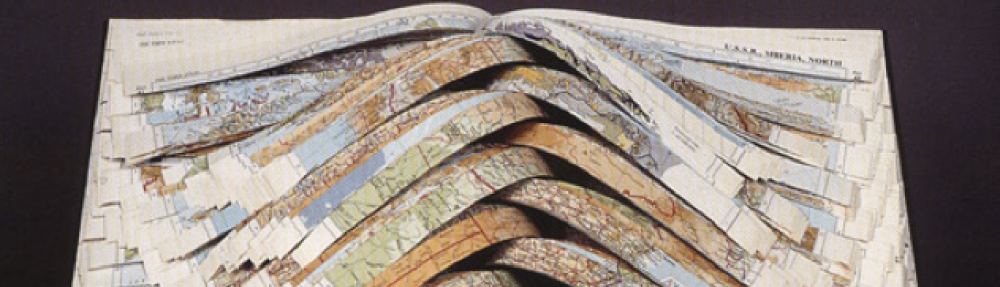
The Library of Babel as an allegory of the archive

Jorge Luis Borges The Library of Babel demonstrates the ideological power of the archive. Rather than the archive working as a tool of power and control I seek to expand on Borges’ representation of the library– a system of classification that shapes ideas and beliefs. Specifically, their sense of what is important– what constitutes knowledge and what does not. Ultimately, demonstrating how The Tower of Babel is an allegory of the archive, reflecting on the conventions of language and communication. In Borge’s story, language is not communal but enigmatic, revealing the impossibility of a single stable meaning and truth, exhibiting how language obfuscates itself.  

Language and communication gives birth to a different type of “uncovering”—not in the traditional sense as found in the scriptures, but in our human desire to seek one. Humans are creatures that seek to categorize, classify, and label, looking to find meaning and truth in a world where language obfuscates itself. Words bounce between signifiers, blurring the line between the truth and the illusion of it. However, this raises the question: is it possible to seek and find truth through the archive—a system that operates in a feedback loop of classification and preservation? The archive is not neutral; it mediates based on the prejudices and biases of scholars and reflects our anxieties. It directs us to one path while it alienates us from other possibilities. Intrinsically, this action not only preserves meaning but produces it. Borges’s Library of Babel exhibits this ideological power; through a system of classification, the library shapes scholars’ ideas and beliefs, obfuscating what constitutes knowledge and what does not. For Borges, the library is endless: “The universe (which others call the Library) is composed of an indefinite, perhaps infinite number of hexagonal galleries… Each wall of each hexagon is furnished with five bookshelves; each bookshelf holds thirty-two books identical in format; each book contains four hundred ten pages; each page, forty lines; each line, approximately eighty black letters” (Borges 112–113). The description of the library indicates that the library is a means of production. It demonstrates how language operates and circulates. Although the description of it demonstrates a system of classification and order, there are an infinite number of possibilities and probabilities regarding the conventions of language—falling into absurdity and incoherence in the attempt to find stable meaning. Similarly to the account of Genesis, language and communication break down, demonstrating that language works as a limitless sprawling web; the abundant amount of possibilities overburdens the possibility of finding stable meaning.

Furthermore, Borges deepens the instability of the archive as he demonstrates the angst that classification brings. In an attempt to search for the truth, scholars are overwhelmed as this pursuit is fruitless. Borges notes, “I know of one semibarbarous zone whose librarians repudiate the ‘vain and superstitious habit’ of trying to find sense in books, equating such a quest with attempting to find meaning in dreams or in the chaotic lines of the palm of one’s hand” (Borges 114). To find the sole truth is pointless—scholars create their own meaning based upon their desire to find one; therefore, producing meaning based on their own understanding—creating new meaning that is not grounded in objectivity but in their longing to find a sense of purpose in this vast universe. Paradoxically, the library is a place that should provide scholars with meaning and purpose yet continues to alienate them from their desired answers—objective answers are not found, but their insights become their facts. In this manner, Borges showcases a melange of emotions regarding the library—it is vast and incomprehensible and pointless to attempt to find static answers. The library generates more confusion and brings more questions than it answers.

The destabilization of meaning not only obfuscates language but uncovers ideological apparatuses that seek to assign meaning to the uncertain; it nurtures an environment where scholars create a belief system—one rooted in the absence of truth and their longing for explanations. This catalyzed the rise of spirituality—answering the unknown and anchoring a belief system. Borges mentions, “Mystics claim that their ecstasies reveal to them a circular chamber containing an enormous circular book with a continuous spine that goes completely around the walls. But their testimony is suspect, their words obscure. That cyclical

book is God (Borges 113). Because there is no certainty in the archive, scholars seek to create answers; creating divinity in the realm of social perplexities, emerging from the unknown and the confusion from within. This is further noted as Borges writes, “We also have knowledge of another superstition from that period: belief in what was termed the Book-Man… it was argued, there must exist a book that is the cipher and perfect compendium of all other books, and some librarian must have examined that book; this librarian is analogous to a god” (Borges 116). The Book-Man is a figure that symbolized divinity and more than likely emerged as a social construct that provided relief from the despair of not having congruent answers regarding the universe. The lack of truth or stable meaning lead to scholars creating their own ideology. Perpetuating the idea that the archive continues to ideologically shape their ideas and beliefs demonstrating how it operates on a continuum. This omniscient deity/ figure is a product in relation to the absurdity of seeking truth and stability in an environment where the infinite possibilities obfuscates itself– it represents and reflects the scholars anxieties and, rather than being a literal figure it embodies meaning and truth– even if it is a mere illusion. The instability of the archive produces its own belief system that is anchored in the uncertain and the desire to fill in absence of answers. 

Similarly, as in the account of Genesis divided the people building the tower due to the breakdown of language, or lack thereof, The Library of Babel continues to divide people. Rather than being a place of unity, the polarization of different truths alienates scholars and believers from one another. The emergence of the “Book-Man” not only serves as an illusion of the truth but demonstrates the emergence of a collective need for meaning and purpose. As mentioned earlier, words bounce between signifiers– demonstrating how easy it is for language to break down and to create miscommunication. Therefore, the perceived meaning  becomes fragmented which allows for different groups to anchor themselves into different interpretations regarding the truth; just as language breaks down, so does their sense of community. Borges writes, “ These pilgrims squabbled in the narrow corridors, muttered dark imprecations, strangled

one another on the divine staircases…Others went insane … . The Vindications do exist” (Borges 115). The division amongst the pilgrims is a direct consequence of the conventions of the archive. The endless amount of meaning and possibilities divides people and fragments them– specifically between the polarization of different ideologies. For example, the Mystics turned to spiritual and/ or religious interpretation to understand the archive whereas the vindicators claimed their actions would be vindicated– leading to the consequences mentioned above, violence amongst themselves in light of their “vain to find vindication”– atone for their sins (Borges 115). The Book-Man emerged from the uncertain, providing relief and acting as the illusion of truth and divinity as opposed to a group that seeks to eliminate parts of the archive “the first thing to do was to eliminate all worthless books. They would invade the hexagons, show credentials that were not always false, leaf disgustedly through a volume, and condemn entire walls of books” (Borges 116).  These conflicting ideologies demonstrate the instability of the archive and further fragment their sense of reality—demonstrating that in the search for the truth it alienates them more and obfuscates their sense of community, being divided by the same paradigm that promotes unity. The fragmentation catalyzed by the archive does not merely alienate scholars but also perpetuates the instability from our own self. 

In Borges and I, Borges demonstrates a fractured self—one produced and mediated by the archive; exegeting how language not only breaks down communication but also our identity. Borges and I echoes the instability from The Library of Babel—readers are not able to decipher who is the one speaking. Borges writes, “The other one, Borges, is the one thing that happens to… I hear about Borges in letters, I see his name on a roster of professors and in the biographical gazetteer” (Borges p.1). One Borges is constructed through media—through letters and texts—whereas the other one has been archived by the conventions of the persona he has written; their identity is interjected by the archive. The identity of the outside Borges is not a shared living experience nor influenced by them but affected by records Borges has written of him. Parallel to The Library of Babel, where scholars are in search of the solemn truth, Borges encounters himself through an amalgamation of writings; writing that he authored. Through this experience it is revealed that his identity is fractured and unstable—it is dependent upon interpretation and the assigned meaning one gives to it. Therefore, echoing the topic from The Library of Babel—there is no inherent truth but one assigned that reflects the reader’s anxieties. Furthermore, the conventions of language and communication also demonstrate how the truth is distorted; it creates a distance between himself and his authored persona—further perpetuating how interpretation continues to bounce between different signifiers, alienating himself from the truth, or the perception of it. Additionally, it demonstrates the self as an archive; specifically, his self becomes similar to the library. One of the Borges is a compilation of writings and texts—one that is being recognized as such rather than being acknowledged by his own existence. It creates a place of collections rather than uniformity. Ultimately, Borges and I demonstrate the same instability in The Library of Babel. The archive does not only fragment language and communication but alienates regarding how scholars engage with the world; it fragments our sense of understanding but also fractures our self. It demonstrates that identity is not intrinsic but mediated through an amalgamation of apparatuses. The instability of languages extends beyond our means of communication and produces endless interpretations, as evidenced by The Library of Babel.

Derrida’s Des Tours de Babel further demonstrates the fragmentation of language and meaning. Derrida notes, “The calm irony of Voltaire means that Babel means: it is not only proper name, the reference of a pure signifier to a single being—and for this reason untranslatable—but a common noun related to the generality of a meaning…even though “confusion” has at least two meanings, as Voltaire is aware, the confusion of tongues…a certain confusion has already begun to affect the two meanings of the word “confusion” (Derrida 166-167). Derrida argues that “Babel”– the word itself is a double entendre without a stable signifier. This reveals the grammatical complexity of words and their meaning– there is no pure original language as its name is associated with multiple meanings. This parallels Borges discourse; in The Library of Babel, in that universe, meaning is depended upon interpretation, bouncing between subjectivity and objectivity without clear stability. It is obfuscated due to the constant shift in words and letters– this causes scholars to anchor their ideas and beliefs in their longing for viable answers as opposed to a solemn static reason. Intrinsically, this causes different modes of interpretation and ideological systems;  just as scholars are overburden when seeking to confront the realm of possibilities of the archive only to discover the single truth is not achievable, Derrida suggests that different modes of media– translation and interpretation are processes that are unstable do to its evolving nature, making them incomplete and intangible. Furthermore, in Borges and I this instability is demonstrated through a fragmented sense of identity and reality– the instability of language creates a sense of fragmentation that is mediated by Borges writings. Therefore, Derrida exegeses and demonstrates that the archive is not stable nor clear but exhibits the multiplicity of meaning. Ultimately, Borges and Derrida expose the conventions of language and communication– the truth is constructed through subjective interpretation of experiences rather than being static, further perpetuating the idea that language intrinsically produces and obfuscates itself.

Ultimately, Borges demonstrates communication and language conventions/ structures are not inherently stable but bounce between meaning and text. In an attempt to find clarity, it has been demonstrated that shared living experiences interject and create different ways of seeing; systems that follow a structured ordeal are not able to contain the endless possibilities followed by the archive. The Library of Babel exposes how fragile the conventions of the archive are– endless possibilities alienates scholars from the truth in an attempt to pursue it. The archive not only stores but mediates and produces new ideas in the absence of truth– prompting further a sense of fragmentation between scholars. Furthermore, Borges and I perpetuates the sense of fragmentation and instability at an individual level. Similar to the archive, identity is incomplete and created through an amalgamation of experiences; Derrida’s explanation and interpretation of The Tower of Babel confirms the instability of language. Because words hold different meanings it obfuscates communication and does not nurture unification but fragments our senses; altogether, the texts mentioned above for our innate desire to search the truth– to find lifelong answers that texts have not been able to provide. The archive mirrors language– unstable, bouncing between signifiers, obfuscating meaning and words by fragmenting our limits and understanding. 

A Quick Farewell

What a treat it was to take this class, but more so to have met and collaborated with great minds. I would like to say how much I enjoyed this class, reading our discussion posts and our responses to one another. Oftentimes, I found the ideas presented compelling and-moving. This semester was truly a delight, and probably one of the most challenging courses I have taken this year at State; which is a good thing, I found myself questioning and challenging my beliefs–this is were growth happens. I hope everyone in this class had a pleasant experience. This class was intellectually satisfying; I was able to read new literature and expand on my personal library at home. This class definitely inspired me to be on the lookout for other literary works– works that will more than likely end up on my archive. The texts, ideas and essays presented deepened my intellectual curiosity and restructured how I perceive the world– how I can engage with the world from this point on. I’m looking forward to working on my final project in hopes of it being something interesting and illuminating.

Thank you all, professor and colleagues for making my last semester at State a memorable one.

Fina Project Proposal

The archive reveals, or unveils an apocalypse different than the one described in the scriptures; although we conflate the term apocalypse with the end of times, it can mean very different things. Rather than times coming to an end, it births a new “uncovering”, or sheds light onto a new revelation. In this instance, the archive exhibits human nature to: categorize, label and preserve writings that may be considered of literary merit. And, through the different modes of media, wether analogical or digital, we worship and reproduce different ways of seeing. This raises the question–why do we need to classify, codify and archive media? And, how does the reproduction of power operate within the realm of different ideological systems within politics and institutions?  

Grounded in different theoretical frameworks such as Derrida’s Archive Fever and Althusser’s theory of interpellation, this project seeks to explore how the archive, wether digital or analogical, functions as systems of control and conservation. The archive will be analyzed as a product of culture and time, operating as a system that reflects the dominant ideology of the time in which it was written. 

David Foster Wallace’s This is Water serves as a framework to reconsider our perception and awareness by deconstructing the choices we make in worshipping different modes of media; the way in which we engage with it allows us to engage with the world differently than what we know–challenging our beliefs and ideas; to encourage critical thinking and awareness. 

The air we breathe

Cloutier eloquently demonstrates the conventions of the archive through Wright’s discourse, ” I would hurl words into the darkness and wait for an echo”– this idea demonstrates how African American writers are marginalized and oppressed in darkness, later for their writings to be rediscovered and reinvented. Furthermore, if we deconstruct the concept or the idea of shadow books we are able to observe the amalgamation of works and writings that are composed by African Americans; together, forming a vast collection of invisible books. Intrinsically, the archive transforms and exegetes a different meaning than what we had originally thought– in this instance, the archive is not a static neutral place in which works can be found but one that is shaped by racism and exclusion; therefore, demonstrating that the archive has become a tool for political persecution.

Cloutier also exhibits the lifecycle of literature under Schellenberg framework, “enduring contributions to modern records management is the lifecycle concept, which appears early in the manual”. This lifecycle expands the realm of how literature is created and used, only to be discarded or disposed when not needed. However, because disposing of literature is part of the life cycle it demonstrates that Black archives are being marginalized, or in other words, history is being erased. Rather than putting an end to part of the archive we should not discard it but reinterpret African American literature– in this way, the shadow of the archive takes a different meaning and interpretation. The archive is not being discarded but works as an act of defiance that refuses to adhere to the traditional standards of the lifecycle of literature. It takes on a different meaning than the one we are accustomed to.

Finally, the archive works in a continuum. What this suggests is that when Black literature is rediscovered or reinterpreted it allows for new generations of literary scholars to disseminate and engage with literature in different manners– to engage with the world differently. Preserving material allows it to be in the archive which consequently allows scholars to redefine the present.

The Archive

I never viewed books under the framework presented; books as a quantitative and qualitative objective measures–books for me, for the most part, are a vessel of knowledge and entertainment; I have never viewed books as an archive– specifically how archival records interject with different modes of medium– physically and digitally. In this instance the archive is defined or categorized as “a place in which public records or other important historic documents are kept. Whether in a library museum or an online database”. This allows to not look at records but understand the perplexities of the history and the science behind the book– not merely at the content of the book but as an artifact, as a medium. Echoing Derrida’s scholar take on the archive. Derrida deconstructs the archive, the notion of archiving and scrutinizing a meditation on time and technology– both factors interjecting on how the archive has transmogrified. The archive are not merely process of keeping documents boxed up but demonstrate a relationship between the different modes of inscription and the technological advancements of the time period the records were written. Such processes, laudable yet problematic. As mentioned earlier, qualitative measures analyze books for its content and meaning, exhibiting the relationship between time and values; on the other hand, the quantitative measure seeks to find patterns across literary records– both metrics seek to accomplish to understand the archive. Furthermore, this archive duality demonstrates how digitalization shapes and reconstructs our perception regarding the permeance of objects. It guides our thinking through an “extended meditation… on time and technology”. Just as the archive shift from paper to screen, its contents become widely accessible yet unstable– bouncing between the different modes of medium online. The traditional standard of the archive carries from within its original content matter– annotations, missing pages, highlights; the online archive loses those privileges, yet privileges accessibility and equity– facilitating the process for those who seek it. The archive operates in a spectrum, constantly being redefined as our understanding changes.

Archive Fever

I was under the impression (wrongfully) that electronic literature was simply e-books or PDFs stored in a digital device; I never made the connection between literature and the capabilities of the electronic device—for example, digital media have hyperlinks and other modes of interaction, creating a new manner in which literature is reproduced through different modes of media. One example that caught my attention was that electronic literature branched out into several forms such as “chatterbots, interactive fiction, novels that take the form of e-mails, SMS messages, or blogs.” There are many forms and genres in which electronic literature is being reproduced—and, as technology evolves, so do these modes and media. I always thought about the relationship we have with literature as a feedback loop—author, word, and text to reader. E-lit challenges and blurs this paradigm by immersing the reader in a different experience, one that cannot be offered by traditional books. By no means am I making a clear distinction that one is superior to the other, but rather highlighting the idea that they both offer a different user experience. In a similar manner, in a previous post I discussed how language is not static or fixed, as it is always changing and adapting, echoing the framework in which e-lit operates—digital media has branched out through all the user participatory interactions, which demonstrate the instability or nonlinearity of this media. Intrinsically, this also demonstrates the ephemerality of electronic media; just as books can be considered outdated as we have culturally shifted to e-book’s and PDF’s, electronic literature can be archived if the software/ web cease to support that particular format– our current tumultuous political climate also influences. The government has erased several online pages that preserved publicly known information, censoring and making works disappear completely– demonstrating the fragility of this mode of media and echoing that we are in a constant state of change. The relationship between media, text and readers have changed and evolved– from time to technology.

Midterm– Reproduction of knowledge and power

Museum Regalis Societatis (1681) is bounded by a loose spine– one that is separating from the text. The hard cover layers are peeling from the corners, revealing that the book has not undergone any type of restoration; the edges of the book are uneven and the trim of the paper is not symmetrical; the paper is tinted in various shades of yellow and brown due to oxidation. Throughout the text, there are multiple fonts– Times New Roman being the most prominent one. The margins are wide and the foldouts appear to be of a fibrous material– making it seem as if it were a copperplate engraving.

Let me not start at the origin of the codex nor at the content of it, but at the materialistic characterization of the media. Printed in 1681, Museum Regalis Societatis: or, A Catalogue and Description of the Natural and Artificial Rarities belonging to the Royal Society is a book whose physicality is an amalgamation of cultural apparatuses. It is an object conformed by a loose binding, where the spine is separating from the text and does not demonstrate any signs of restoration—leaving the text in its original form. The roughed-out edges reveal several layers of boards that create the front and back covers. The pages are tinted in shades of yellow, white, and brown, more than likely due to oxidation—a natural process in the life cycle of paper. The material of the paper is texturized—almost with a fibrous feel to it. The sides of the pages appear uneven, though it is unclear if this is a manufacturing irregularity, an alteration through the centuries, or simply wear and tear. The pages demonstrate further irregularities: some corners are cut off, and some pages are not fully symmetrical, demonstrating both the imperfections of handcrafting and the limits of technology at the time. The typography used on the cover page is a combination of five fonts—all conveying different messages to the reader, or at the very least creating the illusion of hierarchy between text, reader, and font. The margins are ample—about two and a half inches throughout. Initially, margins could have been intended for annotations, but the text demonstrates no sign of marginalia; all visible sides are unmarked. This suggests that this copy most likely belonged to an academic institution rather than serving as a personal copy for study. The book is structured: there is a preface, a table of contents written in cursive, and divisions of content into parts, sections, and chapters—each with distinct typography. There is a clear distinction between subject matter; in this instance, the contents are divided into plants, minerals, animals, and human anatomy. Every subject is differentiated by distinct typographical choices, creating a visual hierarchy and emphasizing what was deemed of greater importance at the time of assembly. At the end of the book, there are several foldout pages composed of a different material. They are printed on thicker, smoother paper, creating a deliberate distinction between image and text. The images have a certain texture to them—an engraved feeling—and are printed in black and white. The lines are sensitive to the touch, suggesting copperplate engraving, a method prominent at the time this book was assembled. Beyond the illustrations, there is a section titled “Some Notes Upon the Tables,” providing explanations regarding the material being presented. In the final pages, there is an extended list of authors, collaborators, and patrons, demonstrating how the text functions as a social amalgamation of shared knowledge and experience, particularly among the higher orders of society.

Althusser states that ideology is rooted in ritualistic behaviors rather than in a set of ideas—behaviors that have been interpellated through Ideological and Repressive State Apparatuses. This framework echoes the social and cultural conditions that shaped the creation and use of Museum Regalis Societatis, where the book itself becomes a material artifact representing the institutional value of intellectual curiosity. Furthermore, the assembly and the reproduction of this text acts itself as a ritual– it reproduces ideology on a continuum for the higher orders of society– placing knowledge in a place of exclusivity. It reflects the socio-cultural context of the period in which this artifact was produced, examining how knowledge, power, and hierarchy are constructed—often problematic, often laudable. It is manifested in the nature of its taxonomy; it creates power through its authorship and institutional control– it creates a separation of power between the individual accessing the text and converges the reader, author and text. Knowledge is demonstrated through the nature of the text– The variety of fonts creates a hierarchy, one that places emphasis and value on the subjects being presented in the book—fonts that hail the reader differently depending on what is deemed valuable and what is not; subtly becoming a tool of ideology– it organizes ideas visually and interpellates to the reader how information should be categorized and prioritized. Paradoxically, it mirrors social hierarchies.  The unmarked pages, meanwhile, provide readers with a sense of academic moral authority, suggesting that such texts were intended for institutional use rather than personal study. The meticulous division and structure of the different subjects demonstrate that the Royal Society valued order and organization—particularly within the realm of science. This order is further displayed in the foldout anatomical pages, where text and visuals converge, making the reader an active participant with the book. The physical act of unfolding and examining these pages transforms the book into a shared experience rather than a static object. And, it reminds the reader that knowledge is presented as a physical act rather than one meditated through ideas– it blurs the boundaries between voyeurism and objects.  Ultimately, Museum Regalis Societatis serves as a microcosm of seventeenth-century ideology, exhibiting the social structures and power dynamics that shaped class, access, and knowledge. It materializes the cultural hierarchy of the time and encodes different power structures– allowing the status quo to define the authority and value of this media. Under Althusser’s framework, this book is a product and the embodiment of ideology. The physical characteristics of this book are rituals of knowledge and authority.

Ways of Seeing

My interpretation of the book has shifted—not only is it a materialistic characterization of the physical qualities of the book itself, but also a vessel that reveals society’s underlying values, whatever those may be at the time it is written or read. The book is ever-evolving, adapting to social trends; in the 1600s, it was viewed as a symbol of status, power, and control, as only those of the higher orders of society were able to read and interpret texts. Those views have greatly shifted—people rarely read today, and those who do often romanticize it for the prestige that has become intrinsic to the book—echoing that the book is dependent on our values. Therefore, the book is not merely a physical object but a cultural artifact that responds to and acts in accordance with our needs. It is a material form that reflects our values and technological advancements, a medium that can serve as a weapon, a sacred text, or simply the bread and circus for a society too self-centered to recognize the value and worth of words. Therefore, the book cannot be a fixed object but one that embodies our social structures, operating from within rather than independently; the book allows us to engage with the world in alternate ways. We are all interconnected, sharing the same experiences, collectively challenging our ideas and beliefs, encouraging critical thinking and awareness. As Amaranth explains, “we might examine the book as what scholar N. Katherine Hayles calls it a “material metaphor”, through which we interface with language and which in turn alters how we can do so” (Borsuk 141); language is not static, it bounces between different signifies/signifieds, it allows us, the readers, to mediate between, word, text and meaning– in a manner, the book not only represents our social values as I previously mentioned but also redefines our ways of thinking– influencing how language is transformed through an amalgamation of social-cultural apparatus that interjects in our relationship with words and text.

The book as a stream of consciousness

The book is not a static or fixed object, but rather a symbol of knowledge, ideas, and norms–one that is shaped by our cultural values, which have shifted and evolved since the dawn of time. This demonstrates that ideas are non-linear; through the decades, the book has changed, being adapted into different modes of media. Rather than viewing the book as a mere object, it should be interpreted as a mode of language–one that, in whatever form it takes, reflects our ways of thinking and our pursuit of truth and knowledge. One great example of this can be found in the Hebrew-Aramaic and Christian Greek scriptures: although there are different versions of these texts, they all accomplish their purpose–to guide, to educate, and to demonstrate the divinity of truth. Therefore, this raises the question: what does the book represent? It represents the conventions of human memory and guidance–something infinite that seeks to share a universal experience–offering, different ways of thinking, different ways in which we engage with the world as we know it. In this instance, we seek to deconstruct, to alienate, and to differentiate the materialistic qualities of the book and expand on the duality this represents–blurring the boundaries between media and language. “Knowles’s books, like her artistic practice, offer readers nourishment, reminding us that the book is an exchange” (Borsuk 108). In this instance, because the books exchanges with the reader it vividly paints an interaction, or more a transaction with the reader– one that creates a space for intellectual curiosity that collectively unifies individuals that seek to enrich their understanding not intellectually (not only in this manner), but feeds into the realm of human complexities– nurturing our curiosity and creativity. Further demonstrating that books are not just a vessel of knowledge but imparts in our modes of communication and exchange. Ultimately, the book lives not as an object but as a symbol for mankind– one that is present and allows us to learn , question and engage with the world in a different manner; one that interjects across our innermost needs and desires.

Bibliography as an act of resistance and defiance

Bibliographies are commonly known as a list of: books, sources and articles– typically used to cite sources. Though, scholarly, there has been a shift regarding what is a Bibliography– challenging our preconceived notions and prejudices regarding the materialistic content of what constitutes a Bibliography; a Bibliography is not merely a works cited but material with intellectual depth– not with discourse but with the actual content characterization. A Bibliography is not a superficial list of works but examines the cultural value of texts, books and digital forms of literature. There are different aspects that should be considered when scrutinizing a Bibliography– the social-cultural framework surrounding the period in which book/ content was produced. In this instance, physical elements should be considered– the type of paper that was used/ produced, watermarks and the mechanism used to reproduce and spread literature; in this manner, converging material characteristics with our social-cultural time period and values– all dependent on our surroundings. This further demonstrates the fix set of objects in a culture that constantly shifts its values– acting in a feedback loop. And, unlike other branches in the department of arts and humanities were certain objects and materials are reserved for a particular demographic, bibliographies are entrenched in our society: scholars, professors, students, book collectors and libraries are all filled with Bibliographies– providing a sense of community and unity rather than alienating individuals that value academic curiosity and intelligence.

Maruca and Ozment’s position regarding Bibliographies converge material books with critical theory– the liberation of ideas that constrains society from ideology– ideology rooted in behaviors and rituals rather than merely ideas according to Althusser’s standards. The framing of critical theory intervenes against dire social prejudices– one that is intrinsically interconnected to the Bibliography– demonstrating how books are a symbol of power and resistance– echoing topics viewed in books such as 1984 and Brave New World.