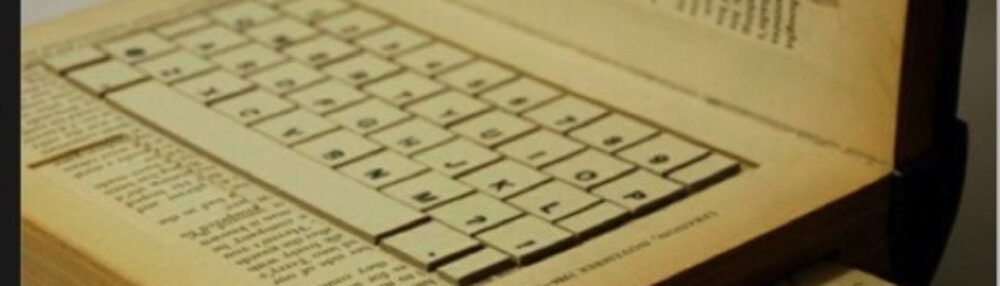
The Shadow I Know
By Kaan Alaca
As in awe I look up
Gates of leather in front
Light births a new world
A world of paper and font
Unfamiliar winds
Risk the step and explore?
Or just turn around
Stay where I was before
A sudden sense
A sense so known yet so strange
Warm and welcome I feel
Inner struggle, inner change
One step, two steps,
I start thinking out loud
Three steps, four steps
There’s no turning around
By five my breath stops
Six where I rethink one last
Seven – breathe out
Eight I pick up, walk fast
The first room greets me
Walls of parchment in rise
Ink creates furnishings
Every color, every size
As in awe i roam
A distant shadow i see
Who is this shadow
And does he know me?
Gesturing me to follow
I think twice, but decide
To follow this shadow
Seeming familiar by surprise
My hand he then holds
I feel light, I feel free
I know who the shadow is
He’s the friend that i need
The view from up top
A land of beauty and mind
A room marks our stop
What might I now find
Every step feels well placed
Every sight feels so known
Every sense feels welcoming
As if it was my own
A tap, a step,
Follow who I see
I know who the shadow is
But does he know me?
Halting at a place
Sunken deep at the bottom
I seem to remember
A place long forgotten
While i follow my friend
His shape starts to show
I know who the shadow is
He is someone I know
Soon as we land
Feet connect to the ground
Light sparks up
What have we now found?
The beauty of the past
But while the find I admire
I see my friend disappear
As light gets brighter and brighter
Sadness, grief upon
My friend who now is gone
He seemed to know
It seemed this world was his
I seemed to know
A friend who no more is
He seemed to know
He seemed to care
What this world was about
When to look and where
What all he had learned
I’m glad that he shared
Since I now fully recalled
How for this place I once cared
The memories awoke,
The world hugged me warm welcome
As if I never had left
This realm of quiet freedom
I came back, and I stayed
For my mind had felt free
I know who the shadow was
The shadow was me
Introduction
My poem “The Shadow I Know” explores what it feels like to rediscover reading after years of “forgetting” about it. I show this return by turning the book into a world of rooms, memories and movement. The shadow figure in the poem reflects a part of myself I had forgotten: the version of me who used to love reading and who somehow disappeared over the years. By connecting this journey to Borsuk’s idea that “the book accommodates us, and we accommodate to it” (The Book, p. 198), Mak’s understanding of the page as an interface and Carrión’s description of the book as “a sequence of spaces… a sequence of moments” (p. 148), the poem shows that coming back to reading is more than just picking up a book again. It is a return to a part of myself that felt lost. By the end, when the light grows and the shadow dissolves, the poem expresses the realization that “there is no shadow of the past in a place that exists in the present.”
Essay
There was a time when reading was a constant presence in my life, even if it didn’t follow me everywhere. Next to my bed, however, there was always a growing stack of comics and graphic novels, piling higher and higher over time. Eventually, they moved into a bookshelf of their own. There were books too, but comics were what I truly loved. I read them obsessively and for a long time they were part of my everyday routine. And then, without any clear reason or moment I can point to, I stopped. Completely. For years, I didn’t read at all. No books and not even my beloved comics & graphic novels, nothing. When I finally returned to reading, it didn’t happen through a big decision but through something surprisingly small. A Kindle I bought for a university class. It should have felt odd or unfamiliar, especially because it wasn’t a physical book, but something about the experience clicked instantly. I fell right back into it. It felt almost like the old version of myself had been waiting somewhere, ready to take my hand. Suddenly, I was reading again. Books on my Kindle and comics on my iPad. The form factor had changed. What was once physical had become digital. And suddenly, I had everything I wanted to read available with me, wherever I went.
My poem is basically that process turned into a world you can walk through.
The poem starts with “gates of leather in front,” immediately turning the book into a physical threshold. I always liked how Mak describes this idea, how “the boundaries of the interface are always identical to the edges of the material platform of the page” (p. 3). That line stayed in my head because it made me see the page as an entrance, something we cross. In the poem, the speaker stands right in front of such a boundary and wonders whether to step inside or step back. That hesitation felt true to my own experience. It’s strange to return to something that once felt natural.
Once inside, the poem shifts into a different register. The world becomes spatial: “walls of parchment,” “rooms”, “furnishings” made of ink. This directly reflects Ulises Carrión’s idea that “a book is a sequence of spaces… a sequence of moments” (p. 148). When I wrote the poem, I didn’t think about theory first, but afterwards I noticed that the poem follows this exact rhythm. Moving from room to room, moment to moment. For me, reading again truly felt like that. Entering places I somehow remembered but hadn’t visited in years. Even reading digitally didn’t change that feeling. It still felt like walking back into something.
Borsuk’s description of the book as a body, with “a spine, a head, and even a tail” (p. 77), also helped me understand why the book in my poem behaves almost like a character. In my blogs I wrote about how this comparison made books seem more alive, almost like companions. My poem plays with this idea too. The book-world doesn’t just sit there, it greets the speaker, pulls him forward, opens itself up. That relates well to Borsuk’s line: “The book accommodates us, and we accommodate to it.” (p. 198). When I started reading again, it really felt like the book (or Kindle, in this case) met me halfway, like it was inviting me back.
But the emotional center of the poem isn’t the rooms. It’s the shadow.
The shadow appears in the poem before anything else is fully understood. He feels familiar and unfamiliar at the same time: “Who is this shadow / And does he know me?” When I wrote that, I wanted to capture the strange feeling of returning to a past version of myself. The shadow leads the speaker through the book-world, sometimes ahead, sometimes beside him. That’s exactly how it felt when I suddenly began reading again. Like someone I used to be had returned, but only little by little.
The poem becomes more personal as it continues. The rooms start to feel “well placed,” the sights “known” and memories begin to resurface, just like when I opened some of my old books or (especially) my old comics again and recognized small details I had forgotten. It was comforting and strange at the same time. Borsuk writes about how books carry “residues of reading,” traces of past encounters. I felt that directly. Some memories lived in those pages and stepping back into them felt like being welcomed by something I once loved.
The turning point in the poem is when the light intensifies. The line “I see my friend disappear / As light gets brighter and brighter” is where the metaphor shifts: the shadow, the past self, disappears not because it’s lost but because it has merged with the present. This is where the final insight comes in:
“there is no shadow of the past in a place that exists in the present.”
For me, this means that once reading became part of my life again, the version of myself who used to love reading didn’t feel like a memory anymore. He became present again. Whole again. Not a shadow, but me.
In the end, my poem is about returning. Not just to books, but to a self I had forgotten. Using the ideas of Borsuk, Mak, and Carrión helped me understand the journey in a more concrete way. As movement, as interface, as space, as encounter. Reading is not just reading. It’s stepping into rooms that hold memories. It’s meeting a body that has its own history. It’s crossing a boundary that leads back to oneself.


