Memes as digital literature

Introduction

The seminar on “Books as Objects” made it clear that books are not losing their significance in the digital age, but rather undergoing a transformation. They remain historical, cultural, and symbolic objects, while digital media are simultaneously giving rise to new forms of knowledge transfer. This is precisely where my creative project comes in. It presents a double page consisting of a traditional text page and a meme collage. Both pages convey the same content, but use completely different media logics. The project thus reveals how forms of literature are changing, how digital expression complements traditional structures, and how both media forms coexist rather than exclude each other. My project argues that memes function as a new form of digital literature by translating the material, cultural, and symbolic dimensions of the book into a fragmented visual mode of meaning-making, thereby demonstrating how digital media reshape our understanding of textual objects without replacing the book.

The project demonstrates that literature is not disappearing in the digital age, but rather becoming more diverse. Memes function as digital literature that conveys complex ideas quickly, visually, and with cultural significance. The combination of the linear text page with the fragmented meme page makes it clear that books continue to be significant as material and symbolic objects, while digital media are giving rise to new forms of literature. This coexistence gives rise to an expanded form of meaning in which traditional book culture and digital forms of expression go hand in hand. The project thus illustrates that media change is not a loss, but an expansion of our literary possibilities.

The traditional text page: The book as a multi-layered object

The text page deliberately follows the conventions of a classic book page. It has a linear structure, is organized argumentatively, and focuses on linguistic coherence. In terms of content, it shows that books are more than mere carriers of text. Their significance arises from several levels: their materiality, their production, their social significance, and their effect on thought processes. The page illustrates that books are historically developed media whose structural characteristics, such as page design, binding, and text arrangement, determine how content is read and understood.

These observations can be directly linked to Pressman’s analysis. She describes how, in the 21st century, books function not only as reading devices, but also as cultural symbols that embody values such as knowledge, individuality, and privacy (Pressman, p. 2). In this sense, the text page not only serves to convey information, but also represents the cultural depth and emotional attachment that continue to characterize physical books. At the same time, the page refers to the fragility of media. While a physical book can be physically damaged, digital information is threatened with disappearing unnoticed. Pressman emphasizes that in the digital age, the book is not disappearing, but rather being “repurposed and reimagined” (Pressman, pp. 2-3), an idea that is reflected in the text page by emphasizing the cultural longevity of the book as an object.

The meme page: Digital literature as fragmented meaning production

The meme page replaces linear text with a collage that deliberately focuses on fragmentation, superimposition, and visual condensation. The memes take up all the content of the text page: materiality, historical dimension, emotional attachment, fragility, social significance, and translate it into a form that is typical of digital culture. Instead of linear argumentation, multiple points of meaning arise simultaneously, which in their entirety represent the same content framework.

The meme page thus serves as an example of what Rettberg describes as electronic literature. According to him, digital literature arises when literary activity is produced by a computer or network (Rettberg, p. 169). Memes fulfill precisely these requirements, as they are based on images, text fragments, cultural references, and social interactions. Rettberg emphasizes that digital literature is often characterized by visual elements, non-linearity, and collaborative meaning-making (pp. 168–172). These are characteristics that are central to memes. The meme collage in my project therefore shows how digital media structure complex content differently, not through linguistic depth, but through visual intensity and cultural condensation.

The spatial contrast: form as argument

An essential aspect of the project, which goes beyond a mere comparison of content, is the spatial and visual design of the double page. The left-hand side shows an orderly, legible text, while the right-hand side shows a multitude of memes that overlap and are arranged in clusters. This composition is itself a media-theoretical argument. It shows that media forms not only convey content, but also shape thought structures. While the left page represents a linear order of knowledge, the right page creates a visual knowledge framework based on simultaneity, humor, and association. Rettberg’s description of digital literature as interactive and visually structured (pp. 168–172) is directly reflected in this collage. At the same time, the left-hand page fulfills what Pressman calls cultural “nearness”, a closeness to the book as an object that conveys stability and identity (Pressman, pp. 1–3). The double page thus becomes a performative representation of media change, as it shows how book culture and digital culture coexist and shape each other.

Comparison of the two pages: Different ways of imparting knowledge

A comparison of the traditional text page with the meme page shows that both media forms generate knowledge, but in different ways. While the text page uses argumentation and linearity, the meme page works with visual condensation and cultural references. However, both forms require specific reading skills: the meme requires the ability to quickly recognize visual symbolism, while the text requires linguistic processing.

The project thus confirms a central finding of the seminar: media do not replace each other, but exist in coexistence. Pressman points out that digital culture does not destroy old media, but transforms and recontextualizes them (p. 3). Rettberg, in turn, shows that digital literature creates new possibilities for expression that expand traditional literature rather than replace it (pp. 169–172). My project takes up these insights and makes them visible: books and memes do not compete with each other, but complement each other as different but equally valid forms of knowledge production.

Conclusion

The project demonstrates that literature is not disappearing in the digital age, but rather becoming more diverse. Memes function as digital literary forms that convey complex ideas quickly, visually, and with cultural significance. The combination of the linear text page with the fragmented meme page illustrates that books remain significant as material and symbolic objects, while digital media give rise to new forms of literary expression. The two media forms do not compete with each other, but rather expand the area of literary possibilities.

Crucially, however, the project shows how memes translate central characteristics of the book, its materiality, cultural authority, and symbolic functions, into a new visual and network-based mode of meaning. This digital transformation does not negate the basic principles of the book, but rather translates them into a contemporary, image-oriented logic. The project thus directly confirms the thesis that digital media do not replace our understanding of textuality, but rather transform it. Media change therefore does not mean a loss, but rather an expansion of our literary forms of expression and knowledge, in which traditional book culture and digital literatures coexist productively.

Final Project Proposal

This project examines how the understanding of literature is changing in the digital age by analyzing memes as a possible new form of digital literature. My thesis is that memes function as a new form of digital literature because they replace linear narrative structures with collective, visual, and participatory meaning production.

The aim of the project is to explore the cultural and cognitive shift from print-based to digital media and to ask what still counts as “literature” in the digital context. I would also like to explore to what extent memes can be compared to books in terms of information transmission. While text is based on language, structure, and argumentation, memes work with images, emotions, and shared digital references.

As a creative project, I would like to create two pages that each deal with the same topic. The first page is more traditional, a standard book page. Instead of an informational text, the second page contains a collection of various memes that report on the same topic. By comparing two forms of presentation of the same topic, on the one hand as traditional text and on the other as a collection of memes, I want to show how the structure, form, and interactivity of digital media change the way meaning is created, communicated, and understood.

Furthermore, I want to show that the transition from print to digital media is not only a technical change, but also a cultural one. Young people today spend a large part of their time with digital content, especially memes, while books are becoming less important for many. Memes are therefore an integral part of our everyday culture and shape how young people think, communicate, and absorb information. Nevertheless, they have hardly been seriously studied in literary and media studies to date.

May Books never leave us

In her work “Bookishness: Loving Books in a Digital Age,” Jessica Pressman describes a fascinating paradox. We live in a time when we no longer need books, but love them more than ever. Although the traditional physical book is far outdated as a reading technology, we are surrounded by a new culture of book worship. Pressman calls this phenomenon bookishness: “creative acts that engage the physicality of the book within a digital culture.”

This phenomenon can be found everywhere: book sculptures, cell phone cases that look like old books, in so-called “shelfies” on social media, or in laptop bags with a leather book look. The aesthetic appearance, especially of old books, fascinates many people. It is more than just pure nostalgia. It is a cultural response to the loss of closeness, materiality, and identity in the digital world. While we find ourselves in an era of constant connectivity, we longingly seek the concentration, privacy, and tranquility that we find in books. Pressman writes: “The book has historically symbolized privacy, leisure, individualism, knowledge, and power. This means that the book has been the emblem for the very experiences that must be renegotiated in a digital era.” Books have become symbols, physical markers of identity. Pressman describes how people today use books (or images of them) to show belonging and taste, for example through bookshelves as Instagram stories or in the background as decoration in cafés or in their own homes. The possession, or even just the display, of books becomes a gesture. It is proof of cultural depth, education, perhaps even resistance to superficiality.

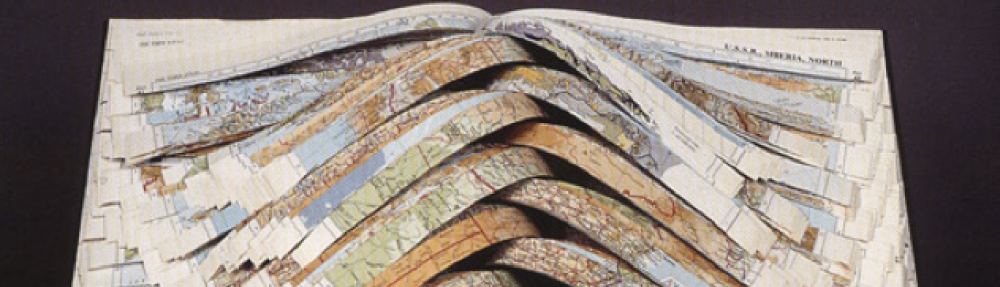
The work emphasizes that this love of books is not backward-looking, but productive. Bookishness transforms books into art, design, or performance. When artists cut, fold, or digitally recreate books, they make it clear that books live on, not as a medium for reading, but as a medium for thinking and feeling. We also saw this in the interview between Jessica Pressman and Doug Beube and Brian Dettmer, who use books as art to convey a certain criticism of a particular medium. In the end, bookishness is not a nostalgic retreat, but a new form of engagement with the digital. She writes: “Loving books in a digital age is personal and communal… claiming a bookish identity can constitute an act of rebellion.” We love books not because they are useful, but because they no longer have to be. 

Archives and truth

In the chapter “Book History from the Archival Record,” Katherine Bode and Roger Osborne emphasize that archives form the foundation of book research, but are not neutral places. The following quote stands out in particular: “Archival records are not only incomplete and mediated by various levels of archival intervention; they are also subjective. The records of individuals and institutions are strongly influenced by the beliefs, perspectives, values, interests, and aims of those who produce them.” This quote sums up a crucial insight. Archives do not tell an objective story. Various institutions, such as publishers, librarians, collectors, and historians, create them. They are therefore an expression of decisions, preferences, and power relations. For example, those who archive something also influence what is forgotten or should be forgotten.

This dominant influence has far-reaching consequences, because when we understand how literature is created and disseminated, we must also bear in mind that the traces we find in archives are not random, but selective. One example would be authors’ letters, which are carefully preserved, and documents from small printing houses or readers, which are often lost. So we mainly absorb filtered knowledge. This knowledge is accessible through the perspectives of those who have decided what is “worth preserving.”

Bode and Osborne show that this subjectivity is not simply a mistake, but part of the historical process. Both see archives as constructions of cultural memory. They say something not only about books, but above all about society. In this sense, archives themselves are sources of cultural ideology.

I find the idea of implying the digital age particularly relevant here. Although digital archives appear limitless and objective, and everything is available and searchable, selection processes once again play an important role. Thus, historical truth never arises simply from data or documents, but from interpretation, contextualization, and the awareness that every source bears a human signature.

The Universe as Book in Celestial Navigation – Mapping the Unknowable

The artist’s book “Celestial Navigation” was produced in Chicago in 2008 by American book artist Karen Hanmer. Only 30 copies of this handmade work were produced, making it a limited edition. It is clear at first glance that this is not a book in the traditional sense. Celestial Navigation has neither a spine nor firmly bound pages, but consists of several triangular and trapezoidal panels connected by concealed joints. This system allows the user to fold the object into various geometric shapes. Through trial and error, one can form pyramids, prisms, or open, almost architectural structures. This design can be read page by page like a book or unfolded flat to resemble historical star charts or modern NASA composite images. In this way, the work emphasizes the idea of movement and changeability rather than linearity and closedness, as found in the classic codex.

The book appears to be digitally printed, with sharp lines and clear contrast. The typography is a classic serif font in white, which blends harmoniously with the astronomical imagery. The overall appearance is minimalist and cosmic, rigorously constructed yet poetic. The copy is in excellent condition. There are no creases, tears, or discoloration, the edges are clean, and all binding elements are in perfect working order. There are no signs of use, notes, or ownership marks. The surfaces of the individual panels are printed on a black background and feature fine white lines, dots, and inscriptions reminiscent of star charts and celestial diagrams. They are complemented by illustrations of historical astronomical instruments such as sextants, astrolabes, and planispheres.   On the left-hand side of each double page is a text about a star field, and on the right-hand side is a historical star map, creating a rhythmic balance between language and image. This movement through the pages is ultimately resolved in a final double page dominated by empty space. The work thus offers three “paths through space”: a narrative track that addresses loss, and two others consisting of lists of astronomical instruments, symbols of human attempts to understand the heavens. These images refer to the history of astronomy and thus to humanity’s attempt to measure the infinite. By transforming this scientific imagery into a work of art, Hanmer removes its functional purpose and reduces it to pure form. The work thus demonstrates that every human system of knowledge has its limits. The maps of the sky, which once served as a means of orientation, become symbols of the loss of orientation. Hanmer makes it clear that the longing for order in the face of the cosmos inevitably turns into wonder.

In terms of content, Celestial Navigation can be understood as a reflection on orientation, memory, and humanity’s relationship to the universe. The text portion of the work is minimal, consisting of short English fragments integrated into the visual space: “I don’t remember what you looked like,” “I see your face in the stars,” “Like ancient navigators, I look to the sky to find my way back to you,” etc. These pieces of text are not the focus of the reading, but function as poetic elements within the field. They interact with the visual elements and open up room for interpretation on topics such as perception, forgetting, and the unknown. In this way, Hanmer connects the history of celestial observation with the experience of loss. Navigating the cosmos becomes a metaphor for the search for the past, for orientation in the incomprehensible. The sentence “Like ancient navigators, (…)” summarizes the central motif of the book.  The stars serve not only as geographical orientation, but also as existential orientation. The juxtaposition of scientific precision and emotional emptiness creates a work that dissolves the boundaries between knowledge and memory, between map and memory. The work acts as a silent monument that reveals human longing. The sentences seem like intimate memories and personal confessions. Forgetting a face symbolizes the human loss of orientation and the limits of knowledge. This combination of scientific iconography and poetic language creates a tension between order and chaos. Hanmer uses the symbols of astronomy not to explain the sky, but to make the inexplicable visible. Her navigation is not a search for a destination, but a process of constant searching.

Hanmer draws on historical sources of celestial cartography, such as Alexander Jamieson’s Celestial Atlas (1822). Hammer uses their scientific precision in an artistic language and image. Just as the cosmos itself has no center, no direction, and no end, this work also rejects a fixed order. In its changeable, geometric form, it reflects the incomprehensibility and openness of the universe. Every movement of the viewer changes the object, creating new perspectives and simultaneously destroying the previous form. Furthermore, the work rejects the idea of a book as a finished object. Every individual who touches it creates a new version of it. It has no correct form. The reader is thus not a passive recipient, but an active creator. The striking geometric symbolism of the construction, represented by triangles, pyramids, and squares, has been a sign of order and harmony since ancient times. In Hanmer’s work, however, this meaning is reversed: geometry no longer stands for stability, but for movement and impermanence. When the viewer folds the object to create a cavity open at the sides, this space appears dark, deep, and mysterious, like a small black hole. This comparison is not only visually but also conceptually apt. Black holes are places where the laws of physics fail and information disappears. 

Christopher Nolan’s film „Interstellar“ (2014) can also be linked to this insight. Both works take up the idea of the black hole not only as a physical phenomenon, but also as a philosophical one. In Interstellar, the black hole “Gargantua” becomes a place where space, time, and perception collapse, a point where knowledge and experience reach their limits. The situation is similar in Hanmer’s work, as the geometric folding structures create cavities and depths that are visually reminiscent of the interior of a black hole. The viewer looks into these dark openings without being able to comprehend them. Both works thus emphasize the paradox that the attempt to understand infinity inevitably ends in incomprehensibility. 

The work is not addressed to readers in the conventional sense, but to viewers who explore the object through movement and touch. Hanmerk’s work thus appeals to an audience interested in artist’s books, book history, scientific aesthetics, and conceptual art. Through the artificial concept, knowledge is not acquired as linear text, but rather as a spatial and sensory experience. The integrated typography reinforces this idea by allowing the words to “float” within the visual space, turning the book itself into a small model of the cosmos.  

As an artifact, this specimen occupies a position between book, map, and sculpture. Each copy of the edition is handmade and, thanks to its manual assembly, possesses an individual character that is unfamiliar in traditional books. The flexible, foldable structure makes physical interaction a central part of the concept: opening, folding, and reshaping become symbolic “navigation” through space and meaning. Her book art marks a conscious turning point in the history of the book. While early modern celestial maps chart the cosmos in order to organize and control it, Hanmer’s book, on the other hand, allows the incomprehensible to remain. It transforms the idea of navigation into an aesthetic principle. 

Overall, it can be said that Celestial Navigation redefines the book as a physical and intellectual object. The art book can be viewed as a material model for thinking about infinity and ignorance, in which Hanmer combines the precision of scientific representation with the openness of poetic reflection. It is a book that is not read, but explored. In the end, Celestial Navigation remains an object that eludes complete interpretation. It refuses to be unambiguous and thereby creates meaning. Its form and imagery refer to an experience of infinity that is neither rational nor mystical. Celestial Navigation ultimately exemplifies a modern book aesthetic that transforms reading into a physical, meditative act. The work stands for a medium of open thinking. It represents the book as an experience rather than a repository of knowledge.

Where does literature end?

In his text “Electronic Literature,” Scott Rettberg describes the challenge of rethinking literature in a digital world. He sees electronic literature not as a digital replica of printed texts, but as a completely new literary practice that exploits the full potential of computers. The quote “Electronic literature is the result or product of literary activity created or performed using the computer” stuck in my mind. 

The concept of “literature” is undergoing a fundamental shift. It is no longer bound to pages, printer’s ink, or linear storytelling, but arises from the interplay of text, code, sound, image, and interaction. Where writing used to be the medium of meaning, today animations, algorithms, and digital interfaces also generate meaning. 

Rettberg also shows that electronic literature lies somewhere between art, technology, and experimentation. This opens up many possibilities, as electronic literature can be a visual installation, an interactive poem, or a game. This openness and broad scope make it difficult to define. “The term is somewhat fraught and often challenged as not sufficiently or accurately descriptive,” writes Rettberg. I find Rettberg’s observation that electronic literature simultaneously ties in with the history of literature and dissolves it particularly interesting. The computer does not replace the book, it expands it. Literature becomes a process, not a finished product. This blending of poetry and programming also challenges the role of the reader. Reading no longer means following a text, but controlling it. A click, a selection, an interaction changes the course of the story. We also saw this in the second week with hypertext. The reader becomes part of the system. 

Thus, literature does not end in the digital realm; it loses its boundaries. It becomes fluid, interactive, unpredictable. And that is precisely where its future lies: not in clinging to old forms, but in the courage to reinvent them again and again.

A Network of Communication

In his essay “What is the History of Books?”, Robert Darnton describes books not simply as texts or objects, but as part of a living communication system. Darnton emphasizes that books are not static things, but social actors that circulate within a complex network of people, institutions, and ideas.

The model described by Darnton, the “communications circuit,” illustrates this insight very well. “Communications circuit” refers to a cycle in which a book moves from its creation to its reception. He writes: “It could be described as a communications circuit that runs from the author to the publisher, the printer, the shipper, the bookseller, and the reader.” Each of these actors shapes the text. The author is himself a reader of other texts. The publisher decides what will be published. The printer influences the design. The distributor determines the distribution. The reader closes the cycle by interpreting the book. This is how new ideas are generated. This model shows that books do not exist in isolation, but are products of social and economic relationships. There is a long way between the author and the reader, which is usually not taken into account. Paper suppliers, censorship authorities, transport networks, markets, and cultural institutions are the infrastructures that lie between the two entities. Darnton illustrates this with the example of Voltaire’s Questions sur l’Encyclopédie. This book, which was officially banned, traveled across borders, smuggling routes, and publishing networks from Switzerland to southern France. It was therefore not only an intellectual work, but also a material object shaped by political, economic, and logistical conditions.

The history of books is therefore not a secondary discipline, but a gateway to the history of communication itself. It connects literature, economics, politics, and society. I find Darnton’s idea that books not only tell history but also make it particularly convincing. They are tools for spreading ideas and knowledge, but also products of their own time. Darnton’s model reminds us that every medium, whether printed or digital, remains part of a social cycle in which knowledge, power, and meaning are interwoven.

The Page as Space

Let’s be honest… Who among us has ever thought about the page? Reading Bonnie Mak’s “How the Page Matters,” I realized that the page plays a central role in the history of thought. Mak shows that the page is not only a carrier of text, but a medium in itself. She writes: “The page has remained a favoured space and metaphor for the graphic communication of ideas over the span of centuries and across different cultural milieux.” The page is therefore not merely a material object, but a cultural tool that shapes thought.

Mak takes us through different eras to show how each generation has developed its own forms of reading and writing. From antiquity, through the Middle Ages, and up to the present day, the relationship has changed radically. From foldable papyrus to scrolls and finally to our conventional page, it has evolved into an orderly and tangible medium. The idea itself took on a new structure. This development is not only technical, but also cultural. Every material form, such as papyrus, parchment, paper, and screen, is an expression of a particular understanding of knowledge. She emphasizes: “So accustomed to its form, we no longer notice how the page is fundamental to the transmission of ideas and that it shapes our interpretation of those ideas.” We think in the forms in which we read.

What is particularly exciting is how Mak applies this perspective to the present day. Digital “pages” on smartphones and tablets have once again changed the way we read. Their fleeting nature, mobility, and infinite repeatability reflect our society, a society in which information is no longer fixed but constantly in circulation. Mak reminds us that what we take for granted is always also a cultural decision. The form of knowledge is never neutral. When the context changes, what we understand as “knowledge” also changes.

When the Book Falls Apart and Forces Us to Think

In the interview “Bookwork and Bookishness,” Jessica Pressman talks to artists Doug Beube and Brian Dettmer about their book sculptures. I find their statement about books as a medium in the digital age particularly exciting. Because it becomes clear that art is not just decoration, but criticism of a medium.

Beube describes his work as follows: “The book is a technology that is not meant to be malleable or flexible in the ways I use it, and I’m trying to force a fluidity onto the book that isn’t intended.” Originally, the book was a linear, rectangular, bound medium intended for reading information. However, when you bend and dismantle the book, it becomes “flexible.” This is precisely where the critical impulse lies. This even becomes clearer when he says: “Artists like myself pull the book apart to show that it is no longer the only way to present knowledge and information, especially not in a digital age.” In the past, books were considered the most important medium for storing and disseminating knowledge and information. Today, digital media and artificial intelligence have largely taken over this role. By literally taking books apart, artists illustrate this cultural shift.

Brian Dettmer adds to this perspective by pointing out the effect of media on our thinking: “The media we use has a large impact on how we digest content; it shapes our minds and influences the way we think.” He makes it clear that it is not only the content that is important, but also the framework, the way in which the medium structures our perception and thinking.  The linear book shapes our understanding of stories and knowledge. Meanwhile, digital media promote speed, networking, and multitasking.

In my opinion, Beube and Dettmer’s artworks are not nostalgic, but critical. They reveal that books are no longer a given in a world flooded with digital information. Beube and Dettmer’s artworks are not nostalgic, but critical. They reveal that books are no longer a given in a world flooded with digital information. By taking the book apart, they open up a discussion about what media do, how they shape our thinking, and why we still cling to physical books at all. Perhaps the real goal of their art is not to save the book. Rather, they want to remind us that both books and digital media shape the way we think. 

The Biography of Texts: Production, Context, Reception

Our class began by looking at books as objects with various characteristics. Books have both material elements, such as paper, glue, and ink, and content elements, such as the content itself, the table of contents, and, not to be forgotten, the bibliography.

D.F. McKenzie takes up this idea in “Bibliography and the Sociology of Texts.” For him, bibliography is “the discipline that studies texts as recorded forms, and the processes of their transmission, including their production and reception.” His following statement is crucial: “forms effect meaning.” A text is therefore dependent on its form; its materiality influences how it is perceived and understood.

At the same time, we know that we need context to understand texts and their messages. McKenzie makes it clear that bibliography examines not only the technical aspects, such as paper, typography, and binding, but also the social processes. Who produces a text? Who distributes it? Who reads it? A newspaper in the 19th century, a novel, or a post on Instagram—all are texts, but the medium and their context change what they mean. McKenzie also expands the term further by writing that bibliography should encompass “all forms of texts.” This includes flyers, digital media, and other forms of recording. The core idea that bibliography can be understood as the life story of texts is very interesting. From production to distribution to reception. It shows that texts have a history.

In conclusion, McKenzie summarizes: “[Bibliography] can, in short, show the human presence in any recorded text.” I find this quote essential to understanding that books are not neutral objects. They carry a history that arises from the traces of human beings. The producer, the readers, and the publishers unconsciously create a story. Every text is therefore also a document of its time. Once again, I think back to our discussion in class: What is a book? I notice how every insight comes back to this question. And again and again, elements are added that I hadn’t thought about before.