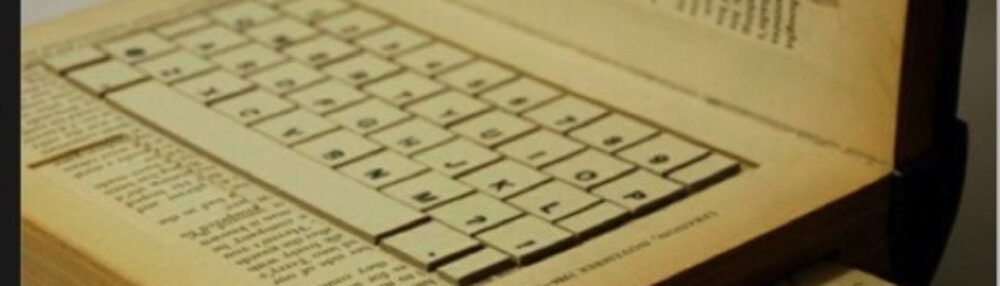
Physical Biography:


Interpretation of Most Intriguing Feature:
After spending two hours examining the physicality of Pliny The Elder’s Naturalis Historia, the most mysterious feature were the final two pages completely stuck together, with unintelligible penmanship bleeding through. It would seem that this handwritten note was sealed away from readers on purpose by a former owner of this copy as a mode of censorship. By sealing this secrecy between the two pages, future readers are forced to grapple with pushing past the words on the page, and to appreciate the book as a concept rather than the book as content. While it is unclear the true reason why this intriguing attribute exists, the reason why it is important is because these final pages contradict the book itself; it is an encyclopedia of natural history, yet neglects to inform readers of everything within its pages. This written detail is an inaccessible part of the book’s history. Whoever owned this book before San Diego State became its home knew the power of words on a page, and knew how to leave readers hanging by a thread.
Upon my final few minutes with Naturalis Historia, an incunable book, I discovered truly the most intriguing aspect, which was barely noticeable writing bleeding through a concealed page. When I noticed this hidden handwritten note, I immediately knew that this was what I wanted to talk about. I want to talk about something I can’t even see. In fact, it is so difficult to recognize that I was stuck trying to interpret Jacobus Goellius’ signature literally the page directly next to it without even assuming more penmanship would appear. Typically, when I see a signature, I generalize that it is the end of something, whether it be a legal document or a letter. In this case, when I saw “Jacob Goellius” impressively signed at the end of the hand-pressed text, I figured it was the conclusion to the book as a whole.
However, one has to remember everyone involved in the bookmaking process in fifteenth century Venice. At this particular print shop, the printer, Rainald di Nouimagius Alamanni, had this edition decreed during the reign of Giovanni Mocenigo. Just in his name alone, we can see the importance of the birthplace of bookmaking skills in relation to Germany, and how Italians used “Alamanni” to identify German descent and craftsmen. In one way or another, this title demonstrates a level of respect for the people who engage with books, making scientific knowledge and power more accessible to others. Similarly, by mentioning whose reign Nouimagius printed this book under, there is a political message identifying the overarching power of the government at this time. It is clear that politicians were well-respected and elevated on the hierarchy of power, dominating even printing presses distributing books.
That is why when we think of book history, we must consider the sociology of the people during the time as well. There are lines of overlap with people in power and people not in power, building tensions between the relations made from one single book. For example, Aldus Manutius’ career with the Aldine Press overlapped with Nouimagius’ which creates an intricate network of people who collaborate and dedicate their lives toward this industry. While I am unaware of Nouimagius and Manutius’ relationship, I know that when I try to research more about Nouimagius, Manutius’ name appears instead. Even though Nouimagius contributed greatly to book history, gifting San Diego State Pliny the Elder’s incunable book, it is nearly impossible to find detailed information on him without learning about Manutius simultaneously. This goes to show the power structures of successful people five centuries ago still remain today based on how much one made an impact on a particular industry. Among hundreds of other printing houses during their time, Manutius is the most popular, not Nouimagius.
Given that we know of how Noumagius could’ve worked with other craftsmen on Pliny the Elder’s reimagined Natural History, one of these craftsmen might’ve left this handwritten message in the back of the book. However, if it were either Noumagius himself or other craftsmen, I doubt they were writing some personal letter or coded note to a future reader. Rather, I am leaning more toward the argument that their note would be more closely related to the general printing, possibly regarding page numbers and orientation. Similar to how there are signatures indicating the end of specific sections—like “d i”—to aid the bookbinding process, I would imagine this message was a possible guide for Nouimagius and his team. Therefore, it would make sense for them to seal these papers together since they might not deem this writing necessary for scholars of content. Of course, when they are printing the books, they do not consider how people like me, five hundred years later, would try to uncover what this writing might mean to the history of this book.
The main indicator as to why I believe it was neither Nouimagius nor others is the page just before with Jacobus Goellius’ notable signature. With such a flamboyant and attractive name, one might not stop to consider the censorship just above his name, covering another person’s signature or handwriting. With a censored signature above and Goellius below, it leads to consideration that Jacobus Goellius might’ve covered this person’s name because they were a previous owner. Without being able to read the writing below this covering, it is nearly impossible to discern if it is even the name of a previous owner. And, even if it was a name, retrieving who might’ve had ownership of this text is equally, if not more, difficult to find. After researching who and when Jacobus Goellius is, on Pantheon.world, he made notable contributions to Mathematics and Latin and Arabic studies in the early to mid-seventeenth century, more than one hundred years after this book was printed. It is possible he studied aspects of this book pertaining to these specializations, but that does not explain why he would write his name in the book, or decide to use Naturalis Historia for that matter. Considering its size and decorative elements, it is most likely that, at the time of its printing and for several years after, Naturalis Historia belonged to a church or university in Venice, Italy. Therefore, only people with power and scholars of these institutions had access to such knowledge since public libraries and portable books were yet to become popularized.
A more important question, therefore, might be: why does Jacobus Goellius, a man from the Netherlands, care about what is in a book in Venice? Thomas Erpenius was Goellius’ teacher at Leiden University, who instructed him in West Asian language studies including Arabic, Persian, and Turkish. During Erpenius’ career, he traveled to myriad places, finding time to stop in Venice, Italy to perfect certain languages. It was there that Erpenius might have made contact with Pliny’s Naturalis Historia printed in 1483. I have tried many times over to find where the copy of this book truly resided, but have failed to find its exact and original home. Even though Erpenius studied at Venice of Jewish Instruction, there is no written record that Nouimagius’ 1483 print was held there. In spite of this, I still consider it reasonable to hypothesize that Erpenius encountered the text here or, quite possibly, became an owner of it. During the years between Nouimagius’ printed copy of Pliny the Elder’s manuscript and Erpenius’ visit to Venice, personally owned books were made popular by the Aldine Press. Somewhere lost in history, this text could’ve been owned by more individuals besides the obvious Jacobus Goellius. Since Erpenius was succeeded by Goellius as the chair of Arabic and Hebrew studies at Leiden University, Erpenius could have passed Naturalis Historia down to Goellius, thus reasoning why his name is signed in this copy. Then, we could conclude that the name or writing covered above Goellius’ signature was Erpenius.
If Goellius was willing to cover his predecessor’s signature, it would not be unreasonable to consider the fact that he might also censor writing in the back of the book. Perhaps he didn’t have any malintentions, but it would seem this act was performed purposefully. From my observations, these pages were nearly seamlessly adhered together, making it close to impossible for this to be any accident. Once again, if Goellius were to have sealed these pages together, it was most likely under the impression that whatever was written on these pages was unimportant to other scholars. Maybe he was even concealing personal details or notes Erpenius might’ve left before he died at just forty-years-old. Whether he was hiding secretive notes or censoring unnecessary annotations, Goellius understood these words would change the book’s history. Whoever wrote in this text, left their mark, no matter how hard Goellius tried to cover it.
After all of this research on Pliny the Elder’s Naturalis Historia printed in 1483 by Nouimagius, we have hardly discussed what was actually written in this book. That is because books are not only important by the information they provide but also by the information yet to be discovered. One might stop to consider the importance of every page in a given book glued together with intent, and question not the words on the pages but why they were concealed. We have not learned about the significance Naturalis Historia has in relation to Pliny’s ceaseless research, but in relation to the sociology and censorship of knowledge. When Nouimagius printed Naturalis Historia, the book likely ended up in a funded institution, exclusive to people in power. After many years, more scholars accessed the information in this text until, bit by bit, relevant documentation was made permanently inaccessible. After New York’s Bern Dibner Library Bern Dibner Library (where this book was collected along with other incunables) permanently closed, it traveled to the Huntington Library, Art Collections, and Botanical Gardens in San Marino, California before finally ending up at San Diego State University’s Special Collections. While this particular copy is not held at a public library, you can still access free translations and versions both online and at public institutions. However, since Nouimagius’ incunable version holds more value in its age and history, it is kept in a more conserved location in Special Collections. The life of this Naturalis Historia is just one demonstration of how the power of a particular book doesn’t just pertain to the content but also the overall concept of it. Nouimagius’ book is not worth hundreds of thousands of dollars because of its content, it is more valuable because of its concept; the life it has lived is longer and more historical than anyone observing it. It is an ancient artifact of human sociology, politics, and culture. That is why it doesn’t necessarily matter what writing the pages hide, but why the pages hide this writing in the first place. In order to make an educated guess as to why, it is necessary to dive into almost every aspect of this book’s life to discern something that could otherwise be easily answered if there wasn’t five-hundred years of history to this book.
Learning about Rainald di Nouimagius Alamanni’s printed version of Pliny the Elder’s Naturalis Historia was no easy task. However, as I encountered multiple challenges such as its age and even that it was typed in Latin, I also learned to appreciate this book for its physicality. Because I’ve only known and read mass-produced books, I’ve only ever learned to read the words on the page rather than the pages, materiality, and history. By taking on a challenge to identify historical and sociological relevance of San Diego State’s Naturalis Historia, I gained experience in interdisciplinary research and scholarship. I also gained a new perspective on reading books not in what they contain but how they reveal themselves to their readers.
Works Cited
De Bruijn, J. T. P. “Golius, Jacobus.” Encyclopedia Iranica, Iranica Online Vol. XI, Fasc. 1, p. 96, 3 June 2013. GOLIUS, JACOBUS – Encyclopaedia Iranica
Encyclopedia.com. “Erpenius (van Erpe), Thomas.” Erpenius (van Erpe), Thomas° | Encyclopedia.com
“Erpenius, Thomas.” 1911 Encyclopædia Britannica, Volume 9. 1911 Encyclopædia Britannica/Erpenius, Thomas – Wikisource, the free online library
Mark, Joshua J. “Alemanni.” World History Encyclopedia, 10 September 2014. Alemanni – World History Encyclopedia
Massachusetts Institution of Technology. “The Burndy Library has moved and the Dibner Institute has closed.” Burndy Library | Dibner Institute
Pantheon. “Jacobus Golius.” Jacobus Golius Biography | Pantheon
Smith, Dr. Lorenza. “Aldo Manuzio (Aldus Manutius): inventor of the modern book.” Smarthistory, 28 March 2019. Smarthistory – Aldo Manuzio (Aldus Manutius): inventor of the modern book Smithsonian Institution Libraries Publications, Incunabula Collections. Incunabula From the Dibner Library of the History of Science and Technology
Once I initially commented I clicked the -Notify me when new comments are added- checkbox and now every time a remark is added I get four emails with the identical comment. Is there any method you possibly can remove me from that service? Thanks!
Can I just say what a reduction to search out somebody who really knows what theyre talking about on the internet. You positively know how to carry an issue to gentle and make it important. Extra folks need to read this and perceive this side of the story. I cant imagine youre not more well-liked because you undoubtedly have the gift.
After I initially commented I clicked the -Notify me when new feedback are added- checkbox and now every time a comment is added I get 4 emails with the identical comment. Is there any means you’ll be able to remove me from that service? Thanks!
I’m really enjoying the design and layout of your blog. It’s a very easy on the eyes which makes it much more enjoyable for me to come here and visit more often. Did you hire out a designer to create your theme? Superb work!