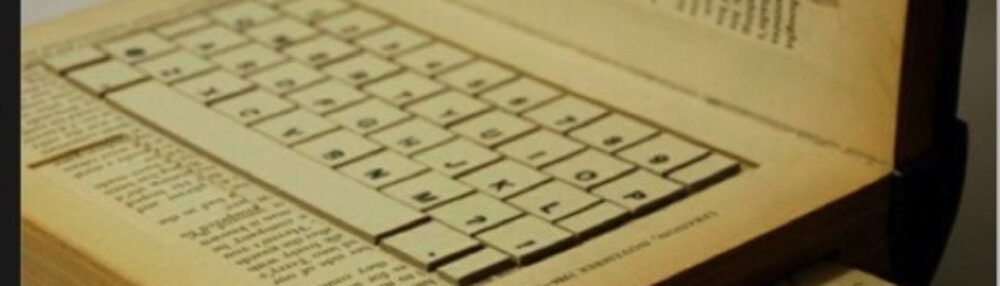
Analyzing Books: Perfect Consumable Objects

The book is a perfect object for consumption. The book as an object has the ability of satisfying each of a person’s five senses, making it an object that is wholly consumable by people and that is useful beyond its capacity to hold and preserve text. Books may take a variety of different shapes and appearances, they are able to be presented in both physical and digital spaces in a number of varying forms, however, within this essay the form of the book which should be considered is that which is bound with a front and back cover with paper pages within. This work will primarily refer to Penguin Publishing Group ‘Classics’ paperback books as an example and definition of a book object. This specific selection of a Penguin book is to be able to utilize what to many be the most commonly known and recognized book form and shape. Since the Penguin Publishing Group is one of the most popular books publishers in the world, the form its books take can be used to exemplify what most people would consider a “book,” to be. Books are perfect objects for consumption. The text featured on and within books is not the only part of the object which is interacted with, the entirety of a book is consumed by each of a person’s five senses when they are within its presence. Readers may easily consume the book through sight, touch, hearing, taste, and olfaction which reflects how the medium of the book, its physical presence and tangibility is as impactful upon the reader as the actual text on its pages. The physicality and the ability of the object to be consumed matters, it creates and initiates the interaction between reader and book to result in the reading of the text within.

The consumption of the book is initiated by one setting their sights on it. The visual exterior aspects of the book are the first impression of the book upon the reader and the first features to be significantly consumed by a reader. The design of a book is not an aspect that is simply passed over by readers, it is a principal feature that a person will fully behold and sample before deciding whether or not to open the book object. The visual form of the book is carefully designed for this consideration and consumption so that it may convince the reader to open the book object. When placed on a shelf among other books a spine will be the first feature of a book to be displayed, it must be attractive and appetizing to the viewer. When designing the spines of its books, Penguin Random House designers focus on creating spines that will, “pop on the shelf,” make one think, “Ooh I want to see more of that,” and that will appeal to the desire of having, “a selection of nicely put together spines from a series.” (Penguin, 2021).

Displaying IMG_5580.jpeg
Displaying IMG_5577.jpeg

The current lettering and design of spines that is common among many publishing houses was influenced and established because of Penguin’s design. As Penguin Archivist Thomas Birkhead describes, when paperback books began to increase in popularity the company’s publishers started to “pay a little more attention,” to the design of the spines, and decided to letter them vertically instead of horizontally (Penguin 2021). Although the spine of the book is at times minimal and simple, it is vital, the spine, providing the title, author’s name, and publishing house is exact, perfectly created for quick consumption by the readers eyes to convince them to pick up the book in mere seconds. The spine is the introductory component of the book, the hors d’oeuvre being the first aspect of the book to be seen by the reader and ingested by the reader that has convinced them to pull the object from the self. 

In a person’s hands the book is viewed by its cover, before being opened the front and back covers are viewed to be consulted and judged by the holder’s eyes, perfectly designed to appeal to them and to convince their opening of the object. The viewing of a book’s covers is part of its consumption, they present a feast for the eyes’ consideration. The covers of books are designed with extreme care and attention, being, as Penguin Random House Children art director Anna Billson describes, collaborative projects between, “editors and the marketing, sales and production teams.” whose goal is to “visually,” bring to life what readers look for on shelves (Penguin, 2021). Book covers are products for readers, they are lively portrayals of the book that are essential for the reader’s attraction and appetite toward any specific book, one of the first features analyzed and looked at. The design of a cover may at times go through as many as twenty meetings, a great amount of consideration and study is taken to produce a perfect cover (Penguin, 2021). Covers are made to be appealing and intriguing to the taste of their specific audience and targeted reader, their design is curated so that said person viewing them will be perfectly pleased and interested by what they have just visually consumed. 

The object and shape of the book, which is perfect to hold and carry, is specially created for a tactile experience, to be enjoyably held, felt, and cradled by the reader for an intimate and satisfying interaction and inherent absorption. The covers of many books are matte, Penguin specifically, made their classics matte in 2007 under art director Jim Stoddart (Penguin 2025). By doing so they now produce softcovers which are matte, smooth, and flexible and provide a comfortable tactile interaction with the book. 

Displaying IMG_5578.jpeg

A book’s ‘smoothness,’ while lacking in glossy ‘slipperiness’ creates a pleasant physical interaction of the book that further promotes its consumption and reading. Soft cover books like Penguin’s which tend to be sized in dimensions of  each cover being “129mm in width and 198mm in height,” featuring a spine of “20mm,” which makes a layout size of  “270mm wide by 198mm tall.” (Penguin, 2025). This size allows for the object to be comfortably held, its softcover being lightweight and flexible as well, for easy transportation, carrying, and even folding if need be, whatever the needs of the consumer be. The book can be used perfectly for a reader’s needs, one can interact with its covers comfortably and do what they wish to affect it. A reader may consume the book through touching it’s form and leaving an imprint upon it, whether and imprint be defined by the leaving of creases touches and finger pringts on it, leaving marks of usage, dog-ear bookmarks or annotations are evidence of easy and accessible consumption of the object.

The physical form of the book is enjoyed by readers, it is a comfortable object that is easily interacted with and consumed. Digital books, presented on computers, tablets, or cellphones present text and information just aas well as physicial books may yet the do not deliver the same comfortable and consumable experience that physical book objects do. The tactile experience of a physical book object presents a full connection with the form, it is not separated by a power button or a screen or a keyboard, it is constantly present and ready for readers ingestion. A book can be opened at any moment, ready to face the reader directly for connection and presentation, the tactile turn of a books cover and page is a continued interaction and consumption of the form throught a readers hands and nerves. Lyngsoe Systems, which creates systems for book sorting within libraries, describes this physical interaction with a book objects as, “a sensory connection that digital formats cannot replicate…a full-bodied act of discovery, offering a reprieve from the distractions of modern technology.” (Lyngsoe Systems). The physicality of the object is significant to the reader’s consumption of the book, however it also matters when considering the later consumption of the text contained within the form. A physical book allows for a greater absorbition of the material within the book as well, as presented by Dr. Naomi S. Baron of the American University in her journal article, “Reading in a Digital Age” (2017), studies find that reading from a screen and scrolling through text instead of from a “stationary text,” like a physical book, “reading comprehension declined.” (Baron, 16). A notable preference to physical books exists among book readers, those who read are more likely to “re-read print,” and engage more with a text if it is provided in physical form. Printed books are favored by readers, many engage in digital books merely because of cost, citing that, “if costs were the same, they would chose to read print rather than onscreen.” (Baron, 18). The physicality of the book matters for the consumption of both the form and content provided by the object. The preference that readers display towards the consumption of text from a physical book, one they can feel and hold, describes that the tactile experience provided to a book’s holder impacts their understanding of the book’s stored information. The books form affects the absorption of the text within, meaning that as the text is read and consumed, so easily and congruently are body and physical aspects of the book ingested as well. 

A portion of a reader’s ingestion of the book is a result of their causing and listening to the books’ sounds. Books are quiet objects, they do not make sounds unless intentionally made to by their user, and the noises they make as a result of interaction are typically only loud enough for the user to hear. These quiet noises made because of and for the reader of the book create a delicate consumption of the object, a special one that is not intervened or intruded on by any other person. A book faces toward its reader, creating a close connection between object and person, as a person reads their eyes scan the text, in a Penguin Classics book this text is small and fills thirty eight rows on a full page.

Displaying IMG_5581.jpeg

The placement and presentation of the text blocks on the page, regardless of their content, engross the reader within the book, causing them to be physically close to the book, fully focused with it. The specific lettering and text placement create a quiet reading of the book, its small font not meant to be read aloud or shown, perfectly provided for the full, undistracted, consumption of the book by one reader. However, thought meant to be read in quiet spaces as quiet activities books still produce sounds which are gentle, soft, and satisfying which readers may even seek to create and consume. The sounds that are made by the turning of the page of the placing of a book, or the scratching of annotations are purposely created by some readers and sought out for enjoyment specifically of the book’s medium. Creators of ASMR (autonomous sensory meridian response) content at times uses books as their medium for sound creation. A simple search on video sharing site, YouTube, provides insight into the desire to consume book sounds.

(Above: 125,709 views for Book ASMR from one YouTube Chanel | Below: 8,553,700 views for Book ASMR from just ten short form videos)

The sound made by books, the turning of it’s pages and the tapping of it’s covers result in millions of views for book sound content, content which does not focus on the reading of the book but only on the auditory interaction with it’s materiality. The sound of books, the sound produced by their usage is consumable, it has even become consumable content which readers might seek out and appreciate. Even when sound is absent from the reading experience that silence is a product of the book and one of it’s consumable aspects as well which appeal to the sense of the book holder and promote the objects usage and appreciation.

To taste an of object a person places it on their tongue to learn its flavor and to begin the consumption of the thing. But typically books are not tasted, not eaten or chewed, they are devoured differently than food. Books are not featured in menus or dinner plates but within a readers specific interaction with them there is at times a literal consumption of the book object. When reading a person may lick their finger to turn a page that is stuck to another. Using the temporary adhesive of their saliva to continue flipping through a book is a form of consuming the book object. As the person returns to their finger to their mouth to lick again they taste the residual flavor of the paper that may be left on their finger and then return their saliva to the page, placing a by-product of their digestion within the book. Saliva is created within the mouth to beginning the digestion of food. As explained by the dental care organization, Palatine Dental Associates, in their article “The Benefits of Saliva,” (2024),  “Saliva plays a key role in the digestive process. It contains enzymes…which begin the breakdown of carbohydrates and fats in the mouth.” Hence, as a finger is brought back past a person lips after touching a page the taste of the page is introduced to the saliva and actually ingest by the body. This practice of flipping pages is not harmful to the reader, so within the mouth the beginning of the digestive process treats this interaction with the book exactly like food. In this sense the book is consumed by the reader by having its pages sampled at every other turn. The book object can be perfectly and harmlessly ingested even in this absentminded way, simply and out of the readers own habit for.

The last sense to which the books consumability appeals to is olfaction. The ability to smell the book is a direct, literal, and an easy consumption of it that can take place by simply being in the object’s presence. Books produce smells which are composed by a variety of their materials which make up their form. The scent of the page, ink, adhesive and cover material of the book all attribute to its scent which is absorbed by a person inhalation. As studied by the National Institute of Health, within an aritcle which describes, “How the nose decodes complex odors,” (2020), the process of smelling an object like the book involves scent coming into the body as  “tiny molecules,” which,  “stimulate specialized nerve cells, called olfactory sensory neurons, high inside the nose.” The processes of olfaction allows the scent of the book to be quickly analyzed and recognized by brain and therefore to a degree consumed by the body. Within his 2013 article for the Smithsonian Magazine, science writer Colin Shultz describes that the smell produced is caused as, “the chemical compounds used—the glue, the paper, the ink–begin to break down.” which release “volatile compounds,” that feature a “hint of vanilla, [since] Lignin, which is present in all wood-based paper, is closely related to vanillin.” The book object is created with wood-based paper which smells pleasant, the presence of this smell is evidence for the perfect design as an object that can be consumed. One can consume a part of the book simply by taking a whiff of it, of its good scent. This scent of the book is not subconsciously received, it is an active part of the book reading and consmeing experience, so much so that it has even been capatlized on separate from the book object. The smell of a book is ingested by every reader, and even sought out by some to be constantly duped when away from books. A desire for the scent of books, and therefore a desire for the consumption of books is obvious through the commercialization and capitalization of the smell of books into aroma objects like candles, scents, and fragrances.Entire websites exist dedicated to the sale of books scented objects. Sites like, Smells Like Books, feature signature products of book scented colognes and lotions for, “book lovers who want to carry a little piece of fiction with them – wherever they go.” and Frostbeard Studios who sell book scented candles which are indented to smell like specific books or even an Oxford Library. A search on online retailer Amazon’s website for “book scent,” even brings up over 2,000 search results of items that smell like books. The scent of books is ingested with every instance that the book is held and opened. The smell so satisfying that there is a market for it’s purchase, the smell of the object is a perfect way to consume the book, even when not actively reading from it one will be reminded of its form and then its content.

Book are perfect objects that can be fully consumed by a person. A book can fulfill each of a persons five sense allowing for a full absorption of the book object. Not only is the text featured within a book important to the reader, but the book’s medium, an entirely consumable bound codex, is relevant and impactful upon them as well. The book is able to be consumed by appealing to a persons visual, auditory, tactile, gustatory and olfactory senses, this ability of the physical object to be consumed increases it’s success as an information storage device, it makes readers more likely to engage with the books form and want to access the information within it. The opportunity of a book object to be consumed by a person creates greater opportunity for someone who is attracted by the form of the book to then choose to enter into the literary world.  

“Amazon.Com Book Scent.” Amazon, www.amazon.com/s?k=book+scent&crid=VCCTN3VNC4JP&sprefix=book+scent%2Caps%2C397&ref=nb_sb_noss_1. Accessed 14 Dec. 2025. 

Baron, Naomi S. “Reading in a Digital Age.” The Phi Delta Kappan, vol. 99, no. 2, 2017,  pp. 15–20. JSTOR, http://www.jstor.org/stable/26388266. Accessed 14 Dec. 2025.

“Book Lovers’ Fine Fragrance.” Smells Like Books,  smellslikebooks.com/collections/book-lovers-fine-fragrance. Accessed 14 Dec. 2025. 

“Book Lovers’ Soy Candles.” Frostbeard Studio, www.frostbeardstudio.com/collections/permanent. Accessed 14 Dec. 2025. 

“Designing Penguin Modern Classics.” Penguin Books UK, Penguin Random House, 22  Oct. 2025, www.penguin.co.uk/discover/articles/penguin-modern-classics-design. Accessed 14 Dec. 2025. 

“How Book Covers Are Designed.” Penguin Books UK, Penguin Random House, 14 Dec. 2021, www.penguin.co.uk/about/company-articles/how-book-covers-are-designed. Accessed 12 Dec. 2025. 

“How the Nose Decodes Complex Odors.” National Institutes of Health, U.S.  Department of Health and Human Services, 12 May 2020, www.nih.gov/news-events/nih-research-matters/how-nose-decodes-complex-odors. Accessed 14 Dec. 2025. 

Lavender, Sarah. “Book ASMR | Sarah Lavender ASMR.” YouTube, 27 Jan. 2025, youtube.com/playlist?list=PLymIhVfp2ZPwnP24koZ_OGd5pk879JisE&si=pIfLziBsvmHKLVwH. Accessed 14 Dec. 2025. 

Musgrave, Amy, et al. “Designers on What Makes The Perfect Book Spine.” Penguin  Books UK, Penguin Random House, 17 Feb. 2021, www.penguin.co.uk/discover/articles/book-spine-design-cover-designers-interviews. Accessed 12 Dec. 2025. 

Schultz, Colin. “That ‘Old Book Smell’ Is a Mix of Grass and Vanilla.” Smithsonian Magazine, The Smithsonian, 18 June 2013, www.smithsonianmag.com/smart-news/that-old-book-smell-is-a-mix-of-grass-and-vanilla-710038/. Accessed 14 Dec. 2025. 

“Template Jargon Buster.” Penguin Books UK | Official Site, Penguin Random House, 15 Oct. 2025, www.penguin.co.uk/about/work-with-us/cover-design-award/template-jargon-buster. Accessed 14 Dec. 2025. 

“The Benefits of Saliva: An Essential Fluid for Health.” Palatine Dental Associates, 17 July 2024, www.palatinedentalassociates.com/the-benefits-of-saliva-an-essential-fluid-for-health/. Accessed 14 Dec. 2025. 

“The Enduring Love for Physical Books and the Importance of Reading .” Lyngsoe Systems, Lyngsoe Systems Library Solutions, lyngsoesystems.com/library/knowledge-hub/trends/the-enduring-love-for-physical-books. Accessed 14 Dec. 2025. 

“YouTube ‘Book Tapping Asmr.’” YouTube, www.youtube.com/results?search_query=book%2Btapping%2Basmr. Accessed 14 Dec. 2025. 

Universal Symbolisidentities

What is interesting about books is that they show how few people understand the true power of the human imagination. The concept of a passport was established over three thousand years ago as a means of permitting Ancient Egyptian citizens to leave port. Since its birth, the passport has been a document that symbolizes how power structures take shape as something as simple as a booklet—a mere artifact of our imagination. In contemporary societies, passports are necessary to identify citizens who travel beyond the man-made borders of foreign countries. This official government booklet can be considered one of the furthest ideas of art, yet it exemplifies how easy it is for people to define one’s imagination of identity, nationality, rights, and restrictions. As one example, the United States passport is a booklet that serves as a symbol of great power and freedom, giving foreign immunity and national protection to its holders. Like any other book, it has a history of social, political, and economic affairs and, without human influence, would otherwise cease to exist. However, this booklet has also served as a symbol of restriction and control, limiting who has access to foreign travel and which countries one may visit. 

When reading about artist books and how they serve to deconstruct various power structures in society, the idea to create an artistic and avant garde passport came to mind. Taking inspiration from Johanna Drucker’s explanation of artist books as experimental means of discussing art and politics, I wanted to highlight the creativity passports behold in concept and make concrete in content. Dr. Jessica Pressman’s Bookishness: Loving Books in a Digital Age, which orients readers into the mindset of how books represent and produce identities, complements an analysis of passport booklets as identity documents that create power imbalances. Having a passport in any country comes with its privileges as well as disadvantages, which is what makes this a book worthy of close reading and re-interpretation through an artistic lens.

For thousands of years, versions of passports have been used in civilizations across the world. They took many forms including tablets, letters and identity papers. According to Dave Roos, “the world’s oldest passport is part of the Amarna tablets dating to the 14th century B.C.” issued by King Tushratta of the Mitanni Empire. Many years later, the Roman Empire used tractoria which were issued by the emperor, granting the traveler assistance from the government, not unlike today. In 1215, the Magna Carta “specified that anyone (except criminals) could leave [England] freely,” until 1540 when the Crown began issuing passports once again. When travel to the Americas soared, France and England used identity documents to describe the holders. However, “after Great Britain executed a German spy who had used a British passport while engaged in wartime espionage in 1914, US Secretary of State William Jennings Bryan ordered that all American passports bear photographs of their bearers” (Neumann). In many nations, the wars of the twentieth century—especially, the First World War—made passports a requirement for foreign travel, “in an attempt to curtail the operation of enemy spies” (Freedom: A brief history of the passport). In a different manner, the Russian Civil War sparked the use of Nansen passports that were meant to assist Russian and Armenian refugees. By 1926, Russian and Armenian refugees who could “afford five gold francs” were given a renewable and “valid form of identity,” which could be used to travel beyond borders. That same year, the United States established a standard design, described as “a stiff, dark red cover enclosing a booklet” (Neumann). It was not until 1976 that the cover was a dark blue to celebrate the United States bicentennial year (Roos). Also in 1976, “the Egyptian authorities issued a modern Egyptian passport to Pharaoh Ramses II the Great, the third ruler of the 19th Dynasty,” due to a necessary procedure only available in France to prevent the risk of fungus. The document contains an image of the pharaoh with an unknown date and place of birth. The modern passport looks much like the ones established in the late twentieth century, containing components that both define itself and the bearer.

While each nation has a different passport history, the documents themselves contain customary components that recognize the bearer’s identity as well as freedoms and restrictions. Passports are updated regularly to improve efficiency and effectiveness of the document itself. I’ve already mentioned how the U.S. passport took the form of a booklet in 1926, but it is worth considering what this book contained. Rather than what today’s passports look like, this booklet opened to a formal letter written from the Department of State, along with signatures and descriptions of the holder. Although these attributes prevail in today’s booklets in most countries across the world, there have been new incorporations to strengthen the passport’s potential. The cover of a passport has a gold or silver embossed design with the title of the document (Passport), national symbol, and name of the country. The inside covers address legal and governmental information on rights, regulations, restrictions, and use of a passport document. Incorrectly following guidelines and laws of the country issuing a passport results in serious consequences, which will be discussed later on. A typical passport identity page has the holder’s full name, date and place of birth, as well as the country that issued the document. Modern passports have photos of the bearer to decrease identity theft and wartime espionage. Finally, the bearer’s signature confirms their identity and status in the nation where they received the document. The United States’ Next Generation passport issued since 2021 has improved security to protect the individual’s identity and mitigate counterfeit. Some key components include a “laser engraved black and white photo image […] optically variable feature […] new perforated alphanumeric passport book number throughout [and] multi-layered plastic data page.” Finally, the last few pages are dedicated to travel stamps that identify the date the individual entered and left the named foreign country. Having a passport is crucial for foreign travel as it represents a person’s identity and the country to which they belong. Without a passport, the process of re-entering the country that issued the document is extensive. The freedoms and restrictions of modern passports are what make these books such powerful devices for myriad reasons.

Bearing a passport is a privilege that comes with rights and regulations in regard to the country that issued the document. Perhaps it is easiest to first discuss the freedoms associated with obtaining a passport. Although legalities have changed over the course of several millenia, passports allow citizens to legally travel between different countries. Passports are official identity documents, so they may be used for any form of identity verification. Thus, when having a passport, one is free to travel to specific countries the document and country allows. In addition to this freedom, a traveler has certain foreign immunities. One of the oldest forms of travel protection dates back to “Ancient Greek and Roman governments [which] accorded special status to envoys, and the basic concept has evolved and endured until the present.” Such immunities have been granted to most passport bearers, demonstrating the power of the nation granting them as well as the importance of the individual. The value of a person feeds into their individual identity, which will be discussed further on, and influences certain beliefs that might be fed by lack of education on their rights. With that being said, countries like the United States use their global powers to protect its citizens while abroad. If one were to be imprisoned, it is within the President’s right to demand explanation and determine if the imprisonment is unreasonable. From then on, “the President shall forthwith demand the release of such citizen” by any means within law. Similar processes are conducted when citizens are wrongfully detained or taken hostage in foreign nations, resulting in the safe release of U.S. citizens. Having a passport first enables citizens to travel abroad but also acts as an official government document that verifies the identity of a national. This analysis of passports alone would lead one to believe this book would be one of the most powerful in the world with extensive benefits and protections, but that is not the case. This booklet is a symbol of power as well as the power structures that perpetuate marginalization and capitalization of human lives.

One important question is, who even has the power to decide who receives a passport? Since 1856, it has been the Department of State’s “sole authority to issue passports” to American citizens. Each country has a specific department—whether it be the ICA in Singapore, the Ministry of Foreign Affairs in China, or DCIC in Uganda—that controls who has access to foreign travel. The history of passports proves that this booklet has been used “as much to restrict the movement of [a country’s] citizens as to police who can enter.” Many nations have abused their powers to restrict foreign and domestic travel of not only foreigners but their own citizens. One reason why governments would want to restrict their own citizens from foreign travel is when a foreign nation’s economy prospers and ideas such as “The American Dream” appeal to those struggling in their own country. Certain countries might not provide as much assistance to professionals of a certain field, enticing citizens to emigrate to where their expertise can thrive. Some countries have or had “restrictions on their people leaving the country” to prevent citizens from moving, taking valuable information and skillsets to other countries. It is not just an issue for those without passports but also those with one since they understand it as an object that symbolizes a version of freedom. Passports are not booklets perceived to cause harm with government control or restriction. Rather, they have a reputation of the government putting power into the hands of its citizens. This power and freedom to travel abroad is not given to just anyone either, it is a privilege to be earned. If one does not meet the requisite criteria to be deemed worthy of this government book, they are not granted freedom or protection in foreign travel. 

The people with the privilege to travel beyond national borders have changed throughout history. Similar to how the form of a passport has not remained stagnant, the people with the right to transcend invisible borders have varied. At least in the United States, “before World War I, only single women in the United States could apply for their own passports” since married women ‘belonged’ to their husbands. The same went for children who, rather than having their own passport, their identity and ability to travel was determined by their father’s status.  The United States is not the only country that has had restrictions on women and children. In fact, countries in North Africa and West Asia still restrict women from traveling long distances, even within their own country, without a male chaperone. The control of women’s freedom of movement with the use of government policies and documents in many countries demonstrates the prevalent sexism of patriarchal societies. However, sexism is not the only issue. Racism has also been a factor in determining a person’s freedom to travel. Even African Americans, with natural-born citizenship, were denied the right to passports. Before the American Civil War, “Frederick Douglass, the famed abolitionist, was refused a U.S. passport in 1859” as a demonstration of the persistent racism (Roos). Despite reformation programs working to build foundations for former slaves, African Americans were at a severe disadvantage in the social and political discourse. By not having a say in decisions for many years, their ability to partake in political decisions and gain human rights evolved slowly. The lack of autonomy in marginalized groups induced by patriarchal societies is present in passport history. The booklet perpetuates ownership of other beings and ownership of belief systems and values. With a passport comes its history and power, which is traditionally only seen as a form of freedom, but it is much more than that. 

The freedoms and restrictions of a person are to suggest their identity. Even though a passport has a page outlining the descriptions of the bearer as their physical identity, its implications also outline the person’s conceptual identity. A similar idea to conceptual identity through passports is bookishness. Dr. Jessica Pressman, in her Bookishness: Loving Books in a Digital Age, expands the topic of developing a relationship with books through a person’s identification with them. She details the definition of each part of this term, discovering that the “’- ishness’ is about identification, even nationalism. It is about subject formation through relationality, about locating and identifying a community of subjects in physical and spatial contexts” (10). Like a work of literature or a digital device, humans connect themselves to bookish objects to create a sense of identity. The exact same process occurs with passports; albeit, the process is more closely tied to the implications of the booklet. A person’s connection with a passport varies depending on the power it holds, similar to how someone appreciates the physical over the digital. A passport from one country holds a different power from the next, just like how a physical book’s presence is more certain than flickers on a screen. For some, a book signifies survival. In Hadas Yaron’s piece, “‘Your Papers or Your Life’: The Significance of Documents in the Life Experiences of African Refugees in Israel,” there is the emphasis that travel documents are sometimes the only way for people to escape carnage. Yaron explains how “the passport can ‘supercede’ the person; be more important and valuable than the human being it represents.” Thus a person’s value to life has less merit than a document permitting them to seek refuge. Not only do passports permit them to leave a particular country or region, but they also “enable and define the refugee’s most basic needs and define their status, legal and social identity in the country.” Every aspect of a person’s survival depends on the legal documents they bear. Every form of conceptual identity is defined by a single booklet. Passports contribute “in building a ‘wall of papers’ against migrants and refugees” (Yaron) who deserve human rights such as the freedom of movement beyond boundaries and basic necessities. Obtaining a passport provides survival for these people, allowing them to emigrate to safer countries that value them as human beings. However, the only reason they are not already valued for their sole humanness is because of the construct of passports. 

People place their faith in the strength of a passport as a travel and identifying document, especially from developed nations. Because certain passports, like the ones issued by the United States, are difficult to obtain and have many limitations, it implies they hold more power. The Legal Information Institute on “22 U.S. Code § 212 – Persons entitled to passport” specifies that “No passport shall be granted or issued to or verified for any other persons than citizens of the United States,” which limits this booklet to around 350 million people, only a rough 4.5% of the world’s population. With such limited access, it might appear that the United States passport would be the most valuable in the world, especially given how many immunities the embassy provides. Nonetheless, judging a passport on its accessibility and immunities is not how the Official Passport Index Ranking determines the power of a nation’s international travel document. The Henley Passport Index assesses a passport’s strength by how many countries the bearer can visit with it. For instance, Singapore is the highest ranking country since their passport has valid travel to 193 countries without a visa. That is every country not including Palestine and Vatican City. South Korea is next with 190 countries and Japan with 189. The United States is ranked 11th, permitting citizens to travel to 180 countries without a visa. This official ranking reveals the values of such a book based on the freedom of travel. In other words, the more powerful a passport, the more deconstructed borders become for travelers. 

While it seems that a passport is far from creative, it is in fact a work of creativity to convince people to believe in absurd human constructs like borders and a book that determines who can and cannot cross them. The passport in essence is a rule book, specified to one particular bearer. Unlike most modern books, the passport booklet is not printed for commodification purposes. Therefore, there is rarely a case of having two of the same passport. A person may have two valid passports at one time but neither one will be exactly alike considering how often security measures are updated. With that being said, these booklets are set apart from the majority of books printed since industrialization. Bigger industries create bigger audiences create more money with supply and demand. Upon no coincidence, just when passports became requisite travel documents in certain countries, modernists were on the rise with twentieth century art movements. Many artists across the world were pushing against capitalism, creating revolutions and change in political climates, with art alone. One way to combat the commodification of print was to create one-of-a-kind artist books. In her Century for Artist Books, Johanna Drucker understands that the more people attempt to define artist books, the more questions arise. She says the easy definition is to say the artist book “is created as an original work of art, rather than a reproduction of a preexisting work [or, that it] integrates the formal means of its realization and production with its thematic or aesthetic issues” (Drucker 2). But artist books, like passports, do much more than what they’re easily defined as. Along with artist books, post-war art movements “mainstream artworld concern with multiculturalism and identity politics” (Drucker 8). The point of artist books was for creation of order and disorder, and to play with the entanglement of ownership. Is it the person who owns a book or does the book own a person? I found this question interesting in relation to passports. Although we think of people ‘bearing’ or ‘holding’ passports, it is uncommon to consider how the passport ‘holds’ us. With every law, regulation, restriction, freedom, immunity, and identity in passports, how does any of this give control to the bearer? The answer is that the control the bearer has lies in the cumulative power of the passport as it becomes a relationship built in capitalism. Since books, including passports, are a symbol and mechanism of power, destruction, empiricism, and genocide, I wanted to strip away the control a passport has over its bearer.

To combat the power structures, I chose to make a replica passport, not much different from the United States passport, that gives all the power to its bearer. This is paradoxical, however, which is what made this project difficult to accomplish. My goal was to create a passport that focused more on the universality of humankind, rather than the individuality. With the research I have done, it appears that the more we individualize people, the more we dehumanize them. Books have been the main source of dehumanizing people when objects like passports hold more value than a human. This booklet is meant to symbolize how every person has similar attributes that constitute them as a human being, and therefore deserve every natural born right, no matter where they are from, when they were born, and what they look like. 

The creative process of building this booklet introduced me to the intricacies of printing presses before industrialization. The first step I took was to use Adobe Illustrator to design the Vitruvian man in a simple geographic grid globe design. I believe this design encapsulates the idea of universal humanity. This design was then transferred to the Design Space platform for Cricut, where I also used a similar passport font to write “UNIVERSAL SYMBOLISIDENTITY,” reflected backwards. After understanding the etymology of the word “passport,” I discovered that the word comes entirely from a combination of the French “passer” (to pass) and “port” (dock). The best way for me to transform this word was to combine the French words “symboliser” (to symbolize) and “identité” (identity), but modernized into “symbolisidentity.” With this design, I used a Cricut machine to cut the outline onto gold vinyl which was heat-pressed onto the navy leather I used for the cover of the booklet. The inside pages consist of relevant quotes, an identity page, and stamp pages. On the inside cover page, there is a brief explanation of the booklet and how it works, requesting: “Treat this document like a body of flesh or textile, one bound and filled by organs of history and life. The book has a heartbeat, and it’s your own.” With this quote, I wanted to refer to how similar humans are to their creations. In tiny booklets, we represent ourselves in many ways demanding our connectedness as humans to books. A quote that traditionally outlines the purpose of a passport is how I wished to convey the idea of bookishness in my artist passport. Beneath this request is a replacement of the information that describes the protections, freedoms, and limitations of a traditional passport. Instead, I have adjusted the topics of these points to fit within bestowing freedom to the bearer. For example, there is no limit to the protections provided to a single individual as every individual holds the same value, despite the booklet they have. Another point relates to taxation of an individual, suggesting the exploitative nature of the government remains separate from the human body. 

The next page contains the symbol of the Vitruvian man, who represents the universality of mankind. The Vitruvian man, sketched by Leonardo Da Vinci, proves that all humans fit into a mathematical framework, creating unity between mankind and nature. Above the sketch is a quote from Mahatma Gandhi, and below is the framework for the Universal Simbolisidentities that acknowledges a separation between humans and laws. Although it is faint, the background of this page is Pablo Picasso’s Guernica, a 1937 anti-war painting depicting the suffering of man and animals alike during World War II. As one of the renowned artists of the twentieth century, Picasso used his craft to make political statements against power regimes, and restore empathy among readers of all genres. His art suggests that out of all the media we consume, reading each other is something we must strive for. Following this introduction is the identity page, which can pertain to anyone in particular. The image is just a mirror reflection to register the particular reader. However, as they read more than what the mirror tells them, they see how, within one another, is the same person—with a brain, native to our mothers, born during the Anthropocene, of the “humanus” race, residing on Earth. This document never expires because neither does any person’s human identity. In fact, the page to the right pulls a quote from Augustus William Hare and Julius Charles Hare, proclaiming that “the body has its rights; and, it will have them: they cannot be trampled on without peril.” By abiding by the rights of our own bodies, we respect ourselves and all creatures. Beyond this page are the stamp/visa pages that lead to a final quote by Johannes Gutenberg that highlights the rebirth of faith and knowledge through the production of books. As the founder of the printing press, Gutenberg understands the power of books as the spread of knowledge, to rid people of ignorance. Yet, it is astonishing to find ourselves nearly six hundred years later, treating humans as less than objects.

Passports are one of the many books of great power. Not only are they a symbol of freedom, but they enable freedoms. Needless to say, they come with consequences such as governmental control over the bearer. Passports are books of a unique kind as they are individual and outline the characteristics of its reader rather than itself. The reader does not necessarily seek new knowledge from a passport but seeks the direct power they provide through ownership. The question of ownership feeds into the cyclical relationship of the bearer and the booklet, otherwise considered bookishness. The booklet defines its bearer’s physical identity and contributes to their conceptual identity as well, strengthening that bookish bond. The creativity at play is the ability for these booklets, plain as they might appear, to convince systems and peoples of their fabricated powers. Through my artist book, I wanted to emphasize the irony of the passport and understand more about how art desempowers structure, routine, and government. My artist book, like many others, is a political statement and a call to action. It demands its readers to reconsider the connection we have to material objects and to evaluate just how similar we are to the person next to us. It is an effort to reframe the way we think of one another; it is no longer about what makes us different but what makes us the same.

Final Project: Traces in Clay

Books have never been static objects, even though contemporary mass production steers us to see them as uniform vessels for text rather than dynamic, material objects shaped by the environments they inhabit and interact with. My midterm examination of the 1578 A Nievve Herball, or Historie of Plantes, located at San Diego State Universities Special Collections, revealed how the book’s physical condition holds a narrative just as compelling as its printed words. In fact, a narrative which would be incomplete by only looking at the words. I found the pages of Dodoens’ herbal discolored around the edges and spotted brown, with a trail of holes book worms have left behind. Before the creation of wood-pulp paper, most commonly used today, book makers used rag paper made from linen and cotton fibers. This material is both resilient, able to preserve itself from 1578 to 2025, but also vulnerable to light exposure, oxidation, and humidity. However, I discovered the “damage” to this copy is what made its story unique, transforming it from one of many identical copies into a rare artifact with its own biography. The narrative of a book is more than just the words inside, but can be found in the physical materiality of the container itself. In our contemporary moment, we are easily disconnected from the material history of the book. It has become easy to think of books as static containers of text, rather than organic artifacts. In order for me to truly read A Nievve Herball, or, Historie of Plantes, I had to look beyond the words, and unto the pages that hold them. This prompted me to explore further beyond the page, to go back in time before the existence of the white, thin, paper page itself. Despite the absence of the “page” we know today, reading and writing still flourished, however, the physical form it took remained closely tied to the natural world which interacted with it, making it easier to view as part of a broader, organic ecology. I have extended my original material investigation, a biography of a special collections book, by creating my own cuneiform inspired clay tablet. In doing so, placing the early modern codex into a broader history of book technology that stretches back to its predecessors in ancient Mesopotamia. This creative critical work demonstrates that the physicality of books, whether clay tablets or codex herbals, are organic, ecological artifacts whose meanings emerge through their material affordances and ongoing interactions with human and non-human forces.

Amaranth Borsuk reminds readers in her 2018 book, The Book, that “the story of the book’s changing form is bound up with that of its changing content” and that each book technology, from tablet to codex, offers its own “affordances” that shape how reading and writing occur (Borsuk, 1). When I examined the 1578 herbal, the bookworms’ holes and the browned rag paper revealed centuries of exchange with light, humidity, insects, and human touch. These marks formed their own ecological biography, evidence that the book has always been part of a larger system rather than a static, timeless container. However, these ideas directly echo the earliest history of writing, specifically the clay tablets of ancient Sumer and Mesopotamia, which were inseparable from their environmental origins. Borsuk explains that Sumerians turned to clay because it was “an abundant and renewable material” and because they already possessed “highly developed techniques for sifting and working with clay to create durable and lasting artifacts” (Borsuk, 4). Just like the rag paper of Dodoens’ herbal, clay was never neutral, it was chosen, shaped, and culturally meaningful because of its ecological availability. The clay had to be collected directly from the ground, worked by hand, and inscribed while still wet, making the material origins of writing almost impossible to ignore. Through this process, reading and writing remain closely connected to the environment, resources, and people from which they emerged, leaving far fewer gaps between the final product and the natural world which provided it. 

My clay tablet artwork emerged from this recognition. To create it, I shaped wet clay into a palm sized slab resembling early cuneiform tablets, then impressed the surface with a stylus, a modern rendition of the original stylus carved from a reed. This process mirrors the ancient method described by Borsuk: “a scribe impressed a corner of the reed into the clay at an oblique angle, using combinations of wedge shapes to make characters” (Borsuk, 6). Shaping the tablet required direct physical engagement with the clay material. The wet clay clung to my hands, refusing to be overlooked. Unlike woodpulp paper, which disappears from our touch the moment we turn the page, the clay insisted to be noticed, making its natural origins, and my own role in shaping it, impossible to forget. Using my clay tablet and the cuneiform writing technique, I inscribed letters and symbols inspired by Mesopotamian signs, however, this is not the focal point of my artwork. A reader able to see past the words will find intentional imperfections; impressions of various leaves and sticks, textures of rocks and dirt, cracks and holes, and even finger prints. These marks reinterpret ancient cuneiform tablets and the deterioration in Doden’s herbal, transforming what might be called “damage” into a representation of the ecological relationship between “book” and the environment. In Johanna Drucker’s “The Virtual Codex: From Page Space to E-Space”, she observes that “a book… is not an inert thing that exists in advance of interaction, rather it is produced new by the activity of each reading” (Drucker). My clay tablet materializes this. Its meaning and history does not rely on the text, but on the reader’s ability to interpret its material surface. It must be “read” like the herbal, by reading the marks, textures, and traces. Its history is entangled with the materials and human and non-human forces that created and shaped it. The leaf impressions, the stylus wedges, and the drying cracks each represent different condensed historical moments in it. In both cases of the herbal and my tablet, these imperfections act as inscriptions of time, environment, and exchange. Just as the herbal pages bear witness to centuries of life, the clay tablet contains a condensed record of its own formation and interaction with the natural world. 

This process of creating my critical artwork reveals that books have always been shaped by their physical materials and environments as much as by the text they contain. By moving back in time from the pages of Doden’s herbal to the cuneiform tablet, I came to understand reading and writing as an organic, ecological process with many participants rather than only a textual one. This art project demonstrates that the book has always been alive, evolving through interaction with the natural world. The clay tablet reveals what modern woodpulp paper can allow us to forget, that every book materializes from the natural world and is never finished with interaction or exchange. This project challenges our modern detachment from the materiality of the book, pushing us to see the “book” as part of a larger, organic ecology, as more than a vessel for information. Reading and writing is more than an encounter with text, but with matter, history, and environment; a process that does not start when you open a book, or stop when you put it down.

Works Citied:

Borsuk, Amaranth. The Book. The MIT Press Essential Knowledge Series, 2018. 

“Cuneiform Tablets and Cuneiform Inscribed Other Items.” View Items, Arte Mission, www.artemission.com/viewitems.aspx?CategoryID=91. Accessed 14 Dec. 2025. 

“Cuneiform Tablet: List of Magical Stones.” Achaemenid or Seleucid – Achaemenid or Seleucid – The Metropolitan Museum of Art, The Met Museum, www.metmuseum.org/art/collection/search/321680. Accessed 14 Dec. 2025. 

Drucker, Johanna. “The Virtual Codex from Page Space to E-Space.” Alliance of Digital Humanities Organizations, companions.digitalhumanities.org/DLS/content/9781405148641_chapter_11.html. Accessed 14 Dec. 2003.

The Book as Space – Returning to Familiar Places

The Shadow I Know
By Kaan Alaca

As in awe I look up
Gates of leather in front
Light births a new world
A world of paper and font

Unfamiliar winds
Risk the step and explore?
Or just turn around
Stay where I was before

A sudden sense
A sense so known yet so strange
Warm and welcome I feel
Inner struggle, inner change

One step, two steps,
I start thinking out loud
Three steps, four steps
There’s no turning around

By five my breath stops
Six where I rethink one last
Seven – breathe out
Eight I pick up, walk fast

The first room greets me
Walls of parchment in rise
Ink creates furnishings
Every color, every size

As in awe i roam
A distant shadow i see
Who is this shadow
And does he know me?

Gesturing me to follow
I think twice, but decide
To follow this shadow
Seeming familiar by surprise

My hand he then holds
I feel light, I feel free
I know who the shadow is
He’s the friend that i need

The view from up top
A land of beauty and mind
A room marks our stop
What might I now find

Every step feels well placed
Every sight feels so known
Every sense feels welcoming
As if it was my own

A tap, a step,
Follow who I see
I know who the shadow is
But does he know me?

Halting at a place
Sunken deep at the bottom
I seem to remember
A place long forgotten

While i follow my friend
His shape starts to show
I know who the shadow is
He is someone I know

Soon as we land
Feet connect to the ground
Light sparks up
What have we now found?

The beauty of the past
But while the find I admire
I see my friend disappear
As light gets brighter and brighter

Sadness, grief upon
My friend who now is gone

He seemed to know
It seemed this world was his
I seemed to know
A friend who no more is

He seemed to know
He seemed to care
What this world was about
When to look and where

What all he had learned
I’m glad that he shared
Since I now fully recalled
How for this place I once cared

The memories awoke,
The world hugged me warm welcome
As if I never had left
This realm of quiet freedom

I came back, and I stayed
For my mind had felt free
I know who the shadow was
The shadow was me

Introduction

My poem “The Shadow I Know” explores what it feels like to rediscover reading after years of “forgetting” about it. I show this return by turning the book into a world of rooms, memories and movement. The shadow figure in the poem reflects a part of myself I had forgotten: the version of me who used to love reading and who somehow disappeared over the years. By connecting this journey to Borsuk’s idea that “the book accommodates us, and we accommodate to it” (The Book, p. 198), Mak’s understanding of the page as an interface and Carrión’s description of the book as “a sequence of spaces… a sequence of moments” (p. 148), the poem shows that coming back to reading is more than just picking up a book again. It is a return to a part of myself that felt lost. By the end, when the light grows and the shadow dissolves, the poem expresses the realization that “there is no shadow of the past in a place that exists in the present.”

Essay

There was a time when reading was a constant presence in my life, even if it didn’t follow me everywhere. Next to my bed, however, there was always a growing stack of comics and graphic novels, piling higher and higher over time. Eventually, they moved into a bookshelf of their own. There were books too, but comics were what I truly loved. I read them obsessively and for a long time they were part of my everyday routine. And then, without any clear reason or moment I can point to, I stopped. Completely. For years, I didn’t read at all. No books and not even my beloved comics & graphic novels, nothing. When I finally returned to reading, it didn’t happen through a big decision but through something surprisingly small. A Kindle I bought for a university class. It should have felt odd or unfamiliar, especially because it wasn’t a physical book, but something about the experience clicked instantly. I fell right back into it. It felt almost like the old version of myself had been waiting somewhere, ready to take my hand. Suddenly, I was reading again. Books on my Kindle and comics on my iPad. The form factor had changed. What was once physical had become digital. And suddenly, I had everything I wanted to read available with me, wherever I went.

My poem is basically that process turned into a world you can walk through.

The poem starts with “gates of leather in front,” immediately turning the book into a physical threshold. I always liked how Mak describes this idea, how “the boundaries of the interface are always identical to the edges of the material platform of the page” (p. 3). That line stayed in my head because it made me see the page as an entrance, something we cross. In the poem, the speaker stands right in front of such a boundary and wonders whether to step inside or step back. That hesitation felt true to my own experience. It’s strange to return to something that once felt natural.

Once inside, the poem shifts into a different register. The world becomes spatial: “walls of parchment,” “rooms”, “furnishings” made of ink. This directly reflects Ulises Carrión’s idea that “a book is a sequence of spaces… a sequence of moments” (p. 148). When I wrote the poem, I didn’t think about theory first, but afterwards I noticed that the poem follows this exact rhythm. Moving from room to room, moment to moment. For me, reading again truly felt like that. Entering places I somehow remembered but hadn’t visited in years. Even reading digitally didn’t change that feeling. It still felt like walking back into something.

Borsuk’s description of the book as a body, with “a spine, a head, and even a tail” (p. 77), also helped me understand why the book in my poem behaves almost like a character. In my blogs I wrote about how this comparison made books seem more alive, almost like companions. My poem plays with this idea too. The book-world doesn’t just sit there, it greets the speaker, pulls him forward, opens itself up. That relates well to Borsuk’s line: “The book accommodates us, and we accommodate to it.” (p. 198). When I started reading again, it really felt like the book (or Kindle, in this case) met me halfway, like it was inviting me back.

But the emotional center of the poem isn’t the rooms. It’s the shadow.

The shadow appears in the poem before anything else is fully understood. He feels familiar and unfamiliar at the same time: “Who is this shadow / And does he know me?” When I wrote that, I wanted to capture the strange feeling of returning to a past version of myself. The shadow leads the speaker through the book-world, sometimes ahead, sometimes beside him. That’s exactly how it felt when I suddenly began reading again. Like someone I used to be had returned, but only little by little.

The poem becomes more personal as it continues. The rooms start to feel “well placed,” the sights “known” and memories begin to resurface, just like when I opened some of my old books or (especially) my old comics again and recognized small details I had forgotten. It was comforting and strange at the same time. Borsuk writes about how books carry “residues of reading,” traces of past encounters. I felt that directly. Some memories lived in those pages and stepping back into them felt like being welcomed by something I once loved.

The turning point in the poem is when the light intensifies. The line “I see my friend disappear / As light gets brighter and brighter” is where the metaphor shifts: the shadow, the past self, disappears not because it’s lost but because it has merged with the present. This is where the final insight comes in:

“there is no shadow of the past in a place that exists in the present.”

For me, this means that once reading became part of my life again, the version of myself who used to love reading didn’t feel like a memory anymore. He became present again. Whole again. Not a shadow, but me.

In the end, my poem is about returning. Not just to books, but to a self I had forgotten. Using the ideas of Borsuk, Mak, and Carrión helped me understand the journey in a more concrete way. As movement, as interface, as space, as encounter. Reading is not just reading. It’s stepping into rooms that hold memories. It’s meeting a body that has its own history. It’s crossing a boundary that leads back to oneself.

Final Project – Marginalia, a Historical Witness

Introduction

Throughout the vast majority of cultures in the world societies have taught to read the history of time periods through the content of a book and other various forms of text. Reading history came from the many different ways of text/content which ranged from articles, books, newspaper, and even social media. This, however, is no longer the case since there have been more and more ways to read/record history not only through content, but literal physical forms as well. Marginalia, being one of those forms, exemplify the idea of how a society can view the margins of a book and read the time periods associated with it. Marginalia is a time traveler that lurks underneath our noses every time someone decides to open a book and read the scribbles on the margins. Looking at margins from the famous 1554 Renaissance rhetoric Latin book Rhetoricorvm ad C. Herennivm libri IIII / incerto avctore. Ciceronis … / corrigente Pavlo Manvtio, Aldi filio or also known in English as the, Four Books of Rhetoricians to C. Herennius / by an uncertain author. Cicero’s … / corrected by Paolo Manuzio, son of Aldus can show us the various different histories associated with the book. Understanding margins grants the people access into a hidden inventory of history in how a reader would respond to the book, how academic institutions would react towards marginalia and how important the book was to societies at the time. Looking at it from not a personal perspective but rather analytical is crucial to the process because the assumptions made towards why the marginalia exist in the book cannot be accurately pinpointed/represented correctly.

How the Aldine Press Indirectly Influenced Marginalia

First and foremost, analyzing the format design behind the Latin book’s margins are critical to knowing why they helped shape the books history and how its content are viewed. Aldine Press was the publishing company for these gorgeous sixteenth century books during the Renaissance period and they were responsible for the wide margins in most of their published books. Although it is argued by many scholars of different time periods, most have agreed that Aldine’s innovative decision to include wide margins in their revolutionary Octavio books changed how people interacted with the content itself going forward into the future. “This change in format subsequently shifted reading from an activity that bound one to a lectern or desk, required to hold up the book, into a newly portable pastime that readers could practice anywhere… In Univ’s copy we can see evidence of how the book’s previous readers have engaged with the text, as they have added manuscript marginalia throughout the book”(Univ of Ox). So, not only were they reformatting the design of the book by creating it smaller to fit the hand, but it also allowed for people to engage with the book even more than before. People were now engaging with the book from the comfort of their home, outside of it, at social events and more which further adds on to the list of histories that marginalia can carry with the book. Add this with the wide margins of the text and there’s a whole recipe to have an entire conversation about rhetorics for a good hundred pages.

Marginalia as a Multifunctional Tool

This design in format allowed for marginalia to flourish in many different ways for readers to use. Not only could it be used as an archive for history, but also a way to communicate with various time periods. Annotations, markings, drawings, signs, summaries, text, highlighting, underlining all add multiple layers to what marginalia can be and what it can show. It can show the history of how society changes the way marginalia is used and how it evolved to the needs of a society or institution. It can also show how some societies were potentially silenced if what is shown are white pages. Marginalia not only does this but also allows for readers to act as time travels, interacting with other notes and texts of different people from various time periods. Writing something in today’s book will be considered history in the next twenty years if you look at the margins of that book. Marginalia in itself, is a type of archive and one that should be carefully treaded with because of how powerful it is.

Digital Marginalia’s Importance

While this project is related to the physical marginalia it would be foolish to not briefly touch upon the power of digital marginalia and how it has evolved as well as shaped its own history. Early in the semester of class, there was a discussion and website of digital footnotes and how they exist overtime so long as they were kept alive on a website or server. This is the key difference between physical and digital marginalia which is their preservations are astronomically different in comparison. While the uses of both marginalia are the same, digital marginalia is at a higher risk of being ephemeral since things run on required exterior resources such as online servers, electricity, machines and hardware. Physical marginalia in books have existed for centuries and there is proof by seeing the various different copies of literature that have existed hundreds and hundreds of years ago. While digital media/marginalia are more fragile it can be argued that it is beyond more accessible than physical literature marginalia. Websites will allow for all footnotes, comments, and questions to be shown as a clickable pop-up which is really neat and honestly, revolutionary. This type of feature allows for various different minds from around the world to chime in, create conversations, lead with great questions that make the reader wonder about the content more. Their date and time stamps are even shown on the footnote when viewing them on the website or reading which is not possible at all on a physical book unless you write in the time, and date.

The Renaissance Scholars and Societies View on Marginalia

Furthermore, the margins added by the Aldine Press and other publishers were never explicitly mentioned as a purposeful design, but the assumption can be made that they were inviting the reader to write back to it or rather reflect any knowledge during the sixteenth century. The Renaissance period for example, were actually very fond of marginalia in texts whether it be for storytelling books, academic books, articles, and even health documents. An example of this were Venetian’s death register system in which they would make iconographic images related to the person death in the margins which would then affect how the Venice Health Department would push their agenda of what was a risk and not. “Marginalia were an integral part of Venice’s civic death registers, facilitating the scrutiny of certain causes of death, as well as allowing the Venetian Republic to promote its public health agenda and to monitor demographic change”(Bamji 3). Society saw how the Venice death register was affected by marginalia which then affected how they consumed that information; it is clear that society and higher up officials didn’t denounce the extra commentary on all subject matters which affected how the content was read in general. Another institution that was open to marginalia were academic universities; they would often encourage students to interact with the content of the book so long as the commentary was effective and added more to the conversation rather than make it more confusing.

To continue, a very well-known professor/humanist and close friend of Aldo (creator of the Aldine Press) was Giovanni Battista “Egnazio” who would often add to the margins of many books whether it be corrections, annotations, or even extra information. “His close association with Aldo himself and his scholarly collaborators in editing texts, in correcting, annotating, explicating, indexing, and the like, gained for Egnazio the reputation for industry and learning which Erasmus generously acknowledged”(Ross 539). While Egnazio does not explicitly state that marginalia should be done in every book. He is indirectly sheding light on it by showing all his markings and Erasmus even promotes it which further adds on to the notion that many academic scholars in the sixteenth century welcomed marginalia with open arms. It was a practice that was commonly done in all books even in private books so long as the information was suitable and that it was not randomly made up to interfere with the content. Many scholars of this time period looked at marginalia as an art form and something that should be respected rather than oppressed.

Not only was Egnazio an indirect force for promoting this usage, but so was Italian humanist Niccolò Leonico Tomeo who felt the need to draw a verdant branch next to important passages as well as write short summary next to it. “Eleonora Gamba also attributes this specific drawing to Tomeo, describing it as ‘a wavy leafy twig (or a garland) to signal longer notable passages’ (‘un ramoscello frondoso e ondulato (o ghirlanda) per segnalare i passi notevoli più ampi’)” (Sherman). Tomeo is widely known throughout Venice for his illustrious verdant branch which people recognize who it was immediately upon seeing them. Tomeo has written and drawn marginalia in all his works so much so that even his private printed works of his have his iconic verdant branch on it. While society sees that many scholars, professors, and humanists talk about marginalia they were never against this idea as well as authoritative about it. They viewed it as an intellectual tool that can further enhance the development of conversation for whatever text they were reading.

Close Reading Analysis and Comparison of the Latin book’s Marginalia

Despite scholars using marginalia, this wasn’t always the case for every book created during the Renaissance period. The Latin rhetorical book Four Books of Rhetoricians to C. Herennius / by an uncertain author. Cicero’s … / corrected by Paolo Manuzio, son of Aldus from San Diego State gives the idea that the book may not have been fully tampered with and that it belonged to an authoritative institution or the owner simply did not use it at all. The only thing that is tampered with is the iconic logo of the Aldine Press, which is a dolphin wrapped around an anchor, but the anchor is colored in with a brownish color. When the margins are analyzed though, in this specific copy from San Diego State, it has shown that the margins of the book are practically white blank which can tell the reader an insurmountable number of things. One, the blank pages can signify its history of never being used before in any way shape or form regardless of ownership. If there was no usage of it, it can raise the questions of: Was there a voice of discouragement to not write in it? Did the owners simply ignore it and allowed for it to live a life on their shelves? Was the book never actually studied as much as it was intended for? These are only a few questions that come to mind when analyzing these pages since they look very inviting; it almost feels mesmerizing looking at the blank pages knowing the context of the book. To continue the list of what blank pages can potentially show, it could also show the dark blank history of the book in which things were left unsaid. This only comes to mind after reading about the Shadow Archives book in class and it prompts the idea that history can be left untold which is tragic and sad because someone’s thoughts and ideas were targeted. This would be no different than a draconic figure dictating people to not inscribe in their personal or publicly owned books which is basically showing the dangers of power associated with marginalia and its history.

In addition, when comparing this copy of SDSU’s to other institutions it can be shown that the other copies had actual interactions with various different people. One of the copies that comes from the University of Utah shows that the cover page had markings of some names. Some of them which are “Alexander” on the top of it and another saying “Benedicti de Benesiets” in the middle which allude to the fact that the book had multiple owners who didn’t mind writing their name in it. While the page doesn’t have any more information related to the Latin book, it’s intriguing to see how there is a different copy with names inscribed all over the cover of the page. It goes to show that no matter what time period these books are made, someone is willing to write something down, even something as small as their name.

Offering another perspective, it can be sees that a version of the book from 1579 have markings on it from cover to the first fifteen pages. There are multiple names and letters drawn on the cover of the book with underlines of certain text. Along the text that is underlined are small texts that are either notes, or summaries of the passage they just read. So, by comparing the two copies everyone can see that marginalia is still a prominent concept almost thirty years into the future when comparing the 1554 to the 1579 versions. There is no clear indication whether or not this was a copy used for school or private use. All that is known is that the markings on the book are done by someone or multiple people in which society at that time are still using the same techniques. Nothing else can be said about its markings and when they were done because that would be pointless and adds nothing to the conversation.

Contemporary Marginalia and How it is Viewed Now

Viewing marginalia in today’s time is actually a lot more different than before. Now, more than ever, are books from the early modern period being valued much more than ever before. No longer are people viewing marginalia as a way to devalue a book, but it has found a market meaning that marginalia have found a way to be commodified by current society five-hundred years later. “As part of this critical shift, scribal marks in books have been radically revalued; no longer viewed as defacing prized clean copies, to be politely ignored or washed away, marginalia now increase the value of early modern books at auction and have been subject of a growing body of secondary criticism”(Smith 1). Not only are marginalia being viewed much differently than before, but it has also found a way to make money from auctions. People are now glorifying other people’s notes which is odd considering how a lot of people want to purchase a brand-new book with no markings simply because it is there. Seeing as how the class of books would discuss issues about power, control, and capitalism and how those affects books in general. It begs to question as to how writers in today’s time are now going to write in their books. Will there be an increase in writing since some believe that they’ll be famous enough to sell it for a future generation? What constitutes the marginalia of its worth? It is the author’s notes or the way they wrote their notes.

Upon further investigation, marginalia are still present within current pedagogies of the world and the United States. Most people have come to the conclusion that marginalia add more to the conversation of the book rather than devaluing it. Educators are now giving their two cents as to how marginalia help students focus more and actually learn more about the concept, they are studying which is a huge bonus. “However, in
educational contexts where students are interacting in class with their peers and a teacher, there is a significant potential in developing more comprehensive theoretical and empirical approaches to grasp the role of Visual Marginalia in the teaching/learning process”(Dario, Lund, Tateo 3). Three educators from the same university spoke about the benefits of marginalia and how it actually helps students grow which is something different compared to the Renaissance period. People during the sixteenth century wouldn’t outright tell you to start using marginalia which is very interesting when there is a complete opposite in today’s time. It goes to show you how conventional techniques change over time from people’s opinions and how society values certain mechanics in their socio-cultural era.

Concluding Thoughts

In conclusion, marginalia is a fascinating tool that allows for readers to view the history of a book through its margins and see how that social time period viewed literature and other topics. The margins even though they are used mostly for good purpose, can come with some despicable things like the silence of certain people’s history. It is not necessarily needed to go read-up hundreds of documents to learn the history of something. Sometimes it just takes a deep dive into the white pages of a book that have been scribbled with. Marginalia is very powerful and honestly something that should not be trifled with so easily. It can show us the many different histories through its margins, and it can show us that the margins are an easy segway to manipulate information or to silence someone from sharing their take. Blank pages may refer to various things such as draconic behavior from institutions, to simply being ignored for the sake of being ignored or someone truly held the item as a collectible which is entirely possible. Overall, viewing the history of the Latin book’s margins showed that the Renaissance period did appreciate critical commentary over many different books and that it wasn’t something that was frowned upon from various humanists and scholars. Comparing that to today’s standards of marginalia, one could safely say that it is still being accepted with the slight difference of it becoming a commodified item. Marginalia will forever be one of the worlds most underappreciated tools/lens for history viewing and hopefully, one day, it receives the respect it so rightfully deserves.

Works Cited:

Bamji, Alexandra.Marginalia and Mortality in Early Modern Venice.Renaissance Studies, vol. 33, no. 5, 2019, pp. 808–831. White Rose Research Online Marginalia and mortality in early modern Venice

Dario, Nadia, Kristine Lund, and Luca Tateo.Mapping Visual Marginalia in Educational Contexts: A Model for New Types of Self-Regulation of Learning.Proceedings of the 16th International Conference of the Learning Sciences (ICLS 2022), July 2022, Hiroshima, Japan, pp. 250–257. HAL Archives, https://hal.science/hal-03915350.

Jackson, H. J.Marginalia as Intimate Contact.Library: The Transactions of the Bibliographical Society, vol. 24, no. 3, Sept. 2023, pp. 318–333. Oxford Academic Leonico Tomeo’s Marginalia: Manuscript and Print in Sixteenth-Century Veneto | The Library | Oxford Academic

Sherman, William H.What Did Renaissance Readers Write in Their Books?The Margins of Texts, edited by H. J. Jackson, The Library, vol. 6, no. 2, 1984, pp. 141–178. Venetian Schools and Teachers Fourteenth to Early Sixteenth Century: A Survey and a Study of Giovanni Battista Egnazio on JSTOR

Smith, Rosalind.Marginalia as Texts: Early Modern Marks in the Emmerson Collection at State Library Victoria.Parergon, vol. 41, no. 2, 2024, pp. 133–159. Project MUSE Project MUSE – Marginalia as Texts: Early Modern Marks in the Emmerson Collection at State Library Victoria

University College Oxford.The Aldine Press & Its Printing Innovations.University College Oxford (Univ), 22 Nov. 2023

Wonder Woman and the Power of the Page: An Analysis of Ms. Magazine’s First Cover

“I will fight for those who cannot fight for themselves” (Wonder Woman 37:18). This declaration of promise has echoed across American public consciousness from the birth of the Wonder Woman comics to the character’s resurgence in the 2017 title film. More than a heroic tagline, this statement presents a broader necessity to advocate and intervene in uplifting marginalized groups who have faced historic and cultural exclusion. Books, magazines, and print media are deeply embedded sites of power that are never neutral and impact public consciousness. Who is able to hold space in these mediums and how their message becomes translated after moving through the publishing circuit comes a central force of shaping a society’s cultural awareness and narratives. While historically this power has resided within patriarchal control, Ms. magazine became the first modern magazine publication to hit newsstands in 1972. As the magazine broke through prior power structures to claim editorial authority for women and reimagine journalism as a possibility for feminist leadership, it disrupted male mediation of authorship and circulation and redefined the public perception of the contemporary woman to support the era’s feminist movement. By using the image of Wonder Woman on the inaugural cover of the first woman-ran publication, Ms. magazine heroizes deviations from the traditional male-dominated communications circuit to champion female leaders and narratives. This branding of the cover not only elevates female leadership, but reengineers the magazine as an opportune media for female control that grants active entry into the editorial sphere instead of passive participation. 

Founded in 1972 by Gloria Steinem with pioneering female journalists and editors, Ms. magazine was a revolutionary and daring publication for women’s rights and mass journalism. In an age of restricted women’s rights, limited protections for women, and a dominating culture of domesticity, Ms. launched as a one-shot sample funded by New York Magazine and sold out nationwide in eight days. Prior to Ms., women’s magazines were male-ran and reinforced female subordination as articles supported advertisers’ interests and these works presented as catalogues for women to befit desirability for the male gaze. With the feminist movement finding its legs again for the Second Wave emergence in the 1960s, Ms. stood as a spearhead for independence, as Steinem’s aim with her team was to translate the movement into a magazine accessible to the everyday woman afflicted with such struggles. As the publication’s all women team presented taboo topics like pornography, abortions, and sexual pleasure, “Ms. was the first national magazine to make feminist voices audible, feminist journalism tenable and a feminist worldview available to the public” (Ms.). In understanding the significance of Wonder Woman running into the feminist conversations via the cover, it is crucial to acknowledge this historical significance of Ms. breaking female silences that had been muted or obscured through traditional publishing and prior women’s magazines that did speak the truths of their lives. Whereas many of the founding women of Ms. had prior journalistic expertise, in their roles at male-controlled publications, they recall experiences of being viewed as professionally inept and directed by male editorial authority on how to write on women. Thus, by establishing this new female channel of where women are able to organize and amplify their political voice, they seize greater control of the communications circuit that Darton explains, “runs full cycle. It transmits messages, transforming them en route, as they pass from thought to writing to printed characters and back to thought again” (Darnton 67). As Darnton points to meaning not being fixed and it being both amassed and subject to altering at each stage of production, the creation of Ms. not only resulted in a new magazine, it allowed women to seize control of this cycle for the first time and restructure frameworks of representation. As such, women’s work was not presented with the approval of male authority and it became a continuous loop of female governance, a feat that Wonder Woman represents on behalf of all the female contributors.

With the depiction of Wonder Woman on the first cover, Ms. magazine utilizes a superheroine whose mythology valorizes the liberation of the oppressed and women to represent their founders’ mission of fearlessly asserting female power through the page. Though not the first female superhero, Wonder Woman’s creation in 1941 by psychologist, William Moulton, and artist, Harry G. Peter, for DC Comics was profound for being an independent titular character rather than a male counterpart with her own profound strength and magical capabilities. As Moulton believed in ushering in a “new type of woman” to correct issues he observed in his practice, “He proposed that Wonder Woman, a character sprung from a matriarchal utopia, might serve as an antidote to what he saw as the destructive and domineering practices of male politicians” (Smith). Mirroring the same frustrations, Ms. utilizes the symbolism of this superheroine and her origin stories of female empowerment as an emblem of structural resistance against the communications circuit and larger society that pushed women into secondary or background positions. With this selection of recognizable iconography for the first cover, Wonder Woman communicates the values Ms. and offers a point of entry through the image offering an invitation. This selection was especially crucial for the magazine’s founding as the publication was not yet established and readers may have been unfamiliar with feminist theory as a rising movement of the period. Thus, through the creation of a bridge between popular culture and feminist critique, Ms. utilizes the collective knowledge of Wonder Woman as a communication mechanism for the immediate establishment of women’s narratives, leadership, and power.

Although Wonder Woman’s costuming has been the subject of great debate over whether her limited clothing is truly empowering to women, in the context of Ms. magazine, her dress can be understood as intrinsically tied to American identity, connecting women to ideals of independence and liberation. Modeled after a pin-up girl in her conception, Peter described his collaboration with Moulton as “intended to represent a bold, independent, and strong female character” (De Daux 62). It is worth noting, however, that first iterations of Wonder Woman resulted from two men imagining how female embodiment of these traits appear. Still, the costume with its golden eagle, star-spangled shorts, and patriotic palette works as nationalist motifs that show women as civic participants in America’s founding values of democracy. Through this stance in the feminist struggle being a democratic pursuit instead of a fringe issue, Wonder Woman connects female liberation to being an American endeavor relevant to national identity. In considering how this fashion impacts feminist interpretation of Wonder Woman’s character, American feminist and historian, Jill Lepore, suggests, “Wonder Woman isn’t only an Amazonian princess with badass boots. She’s the missing link in a chain of events that begins with the woman suffrage campaigns of the 1910s” (Marcus 56). On the cover, rather than denying Wonder Woman her small leotard, Ms. acknowledges the dual possibilities of womanhood by combining her identities of a pin-up and suffragette to make her powerful both in her civic role and personal embodiment. Additionally, the depiction of Wonder Woman in Ms. allows her to keep her female figure with breasts but the cartoon line that runs down the center of her chest in the original cartoon to create cleavage is removed. This compromise allows for the preservation of femininity and reduces potential for sexualization by exemplifying beauty in agency and challenging the false dichotomy of appearance affecting capability. As Ms. does not reject popular imagery created by men but reclaims and redefines what femininity looks like from a feminist perspective, they redirect Darnton’s male-defined communications circuit to one of female governance. The cover of a work being a reader’s first entry point into the communications circuit of a work informs how this work should be engaged, thus, Wonder Woman on the cover visually announces female leadership. This representation reorients not only who may participate in the communications circuit, but who can lead it and how these channels can be transformed into spaces of sustained female power.

In continuing from who Wonder Woman is and how she appears as a woman in the context of Ms., it is important to zoom out and consider how she is depicted in the surrounding America that she serves. The scale of her body in this image is giant as she towers above the town and the civilians in the street look microscopic under her magnitude. Her presence as she runs forward is dominating and unable to be dismissed even with the chaos of the surrounding scene. Comic book historian, Tim Hanley interprets this scene:

She was a giant, striding forward, with half of her body in an average American street on the left and the other half in a Vietnam War scene on the right. The image suggested that Wonder Woman could be a force for good in both worlds; in one hand, she rescued a group of buildings with her golden lasso, and with her other hand she swatted a fighter plane out of the sky. (Hanley 172)

Taking in her size and this resulting ability to split-scene between America and the Vietnam War happening at the time of this publication, Wonder Woman reveals how women are present and larger than the expectations placed on them in the sociopolitical spheres they inhabit. This borderless imagery presents how female leadership is capable and relevant on all scales from domestic to global. The military, a male-dominated and often still sexist entity of power, has historically excluded female participation entirely or placed women in roles away from combat and leadership. As Wonder Woman, in this scene, has one hand in saving Americans with her golden lasso of truth and the other swatting a fighter jet out of the sky, she communicates the omnipresence of women and how their labor and efforts impact all areas of life. Additionally, with one foot extended backwards out of the scene and the other coming forward almost off of the page, Wonder Woman reveals how women have presence in the past and will have presence in the future as active agents in progress.

The visual excess of Wonder Woman in size, motion, and reach amidst the surrounding scene of chaos implies the crisis that has ensued from male dominance and reveals how a large female intervention is needed to fix society’s plaguing issues. This intentional forceful and forward movement mirrors that of Ms.’s entry into the male-dominated publishing industry and communications circuit. In this breakthrough, like how Wonder Woman is visible in this context as an active agent of change rather than a passive participant in the domestic, Ms. magazine argues for women as producers of meaning rather than subjects of male narratives. Like in Darnton’s communications circuit where power does not stem from participation but from production and circulation of messages in each stage of the process, Wonder Woman does not ask for entry into this scene, she dominates it and it reshapes around her. Likewise, in its initial creation, Ms. did not ask for inclusion in the preexisting editorial hierarchies, they made their own channels for women to control their messaging and participate in the media without preapproval. As Wonder Woman bounds onto the scene like Ms.’s imposition on newsstands produced and controlled by men, barriers of entry are lowered for women in publishing with female-made opportunities. Female leadership in this format is not supplemental, it is corrective. Carrying the American town in the lasso of truth, the magazine’s honest sharing of all facets of women’s lives results in saving society from one voice that has shown results of crisis rather than stability. This act of rescuing the female voice and through the magazine works to defeat structural violence that results from the distortion and silencing of marginalized voices by extending the presence of female publication practices into the lived public political consciousness.

Observing further the political circumstances of the cover, the release of this issue came at a time when women were organizing to gain political voice such as the National Organization of Women (NOW), New York Radical Women, and the Redstockings had emerged in the late 1960s. Across the top of the cover, in a bold red block reads, “Wonder Woman For President” as a direct call that is unmistakable and can not be misconstrued by interpretations of meaning. This proclamation situates Wonder Woman as a potential national leader, which, in part, was inspired by Shirley Chisholm making history as the first Black woman elected to Congress who was running for the Democratic Party’s presidential nomination at the time of Ms.’s first issue. As the city below has raised a sign calling for “Peace and Justice in ‘72,” the people in the street are not neutral to Wonder Woman’s presence as they raise her arms up to her as if celebrating her heroism. As this ask for peace and justice has not been achieved through the world being male-controlled, the society shows an openness and desire for societal intervention. The timing of this issue’s release also coincides with the Fourth of July, tightening the connection between Wonder Woman’s and American ideals of liberty and justice. With the cover’s imagery revealing a national need for new leadership for the betterment of American society, the imposition of Ms. offers its publication as a way forward and solution to previous issues of marginalization in the traditional communications circuit. Like Wonder Woman crashing into this comic scene, Ms.’s break into the public news cycle caught great media attention, showing the strength of this cover in functioning as symbolic and material advocacy of feminism. Therefore, feminist media and its production not only represents women’s experiences but it alters societal structures and has the capacity to shift political landscapes that fail those marginalized by power.

The appearance of Wonder Woman on the inaugural cover of the Ms. extends far beyond symbolic empowerment and has had lasting implications in public action and female publishing opportunities–a shift that Ms. defined and was the vanguard of. Shortly before the release of this first issue, DC Comics had revoked Wonder Woman’s superpowers which came as a great disappointment for Gloria Steinem who had been a fan of the character since her girlhood and was a prominent leader of the feminist movement at the time of this decision. With choosing Wonder Woman as the magazine’s cover and the issue featuring an essay on the heroine’s history and role to feminism, the magazine did significant work in initiating a lobbying for the restoration of the superheroine’s abilities which would occur a year after the publication’s release in 1973. In the time since the first cover, Ms. has continued to use Wonder Woman on the covers of their anniversary issues to represent female achievement and steady resilience shown by women actively producing, shaping, circulating, and correcting meaning as needed. Such successes of the magazine to accurately represent female narratives and interests and resist dilution speaks to the over fifty years of strength upheld by Ms. and the significance of woman-ran publishing. Through scholarship on feminist periodicals, the impact of works like Ms. can be understood as American Periodicals presents:

Contemporary feminist periodicals are important political and historical documents for much more than the textual traces they leave behind. (1) they examine the political commitments and practical impacts of often low-budget production; (2) they consider the capacity for periodical publishers, contributors, and readers to build and narrate communities both imagined and real; and (3) they integrate frequently forgotten and marginalized texts and narratives into feminist theories and ways that expand current understandings of the past.  (Jordan and Meagher 96)

Despite struggles with maintaining advertisers to contribute to the funding of the magazine and its liberal stances, Ms. has upheld its political commitments to feminism which has had modern-day impacts in publishing and the larger American society to view women as fully formed figures without male intervention. Additionally, while Ms. now has enough longevity that its early issues may be studied as archival models of feminist study and the history of female publishing, the magazine is not merely an archive. Considering how it is “much more than the textual traces they leave behind,” the existence of Ms. and female periodicals effectively perform feminism through halting the erasure of female stories and platforming the voices that tell them as foundational, not supplemental to history. Wonder Woman’s cover appearance enacts this practice both in the scene by centering women as necessary to all areas of society and politics, and off the page in the powerful ability of Ms. to provide entry to women in publishing and maintain Wonder Woman’s relevancy in pop culture. Taking Darnton’s framework of the communications circuit with the impacts outlined by Jordan and Meagher, the female construction of a feminist magazine reveals how meaning does not end with the finished production of a publication, rather it circulates out to readers and integrates into social consciousness. The Wonder Woman cover, in imagery and its story of conception and resulting impact, narrativizes this process of meaning’s mobilization and how magazines actively do the work of feminism more than just describing or reporting it. In seizing control of the publishing process, Ms. presents a pathway forward for feminism and female authorship from gendered oppression to liberation. In heroizing the departure from a traditionally patriarchal communications circuit to champion the female voice and leadership, Ms. magazine positions the magazine as a site of female media control with Wonder Woman representing this forward movement. By transforming this familiar icon on female strength that already preexisted in public consciousness, Ms. asserts that women can not only be subject to sociopolitical discourse, but have the ability to lead it. In reflecting on the magazine when it reached its fifth anniversary of production, Steinem reflected on its founding, “There was no national voice for those of us who had the radical idea that women are people” (Steinem). Speaking of her founding of Ms. due to large gaps in representation, Steinem reveals the urgent and ethical need she found in American media for women’s voices to be acknowledged as fully capable of speaking to women’s issues. Much like Wonder Woman’s promise to “fight for those who cannot fight for themselves,” Ms. carries Steinem’s mission as a commitment to collective structural advocacy when patriarchal entities limit or deny pathways to authorship, visibility, or accessibility. By insisting on a woman’s full humanity and dismantling the guise of marginalizing women’s voices as needed for marketability, Ms. did not place their content in an old circuit; it restructured the circuit to demolish the gatekeepers. As a young woman beginning my pursuits in the editorial industry, the legacy of Ms. to the ability of women to work in publishing makes my entry and work in the magazine space possible. Though the industry is still heavily gatekeep, Ms. has set the groundwork for magazines to be taken seriously as scholarly representations of female leadership and has women’s self-sufficiency to produce and represent their own work. By creating my own female-ran and feminist magazine, I have entered a lineage begun and made possible by Ms. that presents women as heroes of their own voices.

Works Cited 

“About Ms.” Ms. Magazine, Feminist Majority Foundation, https://msmagazine.com/about/

Darnton, Robert. “What Is the History of Books?” Daedalus, vol. 111, no. 3, 1982, pp. 65–83.

De Dauw, E. Hot Pants and Spandex Suits: Gender Representation in American Superhero Comic Books. Rutgers University Press, 2021.

Dear Ms.: A Revolution in Print. Directed by Salima Koroma and Alice Gu, HBO Documentary Films, 2025.

Jordan, Tessa, and Michelle Meagher. “Introduction: Feminist Periodical Studies.” American Periodicals, vol. 28, no. 2, 2018, pp. 93–104. JSTOR, https://www.jstor.org/stable/26528615. 

Marcus, Jaclyn. “Wonder Woman’s Costume as a Site for Feminist Debate.” Imaginations (Edmonton, Alberta), vol. 9, no. 2, 2018, pp. 55–65, https://doi.org/10.17742/IMAGE.FCM.9.2.6.

Smith, Philip. “Wonder Woman for President.” Feminist Media Histories, vol. 4, no. 3, 2018, pp. 227–43, https://doi.org/10.1525/fmh.2018.4.3.227.

Steinem, Gloria. “We Are Not Alone: 50 Years of Ms. Magazine.” Literary Hub, 20 Sept. 2023, https://lithub.com/we-are-not-alone-50-years-of-ms-magazine/Wonder Woman. Directed by Patty Jenkins, Warner Bros. Pictures, 2017.

Final Paper

Kiersten Brown

Professor Pressman 

ECL 596

12/14/25

The importance of design

De Magorum Daemonomania uses its material and visual technologies– its blackletter typeface and authoritative printing style– to convey a false sense of credibility and institutional authority. The book’s typography and format create this false illusion of legal structure, legal scholarship, and legal format. This aspect of legal formatting functions as a tool of persuasion, that is aimed at legal scholars and people with positions of power, in order to prosecute feared witches and demons of the time this was published. The authoritative formatting of this book changes the tone of the text, as well as who was most likely reading this book. In this sense, De Magorum Daemonomania exemplifies how early modern print culture could manufacture cultural belief—and cultural fear—through design. Design is more important than we think, and De Magorum Daemonomania does a good job demonstrating this. These factors affected the interpretation of the book and how those in Early Medieval Europe were reading De Magorum Daemonomania in relation to the current social climate. 

Translated from French into German by Johann Fischart. Both of these people were notable figures of the time, Jobin a notable printer and Fischart a notable translator of texts. The original author was Jean Bodin, who was a French jurist and philosopher as well as a member of the Parlement of Paris. This book has the Roman numerals D. M. LXXXI where the preface is, translating to 1581 and perhaps when the translation was first written or being worked on- so this copy was published in 1594. He was a very influential author of demonology during the late 1500s, which is reflected in the text of De magorum daemonomania, citing many other jurists and philosophers during this time. Jean Bodin was an important political thinker during the 1500s. Although, witchcraft and demonology was an afterthought for him, his main focus being on political economy and sovereignty. This book was still prominent enough to have a translation.  I believe the text functioned as a reference guide for those responsible with dealing and prosecuting the supernatural or demons, within religious or legal fields. Although, I am sure that De Magorum daemonomania shaped cultural fear in one way or the other surrounding demons and witchcraft. The work’s authoritative textual style with blackletter type, systematic and lawful reasoning, and visual style projected the image of credibility: providing justification for prosecuting or fear of demons. Bodin’s status as a jurist in society also definitely influenced who was reading this book and why it was seen as a scholarly source– it was deliberately a rhetorical strategy. 

When reading Borsuk’s The Book, I found her discussion of the book as an interface important when thinking about De Magorum Daemonomania. “It is, essentially, an interface through which we encounter ideas. Its materiality need have no bearing on its content, yet whenever we hold a codex book, we are subconsciously drawing on a history of physical and embodied interaction that has taught us to recognize and manipulate it” (Borsuk, 116). This discussion supports the idea that De Magorum Daemonomania uses its interface as a form of authority that readers take into consideration when reading and interpreting a text. Borsuk’s framing here helps explain how this book’s interface, specifically its physical form and typography, was so successful in creating this false sense of legality. This book’s visual technology of control– authoritative printing style– gave readers a false sense of credibility. Readers did not believe the text was credible just because of its content and argument, but also because of culturally conditioned ideas about what makes a book serious or legitimate. The power of publication and physical presence within this text is what made the text seem reliable and credible as a legal document and point of reference. Authority was performed through the aesthetics of De Magorum Daemonomania as an interface. The book’s design functions as a system of persuasion, which helps shape interpretation and lead to the prosecution of witches and demons. I believe Borsuk’s text exemplifies how early modern print media could shape cultural and societal fears, as well as encourage this violence that was enacted on believed witches and demons of the time. 

Furthermore, the physicality and format of this text creates a false sense of judicial authority. This text is incomprehensible to me, hence the language being in German, but with translations and analysis of the format of the book I gathered that this text is about demons, witches, sorcerers, and other cursed or “unholy spirits” – and how to prosecute them. Thousands of innocent people were prosecuted and wrongly killed during this time in the 1500s (and after) as there was a lot of fear and superstition surrounding these witches and devils. This book was used as a guideline for lawmakers on how to prosecute these “devil-mongers” and how they were to be investigated and prosecuted. Most of the book seemed to contain prosecution laws, hunting tactics, doctors studies on these creatures, and other cited texts and studies that involved demons of the time. Although the De Magorum daemonomania was not a formal legal code, its juristical format made it function as one. It seems like it was a guideline for jurists and prosecutors, its reasoning and citation of real laws blurs the line between law and superstition. This made the theology of De Magorum daemonomania feel like a real legal framework for the prosecution of innocent people. Its format makes it look less as a theology and more of a law manual, its methodical chapters and marginalia citing legal precedents giving it credibility. It seems to be imitating not only law and credibility, but also justifying the persecution of innocent people who are believed to be devil-mongers. It justifies people being cross-examined as devils, witches, and demons within judicial law. De Magorum daemonomania judicial format matters because it created rationale for conviction, this book circulated reasoning for law makers and others to actually convict people for these “crimes.” The format is problematic for this reason, as it mimics the format of actual legal decisions and laws in order to mimic credibility. 

Although the De Magorum daemonomania was not a formal legal code, its juristical format made it function as one. Its format functions as an interface of false authority and power, like I mentioned with Borsuk above, we encounter ideas through the interface. Subconsciously we draw from the interface when creating our own interpretation of the text. “A good interface, according to human-centered design principles, is like Warde’s crystal goblet: a transparent vessel through which we access the information we want. This invisibility may be marketed as utility, but it is not necessarily in our best interest” (Borsuk, 116). De Magorum daemonomania functions as this crystal goblet– which can blind the reader by simply interpreting the format of the book, its interface. This book seems like it was a guideline for jurists and prosecutors, its reasoning and citation of real laws blurs the line between law and superstition. This made the theology of De Magorum daemonomania feel like a real legal framework for the prosecution of innocent people. Its format makes it look less as a theology and more of a law manual, its methodical chapters and marginalia citing legal precedents giving it credibility. It seems to be imitating not only law and credibility, but also justifying the persecution of innocent people who are believed to be devil-mongers. It justifies people being cross-examined as devils, witches, and demons within judicial law. De Magorum daemonomania judicial format matters because it created rationale for conviction, this book circulated reasoning for law makers and others to actually convict people for these “crimes.” The format is problematic for this reason, as it mimics the format of actual legal decisions and laws in order to mimic credibility. “We are not generally accustomed to think of the book as a material metaphor, but in fact it is an artifact whose physical properties and historical usages structure our interactions with it in ways obvious and subtle” (N. Katherine Hyles, Borsuk, 118). 

The interface of De Magorum daemonomania is very important to its history, as is its blackletter typeface. The dark and heavy Blackletter type gave a commanding tone of credibility and power. In this sense, the design of the typeface reinforces the book’s ideological intent of seeming credible and knowledgeable. Dense strokes, sharp angles, and tightly packed paragraphs/lines are what gives Blackletter type this commanding tone that signals institutional authority. The design of this typeface was utilized to match the book’s ideological message about witches and demons– and reinforce it. Blackletter type has long been associated with theological, legal, and scholarly studies, its appearance in De Magorum daemonomania visually situates this book as reliable and powerful. The message this book conveys being reinforced by its typeface that structures the book’s argument. It works as a device to shape how readers perceive the text, before actually engaging with it. Blackletter type was the national type in Germany before the Nazi’s banned it in 1941 and replaced it. This ties into how deeply Blackletter type has been associated with questions of power, traditions, and authority. Within Bodin’s writing the typeface sought to legitimize his theological ideas and superstitions about demons and witches of the time. “The rules of typography are largely ancient maxims with very little, if any, empiricism to support them. They are a form of “craftlore,” practitioners’ lore, supported by intuition but lacking a theoretical and empirical foundation” (Brumberger, 1). Typography is not a legitimate point of authority, but the blackletter type was crafted in this way by Bodin and his publisher of  De Magorum daemonomania. This study by Brumberger also clarified how people are affected by typefaces when reading, and how it changes the way the approach and process the text itself. “The data from studies 1 and 2 provide strong evidence that readers do consistently ascribe particular personality attributes to particular typefaces and text passages. The typefaces and texts used in the project separated into clear categories according to their personas, and the differences were substantial … .the data supports theoretical perspectives that suggest carrying connotations” (Brumberger, 16). This study documented how different texts were interpreted– and dark/bolder texts were met with more authoritative writings than the lighter types. The design of the typeface in  De Magorum daemonomania is purposeful, as the reader is supposed to interpret the text in a scholarly tone. All together, these ideas about design history, typography, and the texts I read reveal how the Blackletter functions as an argument. Blackletter is used to perform authority within the text– convincing readers through its physical attributes as well as its words– that demonology is scholarly with legal discipline. 

Typography is important to the context of De Magorum daemonomania because of its “voices” that speak on behalf of the text and shape the way the reader understands the words. This idea is discussed by typography historian Robert Bringhurst. Blackletters “voice” is associated with medieval manuscripts, in forms like fraktur and textura, as the dominant typography of documents like legal codes, religious treaties, monastic manuscripts, and other academic texts of the time. As this typeface evolved into visual form, as we see in De Magorum daemonomania, this form became linked to institutions of scholarly and academic works. Blackletter had been adopted with early printers because of this idea that the aesthetic of these words created a sense of trust and establishment– books with the print appearing academic. During the time De Magorum daemonomania was printed, Blackletter still carried these connotations of scholastic legitimacy and seriousness, furthering the claim of authority it held. This typographic heritage and history reinforces Jean Bodin’s attempt to present demonology as a credible discipline grounded in scholarly and academic studies. The typeface makes this book look less like speculative theology and more like an official legal manual that should be trusted and referenced in legal cases. Blackletter was not just a typographic style but an ideological symbol. It attempts to anchor the text within institutional authority and scholarly reference, in order to be recognizable to early modern readers as correct. Bodin created this authoritative text and utilized blackletter type to assert this powerful tone the text created. 

As I have said before, the interface and format of De Magorum daemonomania is important for its interpretation, the printed marginalia emphasising this. Within the book I noticed how many pages and sections of it had printed marginalia– either sourcing or giving further clarification on a topic (according to google translate). This adds another layer to the authoritative formatting that this book gives off. This signals authority to the reader, and even if someone like me is not able to read the text, the marginalia gives the illusion of legal power and knowledge. Marginal notes printed in books lent a form of interpretive authority — reinforcing how “official” texts could embed guidance and claims beyond the main text. By analogy, a demonological or legal text with marginal glosses would likely have similar authority. “The script enabled the humanists to display a connection with those whom they considered their intellectual forebearers. In proposing this link with classical scholars and scholarship, the humanists hoped to add a sense of authority to their own work” (Mak, 23). When reading How The Page Matters by Bonnie Mak, I got a deeper understanding of how people used marginalia to link scholars or “reputable” sources to display themselves as figures of intellect. By referencing and creating associations with texts from notable figures or scholars of the time– within the marginalia of  De Magorum daemonomania– emphasized the legitimacy that the authors wanted to give off. By having associations from notable people or texts of the time, De Magorum daemonomania was able to securely establish themselves as scholars and people of intellectual knowledge. No matter if they truly believed that the information they were stating about witches and demons were true, they facilitated the format and marginalia to create the interpretations that they wanted. It was not decorative, flashy, or colorful- adding another layer to its assertive tone. This is a book meant to be handled, cited, and consulted– not used as a decorative piece. During the 1500s this book helped give superstition institutional stability and credibility among political figures. Being a printed demonological work, by writing these thoughts down it created a legitimate notion that demons existed, and that legal action needed to be taken against these creatures. Presenting these ideas in a legal format or manual style, it taught and guided readers what to think about when punishing or persecuting innocent people. 

Ultimately, De Magorum Daemonomania is more than an old book- it’s a reminder of how design, format, language, can all intersect to justify persecution. Jean Bodin’s text blurred the line between theological beliefs and actual fact and/or law. His work was one of the many during this time that created credible superstition. His judicial and scholarly tone, Blackletter typeface, methodical marginalia all came together to create credibility. With these designs and presentation, De Magorum Daemonomania transformed the fear of the time into institutional authority. I found this book so interesting because of the way it weaponized theological beliefs about witches and demons, and gave it an authoritative tone. As I took information from Mak, Borsuk, and other historians of typography and the interface, I found this to hold true– that marginalia, font, and physical aspects of a book play an important role when reading. Reading a book is not just about the words on the page, but also the format, design, and other physical aspects of a book that change the way we read and interpret them. De Magorum Daemonomania was designed to create a scholarly tone, when really it was nothing more than theological ideas and superstition. I think it’s important to think about this, even though this was written in the 1500s, does not mean this sort of manipulation is not present today. The physical form of the book gave the content credibility, and gave powerful people the authority to prosecute the innocent. This connection with content and form emphasizes Borsuk’s claim that the book acts as an interface– that readers engage with more than just the words on the page. Visual materials of the book shape how readers understand the text they are reading and consuming, whether or not they realize. In De Magorum Daemonomania we see this reflected with the typography of the text, the marginilia, format, and other physical attributes. This goes for books today as well, visual presentation and form matters within the interpretation of the book itself. Font, layout, book art, and more are all things I look at when reading a book. I am not just reading and interpreting the words but also the format of the book. I never thought about these aspects of reading until this class, and am grateful to have had the opportunity to do so. I have learned a lot throughout the course of this semester, and now I realize the importance of the book as an object just as much as its content, both come hand in hand to shape the book. De Magorum Daemonomania shows how these things mattered to readers back then, just as much as it matters to readers now. 

Works Cited

Bodin, Jean. De Magorum Daemonomania. Translated by Johann Fischart, Bernhart Jobin, 1594. 

Lindfors , Tommi. “Jean Bodin.” Internet Encyclopedia of Philosophy, iep.utm.edu/jean-bodin/  Accessed 26 Oct. 2025. 

Guimon, Katy. “Johann Fischart: Research Starters: EBSCO Research.” EBSCO, 2023, www.ebsco.com/research-starters/biography/johann-fischart

Behringer, Wolfgang. “Demonology, 1500–1660 (Chapter 22) – the Cambridge History of Christianity.” Cambridge Core, Cambridge University Press, 2008, www.cambridge.org/core/books/abs/cambridge-history-of-christianity/demonology-15001660/1C9CAEA1E975FA528959F3A88D500438.  

Mak, Bonnie. How the Page Matters. University of Toronto Press, 2011.

Brumberger, Eva R. “The Rhetoric of Typography: The Persona of Typeface and Text.” Technical Communication, vol. 50, no. 2, 2003, pp. 206-223. ProQuest, http://libproxy.sdsu.edu/login?url=https://www.proquest.com/scholarly-journals/rhetoric-typography-persona-typeface-text/docview/220988793/se-2.  

Bringhurst, Robert. The Elements of Typographic Style. Hartley & Marks Publishers, 2004.

The Life Of A Book – A Digital Photo Essay

My final project, “The Life of a Book,” explores how a physical book becomes more than a container for text. It becomes a medium that stores traces of everyday experience and reflects moments of a reader’s life. Over the course of my semester abroad, I noticed that the book I brought with me slowly turned into a quiet companion. It rested beside me on long flights, made unfamiliar rooms feel warmer, and appeared in peaceful moments without me purposefully arranging it. This project argues that a book can function as a memory device that absorbs the rhythms of a person’s day. Through a photo essay, I try to show how a book, simply by being present, becomes part of a lived story.

Walter Benjamin helped shape this understanding. In his essay “Unpacking My Library,” he writes about the intimate relationship readers form with their books. He explains that books carry the “stamp of their past lives” and that ownership is one of the “most intimate relationships” a person can have with objects. This idea resonated with me deeply because it described exactly what I was feeling. Benjamin suggests that books do not only store the stories written in them. They also gather stories from the hands that hold them, from the rooms they rest in and from the journeys they take. When he reflects on the pleasure of rediscovering his books, he hints that part of that joy comes from recognizing the moments he once shared with them. My photo essay visualizes this idea by showing the book in different environments and allowing it to carry the mood of each one.

For example, the image of the book on the airplane captures the sense of transition and anticipation that comes with traveling. It shows the beginning of a journey and suggests that the book has been brought along to witness it. The photo taken in a hotel room shows how the simple presence of the book can make an unfamiliar space feel more personal. Another image, in which the book rests on a balcony in warm afternoon sunlight, invites the viewer to see how objects absorb atmosphere and emotion. These photos demonstrate Benjamin’s belief that books have lives shaped by the moments they accompany.

Amaranth Borsuk helped me understand this even further. In her book The Book, she writes that a book is a form of “portable data storage.” She offers the idea that a book is not only a symbolic object but also a physical technology shaped by its material form. Borsuk reminds us that books have bodies. Their pages crease and soften, their covers fade, and their spines loosen as they are handled. Because of this, each book contains a record of how it has been used. This concept helped me realize why photographing the book made its presence feel meaningful. Through the lens of the camera, small details like the curve of a page, the gloss on the cover or a shadow falling across the surface become signs of its lived experience. The book slowly looks different because of the time it has spent with me.

In other words, my photo essay shows the kind of biography Borsuk describes. The book has its own life story, shaped not by what the printed text says but by where the book has traveled and how it has been held. This makes the book a physical archive of my semester abroad. It remembers the sunlight, the tables, the seats, the days and the quiet moments that surrounded it.

Jessica Pressman’s concept of bookishness offers an important contemporary framework for understanding this attachment. In Bookishness: Loving Books in a Digital Age, she argues that physical books take on new meaning in a world dominated by digital screens. She explains that people hold on to books because they symbolize closeness, comfort and identity. Even if reading increasingly happens online, books continue to matter because they create a sense of nearness that digital culture cannot fully replace. Pressman writes that bookishness is a way of expressing attachment to books and using them to shape how we see ourselves.

This insight helps explain why my project feels personal. During my time abroad, the book became a reminder of home and stability. Its presence comforted me in ways a digital device never could. It also became something I naturally photographed, almost without noticing it. This act reflects what Pressman describes. By placing the book into photos of my daily life, I was turning it into a symbol of identity and continuity. In a digital age, where images travel quickly and daily experiences are recorded through screens, having a physical book appear in these images feels grounding.

The choice to create a photo essay was important to the meaning of the project. Photography captures the physical presence of the book more effectively than words can. It reveals textures, light, wear, and placement. A photo shows exactly how the book sits in a certain place at a certain moment. This makes the book’s “life” visible. The format of a photo essay also mirrors the way Benjamin and Borsuk write about books. Benjamin sees books as collections of memories, and a photo essay becomes its own kind of collection. Borsuk writes about the book as a technology of storage, and the photos extend this idea by storing the book’s experiences in visual form.

The final image, where the book returns to a small bookshelf, completes the narrative. After moving through many places and days, the book comes to rest again. It has returned home, just as I eventually do. The image represents closure, but it also suggests that the book has been changed by the journey. It is now full of the moments it has witnessed.

Ultimately, my project demonstrates that books are not only objects to read. They are objects that share our world. Benjamin helps illuminate the emotional relationship between readers and their books. Borsuk explains the material and technological aspects of the book’s life. Pressman shows how these attachments continue to matter in a digital age. My photo essay brings these ideas together by showing how a book becomes part of a personal story through simple, everyday presence. The project conveys that books carry pieces of our lives with them, even when we are not aware that we are giving those pieces away.

Biography of a Bookshelf

There are exactly 548 books on my shelves. I know this because I counted them. I counted them because it felt necessary to me to quantify my collection and in some ways better understand my persuasion towards the book.

Until recently, the book existed for me as a thing that simply was. It had no beginning or end or much history, if any at all. The book was something that was written, and then after it was written the book became something that was read. It was a way of seeing the book only for the words inscribed upon its pages and the thoughts that those inscriptions denoted. It was the book as content. This content was intertwined with the author and the author’s work, their word order and syntax and voice and style. Mine was a view of a “picture of the author as originator,” as Amaranth Borsuk puts it in The Book (61).

I believe that this is likely the most commonly held view of the book. The majority of readers and non-readers alike consider the book inextricably linked to the author—so-and-so wrote a book, I’m reading a book by, have you checked out ____’s new novel? They’re all phrases we’ve heard before and heard often, and for good reason. Often the prose is beautiful, or we are moved to tears or fits of rage by a plot. These are the things that have been created by the author and the things that stick with us after we are done reading the book. The issue here is that, for the person who owns the majority of the books they’ve read, the collector, they will spend far more time acquainting themselves with the exterior of their books than the contents therein, and the overwhelming majority of that time will be taken up by the passing observation of the arrayed spines of the codexes on the shelf.

I suppose then, that I should instead to a close observation of these spines. This is the only way to truly understand the breadth of a collection. You must run the tip of your finger along the spines and you will feel each movement forward and back like it is the beat of a pulse, what Jeremiah Brent describes as “an opportunity for people to look in and see where you’ve been and where you’re going” (McKeough). Let us see where I have been, where I might go.

A CLOSE READING OF MY OWN SHELVES

If we begin with own bookshelf, then we will find very quickly that these books are arranged in alphabetical order by author’s surname. A to Z, nothing fancy. What seemed to me at the time of its arrangement the most logical ordering of any book on any shelf if the collector were to go back and be hunting for a particular volume after they have shelved it. I understand this ordering now as a subconscious inability to detach the author from the book. In other words, the book was inseparable from its content, and as we follow the spines and the pattern of their forward and backward movement, there are certain deviations that can be found, breaks in the seeming randomness of book width, areas where one particular publisher or one particular author or one particular style of binding take over for a time.

The first impossible to ignore of these moments is in the middle so the Ds, where we find books by Anthony Doerr. There are two nearly identical first-edition copies of Cloud Cuckoo Land. All that separates them from one other is the knowledge that the author has signed his name on different pages in each copy. One was purchased new, as a thirty-dollar signed edition from Barnes and Noble the week of the book’s release. The other was found in a thrift shop in Ketchum, Idaho and purchased for four dollars years after it was published.

What truly makes a signed copy of a book special is that these are the only copies of the books that the author has actually written in. All the rest are just transcriptions of words originally handwritten or typed, pumped out in identical copies by the thousand. A signed book is a unique book. A signed book is a book that by its virtue of being signed cannot be separated from the author. It is the only book that an author has a tangible relationship with.

There are many signed editions in my collection. Some, that are very special to me, were books written and signed by my friends: Demree McGhee, Matty Matheson, Dan Melchior, Patti Callahan Henry. Some are writers whose work I have admired and sought out to sign my books: Seth Lerer, Lynne Thompson. Other books I have purchased because they are signed by authors who I consider central to the literary canon (and I have a faint hope will be worth a lot of money someday): Ocean Vuong, Louise Erdrich, and Doerr.

My bookshelves at home.

As we move our finger along there are other moments that should stand out to us, beginning just a couple shelves down past the Ds, if we are paying attention. There are areas where authors seem to have wrested control of entire lengths of self for themselves. There are three authors among the hundreds represented in this collection that have more than ten books to their name on these shelves: Ernest Hemingway, Brian Jacques, and Cormac McCarthy. Each of these authors enjoyed at least one period in my life in which it seemed as though I moved through a world colored by their prose.

Brian Jacques was the first. From the age of ten to fourteen or fifteen I read and collected 19 of his works. My bookmark from the sixth grade is still wedged inside a copy of Marlfox, one of Jacques’ many fantasy novels set in the Redwall universe. Most of his books are published by Ace Fantasy and are mass-market paperbacks, though there are some larger paperbacks and hardcovers in the mix. A typical Christmas morning as a child usually saw me unwrapping one of these books.

Then came Hemingway. It’s really hard to overstate his impact on me as a reader and a writer, and it’s easy to see as he’s got more books on these shelves than any other author at 21 copies. And if we are to believe that we can derive some knowledge of a person from the mere positioning of books on their shelves, then it will come as little surprise to know I have been an international volunteer in two wars, or that I will be living in Hemingway’s Idaho home as a writer-in-residence come April.

Last is McCarthy, with 10 books on the shelf. The real estate taken up by his books is not as expansive as Jacques or Hemingway, but his influence is easily seen in the prose I write. There is an affinity for the polysyndeton and for the description of landscape and for the American Southwest and I have once driven the whole south Texas map of No Country for Old Men and climbed around the gutters of Knoxville pretending to be Suttree.

There are other moments to notice as we move along these spines, but they are less prominent, they take closer observation, and they say things very quietly. There are a few books of poetry, 8 in total. I have never been drawn to the poem the same way I have been drawn to prose, but when poetry hits, it hits hard. These books are, more often than not, oddly shaped and leap forward from the usual range of depth of the spines. Layli Long-Soldier’s Whereas does this most noticeably, jutting out from a row of books otherwise mostly uniform.

There are damaged books too, here and there. Pieces that look like they have been saved from something. A copy of Felix Salten’s Bambi is missing the covering on its spine entirely. It looks like a sheaf of glued together pages on the shelf. Other books have frayed corners, torn dust jackets, water-damaged covers, but for the most part, the books in this collection are well taken care of.

Toward the end of the shelves we come to the reference books and collections. Best American Short Stories, copies of the Qur’an and the Bible, travel guides to Europe and the Florida Keys, and translation dictionaries that look like they were well-used for a season and then largely forgotten about.

Below the reference books there is a shelf of haphazardly leaning books that are out of alphabetical order with the rest of the shelves. None of them have been opened. They are the books that are (supposedly) soon to be read. The existence of this shelf creates a bit of a misconception, though. It seems to imply that all the rest of the books on these shelves have been read, and this just isn’t the case. A good number have, probably close to 75 percent, but this is a collection. This is not a track record of every book I have ever read, nor is probably anyone’s bookshelf. Mine is not well-curated. The spines are in many colors and some copies are worth money and some are worth nothing, but they all share the trait that I had some kind of passing interest in owning them, whether this is for aesthetic purposes, for the merits of their content, or for the novelty of the manner of their acquisition (where they were purchased/found, who they were given to me by, etc). There are many that I have not read in their entirety and do not ever intend to.

The next shelf down is a perfect example of this. Here we find photo books, coffee table books, and cookbooks: We Came from Fire, Lost in Appalachia, Great Art Explained. I open them often enough, but when I do it is to leaf through their pages to admire an image, maybe find and read one short passage if there is any text in the book at all. But these books were chosen for their aesthetic value, because I like to imagine I will one day have a home in which these will lie on a coffee table or in an area where guests will pass and they will pick up these books and leaf through them with scant commitment. They are meant to be seen and appreciated. And while they can be, and they are, owning them is very much not about reading.

There is a final shelf of books owned for these same purposes. This shelf sits high on the wall and is prominently centered. On it there are many leather-bound editions from the Easton Press, the Franklin Mint, and other publishers of collectible special editions. Of Mice and Men, The Hobbit, War and Peace, The Sound and the Fury—books considered classics of high enough stature to be reprinted on pages with their edges gilded and bound in leather. Their spines carry hallmarks that seem to harken back to an earlier day. Raised bands give texture to the spines and allow the words on them to be divided in a way that is pleasing to the eye. And while these are very well-made books, just like the photo books they are not meant to be read cover to cover. They are opened once in a great while and leafed through, maybe to find a stirring passage, maybe to look at the illustrations the publishers commissioned for them, but these books are owned largely for aesthetic purposes, and they look vintage, and the look old, and the look important, but in reality these are just mass-produced (albeit beautifully) collector’s items that carry little to no historical value, although they do look like it.

In a corner of this top shelf there are three more stacked books. They are rare first editions of Hemingway’s For Whom the Bell Tolls and A Farewell to Arms. These are also meant to be seen more than they are meant to be read. I especially enjoy telling the story of finding that first edition copy of A Farewell to Arms, which was tucked away in a booth in an antique store, listed for twelve dollars. I bought it immediately. It is worth hundreds on the market (thousands if it had its dust jacket), but it is priceless to me for the manner of its acquisition.

There are many other first editions on these shelves. Things that either are now, or I hope in the future will be of historical value, and in some cases they function as an emergency parachute of a retirement plan if these authors should become collectible someday far into the future. Classics include The Things They Carried, Jarhead, and a first paperback edition of The Old Man and the Sea to go along with the edition of Life magazine Hemingway’s novella was first printed in. There are modern titles that I picked up with the hope that these may someday become a treasured possession: About Grace—Anthony Doerr’s first novel, James by Percival Everett, A Thousand Splendid Suns, Buckeye, The Passenger—McCarthy’s penultimate novel.

Where the leather-bound editions intend to impart the air of historicity, these books, often unassuming, or in the case of The Things They Carried, really ugly, actually, truly, are a part of literary history. If we based them solely on their content and their position as artifact this would be something to be admired in a collection, but they do not have the sophisticated, highly curated, historically emotional appeal of the leather-bound editions. The book, and by extension the bookshelf, is only what we see.

But there are other things on these shelves too. Things that are not books at all. A camel-bone-hilted dagger from an Omani souk, pewter statues of motorcycles, a shot glass from the Icelandic Phallological Museum with an artistic penis printed on its side, photographs from war zones, a manually-wound golden Jaeger-LeCoultre alarm clock, a wooden sign that says THE STODDARDS’ made by my father forty years ago, a slim stack of records, a trunk that holds even more keepsakes and mementos, a tisbeh, binoculars, piggy banks, framed postcards, and much more. All these things add to thw whole of the shelves. They function as one artistic unit, and the books on them are impossible to separate from the other objects they are displayed beside.

The bookshelf is not just a place for storage or organization. It is a collection. It is a display. It is an art piece.

In the same vein, the book is not simply a repository for information. It too is an art piece. It too is meant for display. The book is a thing to be collected.

THE BOOK AS COLLECTIBLE

In August of 2025, The Guardian published an article on the decline of reading for pleasure among Americans. In it, author Benjamin Lee cites data from a study conducted by researchers at the University of Florida and University College London that found a three percent annual decline from 2003 to 2023 in readers who read for pleasure outside of work, falling to a low of around 16% in 2023, with information gathered “from more than 236,000 Americans who participated in the American Time Use Survey.” The study analyzed readership beyond just the book, including audiobooks, print magazines, and other forms of reading material. This is something that has widely been lamented by pundits and scholars nearly everywhere, with many wondering if we were seeing the death of literacy, and by extension, the death of the book and print media. Those with a pulse from the turn of the millennium on can probably remember a time they heard the oft-repeated phrase “Print is dead.”

Of course, we know that it is not. As Jessica Pressman states in just the second paragraph of the introduction of her book Bookishness: Loving Books in a Digital Age:

“In the twenty-first century, we no longer need books, physical codices, as reading devices. We have other means of reading, writing, communicating, and archiving. But that doesn’t mean some of us don’t want books. And that want manifests everywhere. Indeed, at the moment of the book’s foretold obsolescence because of digital technologies—around the turn of the millennium—we saw something surprising: the emergence of a creative movement invested in exploring and demonstrating love for the book as a symbol, art form, and artifact” (1).

And there is data to back this up. Publishers Weekly stated in 2022 that “unit sales of print books rose 8.9% in 2021 over 2020 at outlets that report to NPD BookScan. Units sold were 825.7 million last year, up from 757.9 million in 2020. BookScan captures approximately 85% of all print sales. In 2020, unit sales were up 8.2% over 2019, which saw 693.7 million print units sold” (Milliot). Emily Temple, writing for Literary Hub in response to this data, asks, “So what’s going on here? Why are Americans buying more books, but actually reading fewer of them?” She and the team at Literary Hub had no compelling answers, but the evidence seems to point toward a rise in bookishness, or the value of being seen as a bookish person. From this, we can extrapolate that the book has become less about its content or the consumption of its knowledge, but rather about the act of collecting. Why else would someone buy something that is meant to be read and not read it? Because the purchase, in all probability, was meant for display.

There are probably a million Reddit, Tumblr, Instagram, and TikTok posts that proclaim the same thing: buying books and reading books are two separate hobbies. This is not due to some innately capitalistic American need to purchase, but from the more deeply human tendency to collect. We collect many things: some people collect mementos that remind us of a journey or accomplishment; some people collect coins and old currency; some people collect classic cars; some people collect taxidermy and human teeth; some people collect wristwatches and jewelry. In collecting, often things are first acquired for their beauty. They are admired and fondled and gushed over, but this is not what keeps them in a collection.

A person who buys a classic car but never drives it or works on it has no real connection with the vehicle other than an appreciation for its aesthetics. Likewise, if a man buys a wristwatch but never wears it, it is very easy for the collector to then sell the watch. What gives a collection value are the stories we are able to tell ourselves about the things in that collection. We imagine who might have handled that ancient drachmae and what it might have been used to purchase in its day. We imagine what that bobcat stuffed and sitting on a mantel might have done in its last days, or we recall the frigid morning of the hunt that brought down a sixteen-point buck. As Walter Benjamin says of his collection, “Once you have approached the mountains of cases in order to mine the books from them and bring them to the light of day—or rather—of night, what memories crowd in upon you!” (66). Without this connection, these items are just items, without a story, without a memory, they are soulless decoration.

So when we collect books, we are telling a story about ourselves. We are saying that we are well-read, knowledgeable, intelligent, that we are capable of great thinking or of appreciating the rhythms of the written word, that we are patient, that we can sit in idle contemplation divining things from the world and through the divinations of others.

And unlike many things we collect, the book is able to be displayed, en masse, to anyone who comes into our home. Collections of books are outwardly facing, while other things are inwardly facing. You would be hard pressed to find the space to display an entire collection of vintage vehicles, you would be foolish to display a collection of incredibly expensive watches and jewelry without a high-tech security system, and the same goes for the display of coins, and walking into a room full of dead animals is an experience that teeters on the edge of being rustically charming and macabre.

Unlike these other collectible mediums, books are relatively safe, cheap, easy to acquire. The bookshelves still allow us to show off in some ways, if we have rare or old books in our collections, and they give us the opportunity to show people what it is that we value without feeling like we may be over-exposing ourselves or becoming audacious. Nobody ever went into a room and said that the amount of books made them feel uneasy (probably). But I know many people who have gone into rooms of taxidermy and felt a little squeamish, plenty who saw mounds of gold and silver and were turned off by its garishness.

When we collect books, we are able to do so for appreciation of their aesthetics, history, or content, and each of these is equally as valid as the other. With the rise of the digital age and its various subscription services, we have fewer and fewer opportunities to own anything physical—to collect—especially if it is a form of entertainment. Books allow us to reclaim some of that agency we have lost. And even if we never read them, we are able to appreciate what they symbolize or how they look. We are able to collect them and form a story of ourselves around them.

ANALYSIS OF MY COLLECTION

On a randomly selected shelf in the J-L range of my own collection, there are 35 books, of these 35 I have read 29, and this trend holds through most of the shelves in my library. The catalyst for my collection and acquisition is most often because I want to read the book, to consume it for its content, to marvel at its prose or its plot. In acknowledging this, I must also acknowledge that this must skew the perception of my collection. It is a collection based almost entirely on the status of the author, and in appreciation of that status I am saying something about myself, that I am intelligent, that I enjoy high literature, that I am well-read.

But there are many books on these shelves that I will probably never read, never even open. The Malice of Fortune by Michael Ennis is one good example. I know nothing about the book or its author and I am certain I’ve never even opened it up, but the spine is interesting and I bought it at an estate sale for one dollar. Bullfinch’s Mythology and The Agony and the Ecstasy are another two I do not care to read, but I do want them to be on my shelf so that they can proclaim something about me and what I value, maybe that I care for the classics of antiquity and that I am appreciative of great art and story.

I also have to look at how I’ve chosen to display this collection. In organizing the books by the last names of their authors, I have subconsciously centered the author over the book itself, and if we evaluate the things that stood out in my earlier biography of my bookshelf, we must do it with this knowledge in mind. What would have leapt out at me in this close reading if these volumes were arranged by color? What about by subject matter? As this collection is set up now my central interests (aside from the words and value I place on certain authors) can only be gleaned from assessing the collection as a whole.

While I have always seemed to center the book’s content, I have not only ever collected books I intended to read. In Syria with the YPG, our unit collected any printed book in English or Kurdish, just for their virtue of being in languages we could all universally understand. The same was done with printed English books in Ukraine. I usually played a central role in the acquisition and collection of the books, but they were intended as a communal library for everyone, so I made no distinction other than their language. As a result, when it came time for me to find something to read, I often went to books I otherwise would not have looked twice at. Titles that come to mind are The Decline and Fall of the Roman Empire and Shantaram. These were books collected for their language (content), but also for their mere existence, and so the subject matter they tackled was wide-ranging and eclectic.

My collection at home follows what is to me a very chronological progression. I know which books I have had since I was ten, which books I have had since I was twenty, and which ones I have had since I was thirty years old. They follow an arc as a reader and a writer. Though may have informed my writing, thee are certain books on the shelf that I have purchased only to get to know an agent’s interests, or to try to learn a new technique from the prose.

In all this, I am left with something to wonder. I appreciate the aesthetic of a bookshelf, of its many knickknacks, of this collection’s ease of reference granted by its organization, but I wonder what I might find different about my books if they were displayed differently. How might I refer to them in new ways? How might I even better appreciate the aesthetics if these shelves were set up to be maximally pleasing to the eye? If they were organized purely for aesthetic purposes or all bound in leather, what then would the collection’s appearance say to those who saw it? Different assumptions might be made of me, my persona as a collector may be less tied to my persona as a writer and a reader, even though for me, these are inextricable from one another.

I may never be able to truly separate the book from its content. It hits just too close to home. But I do feel that through my education and analysis of my shelves and others, I can appreciate the book for the things it is in addition to content. The book is a collection of words, of images, of thought. But the book is also another form of art too—one that is visual, like a great tile mosaic of sorts. The book is an object in and of itself. And that object is one that can be collected as any other, that can have its own narrative tied to it or fabricated from it, that can be obsessed over, that can be admired, fondled, fawned over. We can turn a page and appreciate the quality of its paper or the gilded edges or the leather binding or the dust jacket somehow fifty years old and still pristine or the history that comes attached to the book, how this book once changed the world, how reading it, or even owning it, changed yours in some small way too.

Works Cited

Benjamin, Walter “Unpacking My Library,” Illuminations, translated by Harry Zohn. Schocken Books. 1931.

Borsuk, Amaranth, The Book. MIT Press, 2018.

Lee, Benjamin. “‘Deeply Concerning’: Reading for Fun in the US Has Fallen by 40%, New Study Says.” The Guardian, 20 Aug. 2025, https://www.theguardian.com/us-news/2025/aug/20/reading-for-pleasure-study

McKeough, Tim. “There’s an Art to Arranging a Bookshelf. Here’s How It’s Done.” The New York Times, 15 March, 2024, https://www.nytimes.com/2024/03/15/realestate/bookshelf-queer-eye.html

Milliot, Jim. “Print Books Had a Huge Sales Year in 2021.” Publishers Weekly, 6 Jan. 2022, https://www.publishersweekly.com/pw/by-topic/industry-news/financial-reporting/article/88225-print-book-sales-rose-8-9-in-2021.html

Pressman, Jessica. Bookishness: Loving Books in a Digital Age. Columbia University Press, 2020.

Temple, Emily. “Americans Are Buying More Books—but Reading Fewer of Them Than Ever. What Gives?” Literary Hub, 12 Jan. 2022, https://lithub.com/americans-are-buying-more-books-but-reading-fewer-of-them-than-ever-what-gives/

Fina Project Proposal

The archive reveals, or unveils an apocalypse different than the one described in the scriptures; although we conflate the term apocalypse with the end of times, it can mean very different things. Rather than times coming to an end, it births a new “uncovering”, or sheds light onto a new revelation. In this instance, the archive exhibits human nature to: categorize, label and preserve writings that may be considered of literary merit. And, through the different modes of media, wether analogical or digital, we worship and reproduce different ways of seeing. This raises the question–why do we need to classify, codify and archive media? And, how does the reproduction of power operate within the realm of different ideological systems within politics and institutions?  

Grounded in different theoretical frameworks such as Derrida’s Archive Fever and Althusser’s theory of interpellation, this project seeks to explore how the archive, wether digital or analogical, functions as systems of control and conservation. The archive will be analyzed as a product of culture and time, operating as a system that reflects the dominant ideology of the time in which it was written. 

David Foster Wallace’s This is Water serves as a framework to reconsider our perception and awareness by deconstructing the choices we make in worshipping different modes of media; the way in which we engage with it allows us to engage with the world differently than what we know–challenging our beliefs and ideas; to encourage critical thinking and awareness.