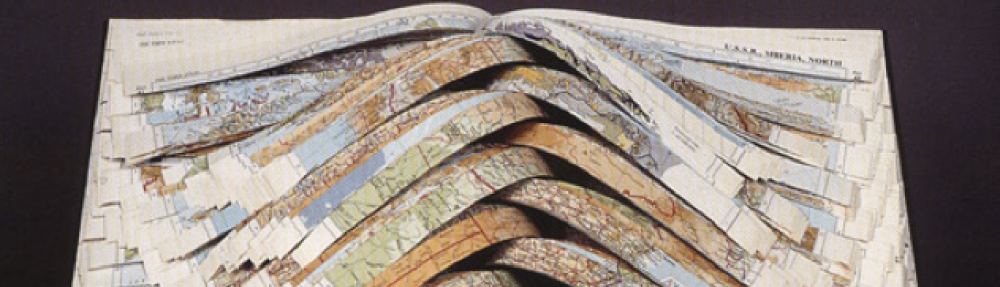
Revisiting My Fascination with the Book

This week’s readings, especially Bookishness have forced me, in many ways, to return to the very first blog post of the semester in which described my own relationship to the book. Books and bookshelves have long been a staple in my life, and I have lugged around the same collection of books from apartment to apartment to house to house and in six or so moves left and right across the country. I feel very much like the collector in Walter Benjamin’s “Unpacking my Library.” I’ve been collecting first editions and rare books for a long time, and I’ve come to them in myriad ways. Often, it is books that somehow, bafflingly, garner “no interest, no bid, and the book was put aside,” but unlike Benjamin’s protagonist, I did not wait but leapt at the opportunity to find a book “in the secondhand department and [benefit] from the lack of interest” (65). I once found a 1929 first edition copy of A Farewell to Arms in an antique store for $12. On the free books shelf in the lounge in the Arts and Letters building I have found, rather recently, a first edition, dust jacketed copy of The Things They Carried, a first edition of Anthony Swofford’s memoir Jarhead, and a few weeks ago in a thrift store in Idaho I found a signed (!!) first edition copy of Anthony Doerr’s Cloud Cuckoo Land for four bucks.

These things carry immense value to me beyond the monetary. In large part, this is due to the culture of bookishness and the time I was brought up in. For much of my adolescence the conversation surrounding print’s impending death was very loud and very present: “A history of normative values associated with literary media … transferred to a new site of conflict: print versus digital” (Pressman 16). As a young boy you naturally must choose a side in any argument or debate or conflict, and so I chose print. In the midst of this conversation, it is important to note that I grew up extremely rural and had dial-up internet until 2012, which very likely swayed things for my mother and I, making it impossible to quickly download files, play games online, watch YouTube, etc. We did not even get cell service at the house. You had to walk up to the top of the hill for to get bar or two.

Regardless, I became a staunch supporter of printed media. I begged my mother for a Sports Illustrated subscription in the misguided belief that I could be the one to stave off the demise of the printed magazine. “If they don’t print it, and only post it online, how will I read?” I remember lamenting.

“The history of the book is about power and politics,” as Dr Pressman writes in chapter one of Bookishness (33). And, at the time, only the powerful and the well-off and the urban could afford the kind of all-the-time connectivity we saw have such a rapid uptick in the aughts and 2010s. I was none of those, and so for me, printed media became a thing that I consumed because I was poor, because we could not afford then the fancy newfangled things that people were claiming would upend the world order. It is interesting that this has now flipped on its head, that many of the poorest in this nation and around the world have access to internet and the technologies that were once unobtainable. That now, following the “death” many in the news once warned us of, print is doing just fine. It is not the same as it was, and many magazines and publishing houses have shuttered, but there is still a market for these things I once feared would become obsolete.

Through all this, I have held on to these books (and added many more), though their meaning has changed over the years, and, like Banjamin’s protagonist, these books have come to me by many avenues. There is a level of intellectual projection done by them. The crowd I often find myself surrounded by is frequently shocked that I read at all, let alone that I am a writer. There are memories in them. Many were passed down from my mother, who stole them from the LD Bell High School library in 1979. Her name is still on the card on the frontispiece. They have been gifts from friends, colleagues, family members. I have found them on the street. I have spent amounts I wouldn’t like to disclose on a few of them. I have stolen others from friends’ libraries. I have written some of them. My friends and my teachers have written others. I have come to them or they to me in many ways, but what is central is that these books remind me of a world into which I was born and which now seems as if it hardly exists at all.

The digital age has completed its ascent, and I latch on to the book out of nostalgia, familiarity, or fear. There is something comforting in looking at their many-colored spines as I write this. I could not have that same comfort on a device, no matter how they rearranged the front screen of the Books app. All of these varied feelings simply cannot be applied to a phone, to a screen, something that when we buy it, we know will someday soon become obsolete, because what the digital grants us in access it strips from us in permanence.

Will my grandchildren one day fire up my laptop and go through my files, watch some of the movies I have downloaded, play some of the computer games? Hell no. Let’s not lie to ourselves. But I do like to believe, if only because I have done it, that one day they might lift a book out from the shelf that was once in their grandfather’s collection, and open it and find his name and turn the same pages that my hands have turned. There is some kind of immortality in that, no?

Week 13: Books to Read or Collect

When does a book reader become a book collector? Most who read, who pursue reading as a hobby, will borrow, or buy, and own books. They will have a bookshelf or bookshelf’s to display and keep their books, bit are they collectors of them or just owners? While reading Unpacking My Library, by Walter Benjamin, I became interested in the process by which someone becomes a collector of books rather than simply a reader of them. Through the reading I figure that the collection of books, not only the ownership of them, is intentionally, one has to state that they are a collector of books in order to be one.

If a reader has a large number if books in their library it is not a collection until they deem it one, until they do it is a group, library, or an assembly, not an intentional collection. To collect books is to appreciate them and see them beyond the material they hold, but as Benjamin describes, to love them as , “the scene, the stage, of their fate.” (Benjamin, 60). There is a difference between a person who says that they love reading and books and a person who says they love books and owning them, one is a reader, one is a collector. A person who reads may be a collector, but there is not always a certainty that a collector is a reader.

I have realized that I am teetering on the verge of becoming a collector of books, not just a reader of them. I used to only buy books if I intended to read them immediately, as a reader I have had rules for my shelves, just as he had ruled that “no book was allowed to enter [them] without the certification that [he] had not read it.” (62). But the rules I have for my book ownership are changing, I now have begun to buy multiple editions of the same book, or have bought books that I will read “one day,” even if a planned date for reading is non-existent. I want to have books not just to read, but because I like having books, I am becoming a collector, my library of books is now a collection of chosen books, not just an assemblage of literary devices.

Week 13: Collection, Capture, and Consent: Connecting Our Learnings with My Research

Dr. Pressman (Bookishness) and Walter Benjamin (“Unpacking My Library: A Talk about Book Collecting”, trans. Harry Zohn) each describe the fetishism of book ownership, in which symbolic value is attached to the book. I am considering the symbolic value of the book (and the bookish body) in the context of surveillance culture, and in particular relation to my research on sexual violence in fandom convention spaces. I use this post as an opportunity to connect some dots between this week’s bookish readings and my research, as I am presenting it at a conference in a few days.

Benjamin writes that, “for a collector, . . . ownership is the most intimate relationship that one can have to objects” (67). “Ownership” as intimacy suggests a close spatial proximity between that which is collected and she who collects, a “nearness” which Dr. Pressman shows is remediated through digital book imagery (Bookishness 10, 35). Following Susan Sontag’s situation of U.S. photography traditions in the colonial pursuit of collecting (On Photography), I consider the practice of (often nonconsensual) convention photography to be a means of “collecting” bodies as datified archival “objects.” By this I mean that the nonconsensual photo documents not only the proximal relationship between the bodies of photographer and photographed subject, but also the photographer’s greater liberty to determine this proximity/nearness through the functions of camera technology. Where the body cannot be literally sexually possessed, the body can be remediated into a collectable visual representation of (forced, coerced, or consensual) compliance with being objectified through the act of being photographed.

For convention culture, this means that the visual archive of the convention overwrites the lived experiences which occur around and beyond the moment of photography / compliance / archival. I am using the convention archive as an entry-point into a larger argument about how surveillance and the “collection” of body-data shapes pop culture practices more broadly. As a class, we have found that the book is a body, and that the body is a book. To build from Nick Couldry’s framework in Media Rituals: A Critical Approach (2003), I want to show how rituals of collecting and archiving serve to “categorize” each body as book or as reader – object or subject – and “naturalize” the book/body as representative of this power relationship. The book and the body are encoded with symbolic value. Dr. Pressman describes the use of the book as a status symbol in the U.S., where reading inherits historic conscription to that position which is “Western, Judeo-Christian, middle class or at least instilled with ideals of bourgeois mobility” (Bookishness 32). This status of reader/archiver is exclusive: the reader is made dominant by their potential to be able to read (they do not necessarily need to read, though this practice would do the ritual work of naturalizing inequality).

Dr. Amira Jarmakani’s Digital and Networked Feminisms course has been a rich complement to our Books class this semester, as each course has offered perspectives on these symbolic and political powers which networked actors produce. Readings on dataveillance have led me to consider the ways in which archival and “collection” practices necessarily datify identities and bodies, producing boundaries and value through containment. When used as a tool (to borrow Amber Rahman’s term) to reinforce violent institutional relationships, archival technologies might also act as technologies of surveillance. Birth certificates, state identification documents, and police drone footage – each what Lisa Jean Moore and Paisley Currah (2015) call a “surveillance apparatus” –archive individuals as data units in value-encoded systems (“Legally Sexed: Birth Certificates and Transgender Citizens” 60). The “intimacy” or “thereness” of book collection is perhaps violently remediated through these surveillance practices, which datify people into readable data units that can be ‘opened’ for interrogation at any time. Surveillance is a violent form of archival and meaning production which can be understood as an extension of colonial reading and bookishness.

Benjamin describes that “[t]he most profound enchantment for the collector is the locking of individual items within a magic circle in which they are fixed as the final thrill, the thrill of acquisition, passes over them” (60). This containment takes on a grim cadence when we consider the collector as a colonial amasser and the archived “individual items” as humans. Jean-Christophe Cloutier more succinctly criticizes this colonial archival framework by critiquing the language of “capture” (Shadow Archives: The Lifecycles of African American Literature 7). My research is also moving towards grappling with collection as an extension of colonialism and surveillance (each key to collection’s obvious grounding in capitalism).

This leads me to my final project for our class, which will mediate the erasure of personhood that is produced when bodies are collected or captured through the colonial “surveillance apparatus” of the medical record. I am deliberating if my project will suggest resistance more obviously, or if its existence will itself serve as critique. Either way, I am inspired by the postcolonial archival critiques which Marlene Manoff describes in “Theories of the Archive from Across the Disciplines”, where creators “reinterpret and recontextualize [colonial archival] information and thus call into question the colonial version of events” (16). I hope that my work on surveillance and sexual violence in the convention space can open up these conversations on the politics of materiality in fandom and pop culture studies more broadly.

Bookishness and the Loss of Books

As I opened this weeks reading, the introduction to Bookishness, the first thing that came to mind was the TV show Blackish. It was about an upper middle class Black family, that felt distanced from the Black culture that the parents had grown up in due to living in a higher income neighborhood. Similarly, the term “bookish” made me think about the distance that’s grown between reading and books. The -ish ending means ‘somewhat’, as if an e-reader is somewhat a book. And it is, I suppose. Dr. Pressman begins the introduction by talking about her “Mac BookBook”, which was a laptop case designed to look like a book. This case is more than just a fun, quirky design, but an ironic expression of how we’ve changed our approach to reading. Pressman writes, “My Mac BookBook displays the book to be a powerful form of residual media actively shaping digital culture.” Residual media– the leftovers from the media of the past– is still effecting the culture that started to leave it behind. But why? We’ve already established how many aspects of the internet were named after physical objects for familiarity, such as the window, desktop, and page. But this is about artistry and expression, not association or functionality.

Pressman puts is plainly: “Bookishness is about maintaining a nearness to books.” Despite using harsh words like “residual media” earlier, there would be no book themed art without people wanting book themed objects. It’s not like people completely stopped reading, although I’m sure there was a dip in overall interest in books with the rise of internet accessibility throughout the 2000s. E-books and audiobooks were not only cheaper than books, they didn’t need to be carried and they didn’t take up space. But e-books are not books. They are electronic books, and they are their own thing. The only similarity between the two is that they feature words to be read. They share the same primary function, yes, but they aren’t the same. So if bookishness is about maintaining a nearness to books, it’s also about mourning the loss of books. Bookishness emerged as a desire for a way to relieve the nostalgia for the book. The book may be obsolete, but that doesn’t not mean it has no value.

We don’t yet live in a world without physical books. I don’t think we ever will, if bookishness is any consolation. There will always be a desire for the physical object. When I see book art, such as sculptures or papercraft, I think of the second life that the object has been blessed with. I think of how much more you can do with the book, what unintended things you could create with it. People don’t want to lose that.

Self-Representation Through Book Acquisition

In the chapter “Unpacking My Library, Walter Benjamin indirectly displays books as a commodity, and as it has been discussed in this class plenty, an object to fetishize. As Benjamin unpacks his library, he gives the reader “insight into the relationship of a book collector and his possessions, into collecting rather than a collection” (pg. 59) by recalling the various methods of collecting books and the mental or emotional loops one experiences during these acquisitions. Some of these methods of acquisition mentioned are writing books yourself, going to auctions, and buying from bookshops. 

In this excerpt, Benjamin spends a considerable amount of time talking about the method of getting a book through an auction, and how this method not only requires recognizing the quality or provenance of the book, but also being aware of one’s competitors who will keep “raising his bid – more to assert himself than to acquire the book” (pg. 64). In Benjamin’s lamentation of the auction’s fierce and prideful atmosphere, it is obvious how books have been marked as objects of fetishization and serve as an outward projection of a persona which is explored in Dr. Pressman’s Bookishness. As Dr. Pressman discusses how “bookshelves as a means of self- fashioning and self- representation” through “judging people by the covers of their books” (pg 34) in the context of physical codices and the rise of the digital page, it’s not thoroughly explored how the cost books also contributes to self-representation, as much as it is explored in “Unpacking My Library.” In Benjamin’s excerpt, the cost of the book and how it’s acquired is practically the focus. This act of finding a book, whether that be through auctions, going to bookshops, or travelling around the world as Benjamin has done, becomes less about the book and more about the wealth needed to acquire the book and the stories about retrieving the book. Though Benjamin ends up buying Fragmente aus dem Nachlass eines jungen Physikers at a secondhand shop, what makes the story riveting is that he was at an auction where he had been outbid, and then learned how to wield a lack of interest in these spaces to get what he wanted. The interesting part is less the book and more the story of getting the book.

The conversation of bookishness is constantly being furthered as the semester progresses, showing me how every aspect of a book and outside of a book can be part of fetishization. It also reminds me that plenty of objects have not gone unfetishized, as “every passion borders on the chaotic” (Benjamin, 60) and is a part of an obsession, whether we acknowledge it or not. 

Bookishness

When reading Bookishness, I was shocked with how I started to remember this fetishization of the book as a physical object. I remember when I was younger I had an obsession with the physical object of a book. I had to hold/read it a certain way so it wasn’t damaged, I wouldn’t let people borrow my beloved books, I had a book stamp that printed my name into every book I owned, and I would even pack my books a certain way on a road trip to ensure they were not damaged. I can think of so many other absurd examples of my own relationship to bookishness back then, but none of these things apply to my today as I write and fold all the pages in my books- coffee stains and all. I wonder what changed in my bookishness, could be a lot of things, but it’s interesting to read this book in context of thinking of my own bookishness actions. Although I was aware about these aspects of bookishness and the obsession with the object, I had never thought about it in the context of increasing digitization.”So what happens when the book get digitized and bookish culture goes digital- when the word ‘book’ may or may not refer to a material object?” (Pressman, 3). This question highlights the transition from bookishness being physical and now digital- something 12 year old me would not understand. Bookishness is in the physicality of the book, but what happens when we no longer have that? These ideas are being reimagined, and I can see how my own relationship with it has changed over time as books have become digitized. I read on a kindle almost every night before bed, but 6 years ago I refused to read on a kindle as I felt I was betraying my physical books- Bookishness.

When I continued with this reading I also found it fascinating when reading about the Mac BookBook. “My Mac BookBook displays the book to be a powerful form of residual media actively shaping digital culture” (Pressman 7). I found this idea of a Mac BookBook the epitome of Bookishness itself: a digital device pretending to be a physical book. Not only does this device make a book appear to be something its not, but it shows something that is no longer there. I found this very fascinating and also shocking. The aesthetic of the book went so far, you wonder why it was changed in the first place. It makes me think that people need change but are also afraid of it- as they hold on to the physicality of the book even when the Macbook was present. Bookishness is more than an aesthetic, its also a lifestyle, as I discussed before I was a part of this before I even knew it. The amount of bookishness themed things I owned: book stamps, book earrings, book t-shirts, etc. I was matching this bookishness of wanting to be near the physicality of the book but I did not even realize or know why- I am not sure I know now. The materiality doesn’t change the content: the words in the book are still the same. But at the same time the materiality of the book feels like its a part of its content.

Week 13: Unpacking

Completing our final reading of the semester, I couldn’t help but reflect on the aspect of humanity that exists in the creation and keeping of books. In Walter Benjamin’s reflection of books and the collecting of them in “Unpacking my Library,” he also alludes to the significance of owner to object and how books exist nostalgia and memory. This is described, “Every passion borders on the chaotic, but the collector’s passion borders on the chaos of memories” (Benjamin 60). By situating the collection in memory, it becomes not a place for accumulation, but rooted in emotional engagement with the past. Though from a scholarly perspective the archive is often revered as a site of self, personal collections extend this ideal to present these collections as a site of self- of the things we love, our fears, the stories we find self in, etc. 

Books have meaning because of the worth we give them. Benjamin shares this by wisely sharing the fate of a book lies with its owner which may give it a new life. Owning books, therefore, is not a passive experience as the significance of books is granted through personal contexts. 

The last time I visited home, I took notice of an old children’s book, The Town Mouse and the Country Mouse, residing on the counter of my family home. As my siblings and I are now all adults and there are no grandchildren in the family, I asked my mom why this had been taken out from wherever she stored books. To this, she told me that when she was babysitting a neighbor’s kid for the evening, she had read this book, the copy being an original print from her childhood and the same one that her mom read to her. As I watched guilt play out on her face, she told me the little girl she was watching had asked to keep the book but that she couldn’t part with it. At fifty is my mom often reading The Town Mouse and the Country Mouse? No, but her experience of emotional attachment towards this book and having a sentimentality towards keeping it in her collection illustrates Benjamin’s argument that books gain value through the person who owns them. To most, this book, worn and weathered, probably is worth nothing, but to my mom, that book connects her to her past and, thus, herself. This is the beauty of the “chaos of memories”– though cliche, one book owner trash is a collector’s treasure.

P.S. For anyone wondering, my mom bought the little girl her own copy of The Town Mouse and the Country Mouse to enjoy. Thus, a new collection was born and books live on.