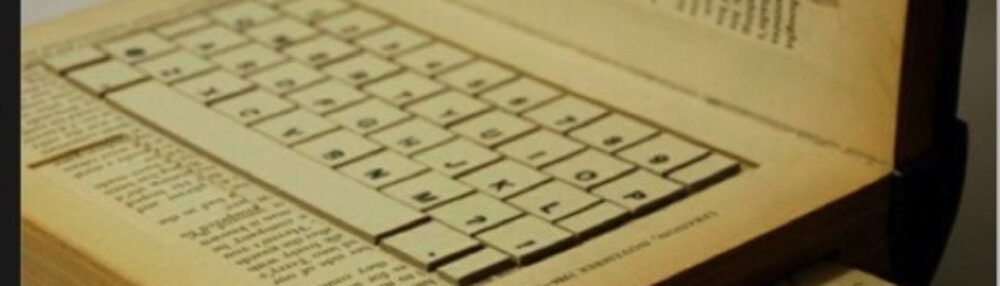
For many centuries, authors of centuries ago were tasked to write with two objects: the stylus and the document. Though before even writing, the author knew the work was constrained by whichever document or medium they chose. In ancient Greece, that document could be wax or papyrus. In ancient Egypt, it could also be papyrus. This is to say, the setting and time largely determine the capabilities of the document, as well as the reproducibility and interactivity. In the midst of our digital era, the document has transformed, allowing the largest breadth of capabilities known to humankind. In doing so, our readership has been changed, though not forgotten.
The days are mostly gone when people begin writing manuscripts by hand. Whether it’s a public desktop at the library or a personally owned laptop, most writing relies on digital products. This is espoused by a study from CNET showing that over 50% of adults get their work done via laptop. So, already, the game has changed. Instead of digitizing older texts, the new norm is to make digital products physical.
With this change, authors are able to open endless doors of possibilities. Like artists’ books, authors use their medium to their advantage, for example, the novella Pry with its acclaimed cinematic experience. And while it may diverge in qualities from the typical books we’re taught in school, it is a prime example of the capabilities of electronic literature. Further, it touches on the line from Borsuk relating, “the extent to which any book is a negotiation, a performance, a dynamic event, that happens in the moment and is never the same twice.”
As claimed by Borsuk, reading indeed takes the form of a negotiation, rather than a one-person operation. Though with the modification of the medium, has reading changed, or rather, been stripped of its essence? While this seems to be a subjectively answered question, take one example, of books measuring length in “read time.” Rather than judging by the words on the page, the reader is judging by minutes left, which, previously to now, was an unknown factor. Now, with the adoption of audiobooks online, students may judge their workload on how fast they can sit through a YouTube video at 2x speed, rather than the amount of words on the page. In that regard, gone is the aspect of leisure in reading, and in is the time-crunching factor of stress.
Readership may be changed, though a book will always require a reader. Whatever form that may take in the coming years is sure to be different, as comparison continues to show, and the difference is determined by the medium.
Category Archives: Week 9: Methods of Studying Book as/in Networks & Media Archeology -Borsuk Ch. 4, Darnton, Huhtamo & Parikka
Physical Bodies
Borsuk’s 4th chapter had a quote that was an impetus for a revelation I had in regards to the way I think about books and us as humans. On top of that, it also makes me appreciate the book as a physical object so much more than before taking this class, and reading this specific chapter. The quote I read that prompted this revelation was in relation to the popularity of the codex, “…it has proven useful as a portable, source-efficient physical support suited to the average human body” (Borsuk 197-198). This idea that the book is suited to the physical human body—not necessarily the mind but our hands, arms, etc.—therefore the book, then, is a reflection of our own physical body. There is an inherent, often unrealized, point of connection when holding a book or even a smartphone.
It brings me back to the practice of mindfullness, where you consciously bring yourself into the present and actively bring yourself back into your own body. This usually leads to a clearer mind and can help you focus. It’s a concept I learned about when I attended a behavioral program to help with my anxiety/OCD and depression. I used to heavily disassociate, but in learning mindfullness techniques I could bring myself back from that 2D-like game-scape into the real world. The mindfullness exercise I came up with was putting my hands on some part of my skin, closing my eyes, and just focusing of the feeling of my own skin (I also focused on my breathing too). Now I think of touching/holding the physical book as a mindfullness exercise, and when I think back to my visits to special collections for the midterm project, I realize I was already doing this; I would be in the present with the physical book, feeling the pages and the ink which connected me to the moment, my body, and the book itself. I think from now on, every time I touch a book, and physically feel it in my hands the same process will occur. In this way the book is a physical extension of my physical body and a mirror of it.
For a moment my body and that book (or laptop or phone or etc.) are interacting and participating in an exchange. For a moment there is an undeniable physical connection only broken when I am no longer holding or touching the book.
The Hidden Power of the Interface
After reading the final chapter in Borsuk’s “The Book”, I was captivated by the idea that Borsuk talks about in how we need to start viewing the interface of the page and how we as a society interact with it. Never in my life would I have imagined the interface of a page as a “crystal goblet” in which the desired information can be shown to you easily due to the accessibility and utility that the interface has. “A good interface, according to human-centered design principles, is like Warde’s crystal goblet: a transparent vessel which we access information we want”(198). Borsuk highlights the importance of how we can use the tool and view it because it is something that we never really had interest, nor have we ever thought about it on that level. We are always concerned with the content, but never with the interface and how that may alter how we the readers view the text.
Physical book’s interface not only allows us to interact with the text and content itself, but with the concept of the interface itself in which we can also add information. Essentially, we are learning how to read the system of the interface at a closer level than usual. Considering how we interact with physical books, I found it intriguing on how we use e-books and try to replicate that same interface interaction from the physical books.
Another quote that stuck out to about how we interact with physical books and e-books is, ”To change the physical form of the artifact is not merely to change the act of reading . . . but to profoundly transform the metaphorical relation of word to world”(203). Going from physical to digital changes everything about how we as the reader interact with the artifact itself. Yes, it may be showing the same letters, words and content, but it is no longer using paper and that in itself already alters how the text should be viewed. See as how Borsuk mentions how it changes the metaphorical relation, this sentence reminded me of last week’s class discussion on how digital text is essentially code which is HTML and it is just a bunch of flashing lights. At its core, that’s what the artifact is and how do we the reader interact with that?
The Future of the Book
In chapter 4 of Amaranth Borsuk’s “The Book,” she discusses how the physical book has been translated into its digital counterpart. In the same way that scrolls evolved into codices, books have evolved into the digital format. As the internet expands, so do the efforts to digitize books and make them available, resulting in digital archives and the emergence of e-readers. While there may be apprehension towards the digital books and how that changes the way people read and absorb information, Jessica Pressman reassures that “the book will not become obsolete with new reading platforms, but rather, will change and develop new incarnations and readerships; it will continue to serve certain kinds of literacy needs and literary desires.” In fact, Borsuk goes on to explain how authors, publishers, and readers are adapting to a digital reading space in which we are at the crossroads of bookish innovation. In this era of digital media and publication, there is a wide avenue for authors to decide how they want to convey their message. Much like the modernists who responded to the stiff Victorian books, we are pushing the boundaries of what makes a book a book. Erik Loyer’s digital book, “Strange Rain,” utilizes technology in a way that enhances the reader’s experience. Holding the phone or tablet up to the ceiling to convey the image of a skylight helps relay Loyer’s idea and allows the reader to become absorbed into the mindset of the main character. This unique reading experience changes the way the reader views the book. It blurs the lines between technology and books. Borsuk continues to discuss these digital formats and introduces Dick Higgins’ term, “intermedia.” This term perfectly encapsulates this new era of reading in which format and content, technology and book, collide in a new exploratory form that can go in any direction based on the creator’s intention.
Non-linear Reading of Digital Texts
After reading Chapter 4 of The Book by Amaranth Borsuk, I began to find a new understanding for digital texts. Amaranth explains how technological advances such as the Kindle or Nook “aim to pour texts written for print into digital vessels” while other authors and artists are utilizing the technological layout to add an immersive, animated, or game-like experience for the reader (220). With this, we are able to create an infinite canvas where the reader is “non-linear reading” requiring the reader to interact with the text. This shift highlights how digital texts are not just replications of physical books, but rather remediations. They are new forms that borrow from the tactile and navigational qualities of print while expanding the possibilities of texts.
While reading about hypertexts and the way hyperlinks create a networked style of reading, I immediately thought back to “Marginalia in the Library of Babel” by Mark Marino. The feeling of being able to explore and interact with the text was a completely new experience that I hadn’t felt from a traditional physical book. I was so confused before we discussed the reading in class as I have always read for definitive answers. But while reading “Marginalia in the Library of Babel” I found myself navigating my own reading journey through a web of interconnected ideas, rather than following a structured, linear path. While clicking through the hyperlinks, I found myself digging deeper, bouncing from one hyperlink to the next with minimal to no structure or path. This sense of agency and mobility through the text demonstrates what Amaranth Borsuk writes as an “infinite canvas,” where the boundaries of a text are no longer fixed by the page but are dependent on the reader’s choices (221).
I remember discussing this experience with my peers and realizing that each of us had followed a completely different pattern of clicking and traversing through the intricate network of hyperlinks. Some clicked on certain links because they were interested in a phrase or idea, while others went down entirely different pathways. This truly resulted in unique interpretations from the same work. This variation revealed how hypertexts allow readers to engage with a text on an individual level, emphasizing the role of reader interaction in meaning-making.
Connections and Connotations
Chapter 4 of The Book is titled “The Book as an Interface”, which is something I had never thought of before. Which, is a common feeling that I’ve hand while reading this book. When I think of the word interface, the first thought that comes to mind is user interface and user experience design. I have always associated the word with computers and software. A quick search tells me that interface is defined simply as “to interact”, which helps me understand the chapter better. Borsuk spends a good amount of time showing how different types of electronic devices and computers were based on and built off of the book. A notable section reads, “To change the physical form of the artifact is not merely to change the act of reading … but to profoundly transform the metaphoric relation of word to world.” This combined with the discussion in last weeks lecture, led me to the realization that words do have meanings. E-readers were modeled after books for no other reason than a desire to be familiar to users. I have said the word “page” in terms of websites and webpages and I have never once made the connection between a page of paper and a website. It seems so obvious looking back, as to the reader, it isn’t the page that’s important rather what’s on the page. They are both ways of displaying information, and describing it to people unfamiliar to the web by saying “Think of it like a page” makes a ton of sense.
These intentionally made connotations have been forgotten to time. Desktop, window, tab. I may not be a linguist, but I’m a little disappointed in myself for not making the connections sooner. It’s another instance of not viewing the computer and internet as objects themselves. I spent so long looking through the screen that I never really looked at it and thought about what I was using, and how software was limiting what I could do.
I also wanted to touch on the Internet Archive and the Wayback Machine, as they are things that I personally use. I have read many books, mostly for class but not always, on the Internet Archive, and I’ve used the Wayback Machine to find old websites. I didn’t know very much about the history of the website, and I found it interesting to learn about how they acquired their materials. Borsuk writes, “Not only did the Archive prioritize not destroying the books they scanned, the process of handling so many, coupled with the constraints of copyright, led it to take the surprising step in 2011 of starting a physical archive for them.” At first, this seemed a bit counter productive. But, after reflecting, I’ve realized that the internet doesn’t last forever. Well, I’ve always known that. I’ve used various different archives on the internet, such as the Harry Potter fanfiction archive, which saves stories that were deleted by their original authors. But anything can happen to a website. Having the physical books, and not destroying them in the scanning process, means they can reupload or reprint them as necessary.
Week 9: Development of the Interface
Online documents and e-books are designed to give readers or viewers a sense of similarity and feeling of understanding. Through designed features made to look like the physical medium, it gives viewers a feeling of ease moving from the physical medium to the other. In Chapter 4, Borsuk writes, “e-readers have dimensions that appropriate a thin paperback. Most enable highlighting and annotation, stimulate both page-turning and virtual bookmarking, and hold one’s place. This is entirely on purpose, making an allusion by designers so people are more apt to buy a digital product because of its familiarity. When docs or search engines came out, it needed to look familiar, taking knowledge of where things go on the paper and try it on the digital page. Google docs shows a literal paper page on the screen so we then know where to start writing and how to transfer physical text to digital.
For the past decades, most things have been made to look like the physical and ignore the code underneath, hiding that what we do on the computer isn’t exactly what we do on paper, it’s a completely different system. But now it seems as though that’s starting to change. Consumers and designers are accepting more unfamiliar versions of technology like VR or self-driving cars, putting more trust in advancing tech.
Our advancement of what we’re comfortable with and the fascination for technology and something digital and unhuman is displayed in coming designs. Borsuk writes, “the design of such readers has gradually streamlined to minimize buttons and dials, heightening the sense that they are simply interfaces for engaging with text and perpetuating the myth of digital disembodiment. They let readers change type size and interface, illuminate the screen in low light, and, on some devices, use built-in text-to-speech functions to play their books aloud. These accessibility features mark an important distinction from the fixed interface of print and would not be possible without digitalization.” Our tolerance for a more tech-based world are based on how the digitalization of the interface has helped people. It has made it easier, faster, and more accessible to learn. Our concern with the strangeness of digital interfaces has worn off over the years of it easing our lives. In that emphasis though, is the lack of care whether an interface stays familiar, ignoring the importance of the physical and being physically active in our learning, reading, and writing? In our encouragement of tech advancement and moving design further into technological and sterile aesthetics, is that ignoring the creative history of the interface and appreciation of physical work like making pages, ink, and illustrations?
Intermedia: The Fusion and Mimicry of The Book
Throughout this class, I have learned and re-learned so many new things about The Book as a medium. It is more than just a single medium; if anything, it is an ever-changing form that reflects culture and society: “By bringing its interface into focus, they draw our attention to a deeper history of mutation and play with book form. Dick Higgins coined the term ‘intermedia’ to describe such works, a word that sounds to contemporary ears like a description of an augmented reality or touchscreen reading experience.”(Borsuk 257). These books are snapshots, time-capsules oozing with marginalia that speaks volumes of certain moments: culture, social and political climate etc…And what isn’t stressed enough is the remediation aspect of this medium. One doesn’t influence the other, it is a nature and process that is cyclical in form and content. It is at once dictated by the ones using but also birthed in the need that arises from mutation and evolution. Borsuk further quotes Higgins and his coined term: “Intermedia works, by his definition, involve ‘a conceptual fusion’ of the elements that constitute them. For him, the artist’s book is intermedial because its ‘design and format reflect its content-they intermerge, interpenetrate. … The experience of reading it, viewing it, framing it-that is what the artist stresses in making it.'”(257).
The importance of this notion is the fact that in recent years, audiobooks and podcasts have seen a surge in popularity as a new, fast, and easy way to digest information in whatever manner we crave, Borsuk writes, “Some scholars consider this period of textual fixity and enclosure the Guttenberg parenthesis, rather than the Guttenberg era, suggesting that we a re returning to a culture that values orality and ephemerality, no longer needing ideas bound between covers or owned in quite the same way.” (258). This new shift is once again posing us a question about what the book is. And the fact that we have so many scholars with different definitions not only speaks to its complexity but its malleability: “The term’s slipperiness, far from a liability, proves its greatest asset. It is a malleable structure through which we encounter ideas.” (Borsuk 258). It is almost paradoxical in the sense that the book as a medium, is so prevalent yet it is un-pinable as a singular definition, “-the book changes us as we change it, letter by letter, page by page.” (Borsuk 258).
Week 9: Understanding the Circuit for Book History
Reading Darnton’s “What is the History of Books?,” it felt like I finally got a clear map for a field that seemed impossibly scattered. I’ve always been interested in how ideas spread through society, but I’d never really thought about all the mundane stuff that makes that possible, such as the question of who ships all these books? How do printers negotiate with authors? What happens when ice closes Baltic ports and books can’t get through?
What really interested me is Darnton’s communications circuit model and his argument. “Book history concerns each phase of this process and the process as a whole, in all its variations over space and time and in all its relations with other systems, economic, social, political, and cultural, in the surrounding environment” (page 67). This quote feels like such a necessary framework because it’s easy to get lost in just studying, for instance, what Shakespeare wrote without thinking about how his texts actually reached the reader, or how those readers understood them.
The case study of the bookseller Rigaud in Montpellier is also quite fascinating. You have this man who is basically running a rather sophisticated retail operation in the 1770s. Through what can only be described as cutthroat capitalism, he reads his consumers, controls supply lines, deals with smugglers, and crushes his rivals. The detail about him literally organizing a cabal to drive a rival bookseller into debtors’ prison was crazy to me and is honestly my favorite part of the reading. Kinda gives me Peaky Blinder’s vibes for some reason, with the ruthlessness of that. It makes you realize that the spread of Enlightenment ideas wasn’t just about brilliant philosophers writing brilliant things, it depended on cutthroat business people who saw Voltaire as a profitable commodity.
I also really appreciate Darnton’s point about reading being “the most difficult stage to study in the circuit” (p. 74). I think that we have all these records about printing and shipping and selling, but how do we actually know what reading meant to people in the past? Did they read aloud in groups? Did they obsess over texts the way that miller in Ginzburg’s study did? This seems like the most important question but also the hardest to answer.
The Future of Books as a Return to the Origins of Story
Borsuk’s final chapter on the book as interface had me thinking a great deal about remediation and the process of it. All the history of humanity has really been the history of storytelling, and a book is nothing but a method of transmitting a story. Borsuk writes, “historian Matthew Rubery contends that the medium [of audio books] emerged to both reproduce the printed book and repair its shortcomings” (205). No matter how much we all may love books and the idea of them, there are some things the traditional codex volume simply cannot do. “Literature,” Borsuk writes on page 208, “emerged from an oral tradition that included bards, troubadours, filid, meddahs, and griots, among other literary performers.” If we continue to think about literature in this way, then we can trace the origins of mankind’s and bibliophiles’ obsession with the story and, as a result, the book, to a point some tens of thousands of years ago around a fire where the first fragments of language were being used to weave together tales of imagination. The oral tradition is the absolute baseline of story. It is what we are always striving to replicate. The book is only one point in the long and complex history of human storytelling.
Storytelling has been in a glacial process of change for all of our history, slow and nearly imperceptible, but once the process is complete, or has moved on to a new phase, the landscape is radically changed in ways that we may not have foreseen. I think that what we are living through, when it comes to books and the perceived threat they are said to be under, is perhaps better understood as a shift in the way story is told. If a book is only a nexus for that, then it is of no higher or lower order than a podcast, an audiobook, a video game, or any other current or uninvented method of storytelling. The book has been romanticized so much by those of us who love them that to envision a world without them is terribly frightening, but this romanticization is only a result of the times in which we live. As we discussed earlier in the semester, there was backlash and fear ascribed to reading and what it would do to the minds of the people from the great thinkers of the Hellenic period of our history. So it should come as no surprise the backlash new forms of storytelling receive when they first emerge in our contemporary conversations.
The knowledge of storytelling’s remedial nature should give us some hope that all is not actually lost when it comes to human knowledge and creation and culture. We are merely watching it turn into the next form of itself. An era may be drawing to an end, though the book will likely never go away, the main methods of knowledge dissemination and storytelling may shift dramatically. As Borsuk says in the final paragraph of The Book, “Some scholars consider this period of textual fixity and enclosure the Gutenberg parenthesis, rather than the Gutenberg era, suggesting that we are returning to a culture that values orality and ephemerality, no longer needing ideas bound between covers or owned in quite the same way” (258).