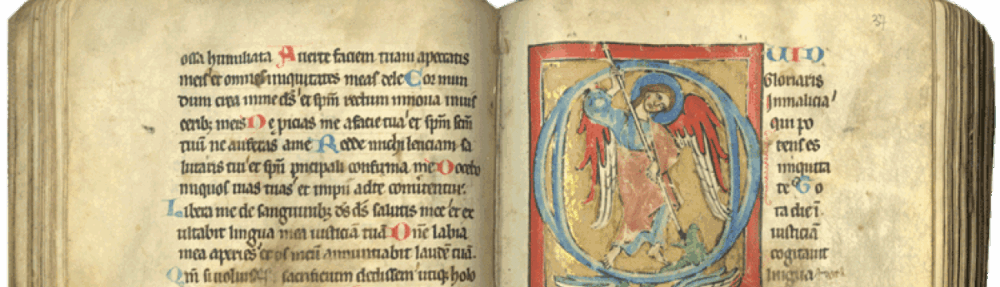
Amaranth Borsuk’s The Book explains the various forms of physical mediums that writing has taken up over time. In it, there is an inherent questioning of the literal definition of a book (Oxford English Dictionary, for example, defines it as “A portable volume consisting of a series of written, printed, or illustrated pages bound together for ease of reading”). Understanding the etymology of books brings its’ existence as a concrete concept into question in the same way that all of language is. For there to be an “objective” definition of what a book is would mean that there would need to be some sort of objective truth in the first place. Tracing the etymology of anything unveils that it is the result of hundreds, often thousands, of years of human experiences.
Because what a book physically is has changed so much over time (paper, papyrus, wood, or bamboo; written horizontally or vertically; read as we read it today or “like a laptop” (43)), the cultural experience of reading a book must have changed too. In the past, for example, being a scribe was a miserable experience, “they spent six hours a day hunched before the page in a cold scriptorium, incurring back-aches, headaches, eye strain, and cramps…” (48). Today, anyone who would create a hand-written book would do it as an artisanal craft and presumably out of passion. What would be required of a book-maker is completely different today versus thousands of years ago. What I want to emphasize is that this creates a completely different experience with the book thus changing the relationship and context surrounding books and the book reading experience.
Books seem to have a cultural resurgence among Gen Z as entertainment–I feel that books lost this for a few decades when TV and video games ruled as modes of storytelling. I wonder if the accessibility of books today has something to do with their modern association as a leisure activity. It is now easier than ever to read any book that you can imagine, dozens of different tablets exist for this activity. Additionally, hundreds of websites exist that post various modes of literature that would have previously been in book form. It is perhaps this unprecedented ease of access that causes phenomena like “booktok” which specializes in leisurely and captivating reading.
Hi JJ, very interesting point about how the definition of a book is never really fixed. The examples you gave of how books looked and were read in the past show just how much the form changes the experience. I also liked your observation about “BookTok” and the idea that books are having a cultural resurgence. It makes me think that every generation reshapes not only what a book looks like, but also what it means to read one.
Hi JJ! I had a similar revelation when it came to how books were both created and read in the past. I don’t think I would be a very good scribe, although I know that they practice for years. It’s hard to believe books were made by hand due to how perfect they were, but that dedication to writing and bookmaking shows that books were considered important. I also agree that books are having a resurgence, but I don’t think they ever completely fell out of style. Plenty of my friends read books recreationally throughout my life, although that is anecdotal. Books have become extremely accessible, which has made reading an easier hobby to get into due to the increasing choices and lack of barriers.
Hello JJ,
You and I made similar regards in the creation of the book– the book as an artifact. Because our values have shifted through time, we have adopted certain behaviors, attitudes and customs regarding books; in this instance, we desire and crave to archive what we know– knowledge. Therefore, since the dawn of time our literary knowledge has evolved– we no longer rely orally on information as we have transitioned to written material.