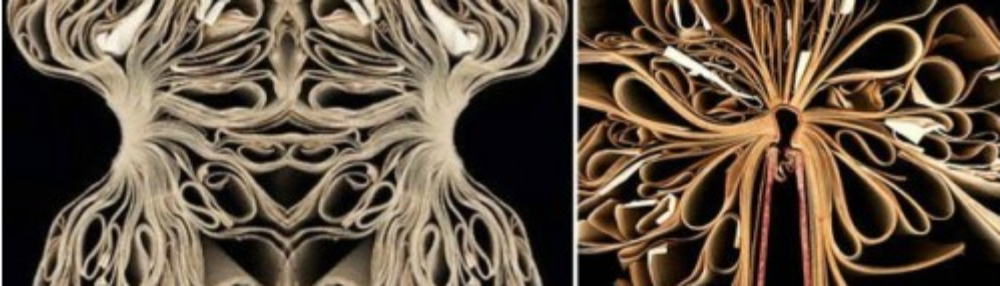
I feel that one of the main hurdles of this class has been the transition from seeing books for their content to seeing books as artifact and object.
For my final project, I would like to do a deep dive into the publishing of books as collectibles. As opposed to most of the other books we can buy that are being published today, these are meant, from the first view, to be seen as objects, rather than carriers of content. Presses like Folio Society, The Frankin Mint, and Easton Press all produce fine editions of many popular books; their pages are gilded, their bindings harken back to an earlier time, and many of the works are illustrated, but for most consumers, these are not things to be read, they are objects to be kept, looked at occasionally, and mostly, to sit on a shelf and project a measure of learnedness, worldliness, and status.
I will focus my research primarily on the Easton Press, as I have many of their books at home. I will delve into the history of the press, when it came about, and how the culture of the country of the time might have related to bookishness then and how it relates or does not relate now. I will compare collectible versions of books to their “non-collectible,” first edition, and mass-market counterparts when available, evaluating the physical differences and what those differences say about how the book is meant to be owned and shelved.
I will conduct some primary research into the acquisition process for Easton Press editions, looking at discourse communities that revolve around the collecting of these books, what their members’ commonalities and differences are, and what the acquisition process/price says about who these books are intended to be consumed by.
Thesis: The widespread publication of collectible editions speaks to a preference toward the vintage aesthetic in American culture. This is a further proliferation of the bookishness that we have seen on the rise in the first quarter of the twenty-first century. These are books meant to be seen as objects, not reading material, and the people who consume these products choose them for the aesthetics of being well-read and learned, prioritizing these aesthetics over the functionality of the book.
I’m glad you’re doing a deep dive into oppress that is personal to you, and I think you have a great foundation for pursuing the work now. I hope that after doing more research, you will be able to reframe your thesis so that it is less a speculative judgment about the types of people who buy and collect these books and more a research-based claim about either the press’s strategy for issuing these books or a longer history of such editions. In other words, what might you find out about the specifics of collectible books and what/when they emerge/proliferate? Are there specific types of content that are more applicable to these editions? Are there specific presses that produce these editions?; and, if so, why? I’m eager to see you get into the research and develop a more specific claim about what you find there. But this is exciting stuff, and I hope you enjoy the process!