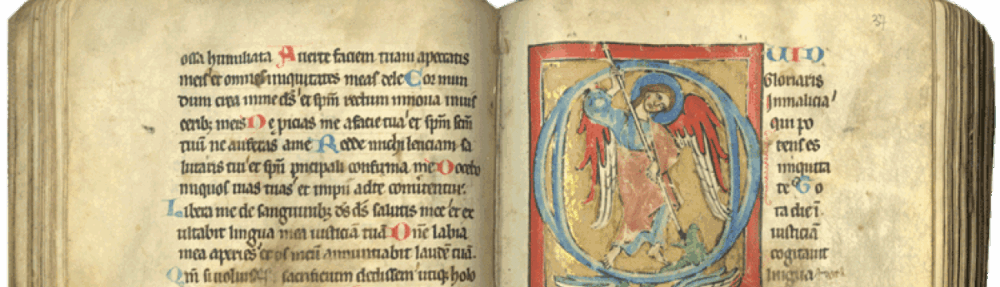
While reading Borsuk’s second chapter, the following quote particularly stuck with me: “A book is a machine to think with.” This quote and its underlying interpretation greatly change the way we view books. A book is not a container for content, but rather a device that structures our thinking.
The chapter shows that our understanding of books changed with the invention of printing. Borsuk describes how early printed works introduced aids such as page numbers, indexes, etc. These elements have a clearer purpose than one might think. They are precisely the “mechanics” that make the book a thinking machine, because they allow us to organize, look up, and link knowledge. Borsuk also emphasizes that the codex is a body, with a “spine, head, and flyleaf.” Just like a machine, it has parts that interact to perform a function. Thinking is therefore always bound to a physical structure.
The book as a machine becomes clear above all through the reader. Even in the Renaissance, readers marked passages, wrote comments, and copied individual passages. They actively operated the machine, thereby releasing knowledge. The book therefore does not work alone, but in interaction with the reader. But what does it mean for us if books are machines? Operating machines is complex, and so is reading books. We first have to learn how to use a book properly.
For me, this also raises the question of how books from special collections make us think differently than ordinary books. No two machines are the same, and the same is true of books, scrolls, e-books, and other forms. For me, this means that thinking is a collaborative process that depends on the author, reader, and medium. And perhaps that is precisely the strength of the book: it encourages us to actively operate the machine instead of just letting it wash over us.