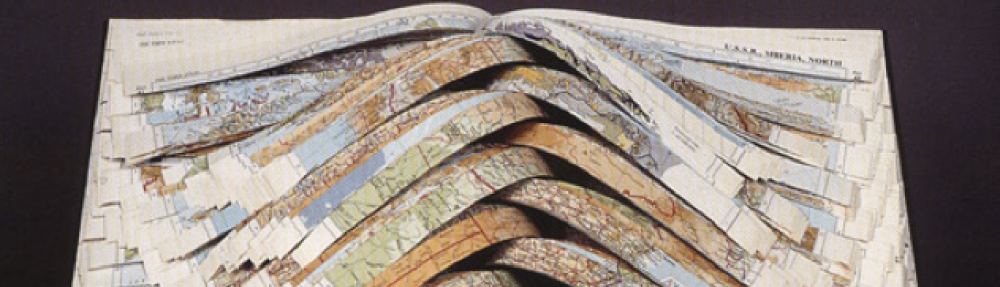
After reading Jorge Luis Borges’ “The Library of Babel” from 1941, one aspect in particular stuck with me: the concept that, because of the infinite amount of literature in the Library, there already exists a book about everything. From the autobiographical past of a person, to the exact history of a person’s future, all the way to his own death. In the text it says: “The certitude that everything has been written negates us or turns us into phantoms.” which really made me think.
On the one hand, I ask myself how much originality and individuality can still be present if everything is already written and exists in some literary form. Because of this, every thought immediately loses its individual independence. Every idea of an author becomes at once a double creation or a repetition of an already existing work. As magical as the concept may sound at first, it also means the end of any creative originality. Furthermore, the question arises of how much a person can still truly be considered their own self if somewhere there already exists a potential book that documents his entire life up to the very end. If everything, down to every spoken or written sentence, already exists, then speaking or writing is no longer an act of creation, but only repetition.
With this concept, Borges touches on a very modern and current topic. On the internet, for example, content is produced and reproduced so quickly that it sometimes feels as if there is less and less originality. More and more contributions on the internet feel like an echo of another contribution. One of today’s challenges is no longer to invent something completely new, but to find orientation. In this flood of repetitions, how do we discover what is actually important? What I find exciting is that Borges does not only see something threatening in this. He also shows that the value shifts. Where once invention and creation stood in the foreground, now discovery and recognition take their place. Therefore our task is not to control infinity, but to find our orientation within it.
In the end, this means that the concept that everything has already been written does not simply destroy originality, but also opens up a completely new view of creativity. Borges reminds us that in a world full of content, our search for meaning remains the most important thing.
Hi Kaan, I had very similar thoughts to yours, I also questioned how thoughts and a persons work/life could be “original” if all writings and documents existing in the library might have already produced those same ideas and works. However I like how you point out that this possibility is not a limitation, but an opportunity to become more creative and to find new perspective. Thank you for sharing!
Hi Kaan, great post! I really like the direction you took with this post, discussing the aftermath of life if everything is already written. It takes away the motivation to want to spread your own thoughts. I agree with you that it doesn’t take away originality, even if everything now is a repetition or an adaptation, it is still original in the historical time it is taking place in.
You are doing a nice job moving from the text to the larger So What questions that it raises: “One of today’s challenges is no longer to invent something completely new, but to find orientation. In this flood of repetitions, how do we discover what is actually important?” This might be a good theme for you to explore throughout our semester, as I think you will see orientation and perspective as central to the history of books. Nice post!