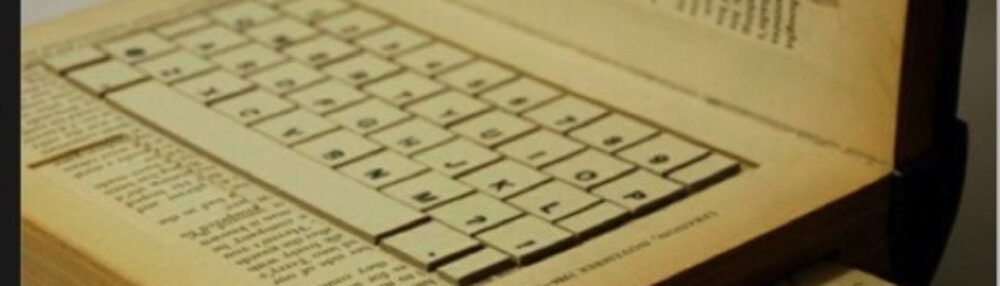
Week 4: So Many Books

When reading the first chapter of Amaranth Borsuk’s The Book, I was struck by how she forces us to reconsidered a thing that we often interact on a daily basis but rarely examine critically. The way her exploration of the book’s physical evolution really shows how our reading experiences have fundamentally shaped by material constraints and innovations throughout history.

What really fascinated me is Borsuk’s argument that a books form is not just a neutral case that has content, but is a object that actively contributes to the creation of meaning. The transition from scroll to codex is something I saw that wasn’t just a technological progress, but it also transformed how we engage with text. With the codex, it allowed for cross-referencing, access at random, and the evolution of modern techniques such as indexing and annotating. It made me really think, that what reading habits are we losing or gaining as we move toward digital formats?

Furthermore, the discussion of manuscript culture reminds me of current debates about textual authority. Borsuk mentions in the book how scribes were involved in the transmission of texts and occasionally changed them while doing so. In our digital age, where texts are becoming easier to modify, repurposed and collaboratively created through tools like wikis and shared documents, this cooperative concept of authorship appears unexpectedly applicable.

Additionally, I was really intrigued by her emphasis on the book as a movable source of human knowledge. Because of its portability, knowledge could transcend institutional borders and democratize education. However, I think about whether or not we are gaining or losing anything crucial about the accessibility of knowledge as we shift toward online storage and digital libraries?

I had a lot of questions about the text that I have never really thought about. Such as, how do we perceive a book’s intellectual weight in relation to its physical weight? Does the inability to pick up digital pages alter the way we highlight and recall key passages?

Through this text, I found that Borsuk’s method helps me recognize that reading books as objects is important for intelligently navigating our modern media ecosystem and is not just a academic exercise. When creating new digital reading experiences, we must think about not only the information we are keeping but also the embodied reading practices we may being losing and whether or not it has an impact on our learning and thought processes.

Week 4: My Story with The Book of Kells

When I was 13, I went to Ireland and Scotland with my family. My dad’s half Irish so we wanted to explore our family roots and culture as it was important to my Grandparents to go, experience, and see other places. While we went to many places during our two-week trip, a city we all enjoyed was Dublin.

As my cousins, siblings, and I, were all teenagers at the time, we didn’t necessarily appreciate the constant walking tours of tombs, ruins, churches, and museums. And I, especially didn’t like that we stopped at least once a day to go to a bar. I got so mad one day that I made my family stop on the side of the road and go pet goats and sheep as penance. But Dublin, we all enjoyed.

One stop we made was Trinity College, where we did a tour of The Old Library, holding volumes and stacks of old books. One such book we saw on the tour included with The Old Library was The Book of Kells, mentioned in Borsuk’s The Book Chapter 1. I didn’t quite understand the importance of it at the time, and I wasn’t in my book fascination and fetishization phase yet, but I can tell you that it is a beautiful book and a beautiful library. I was at the time intrigued with the images and manuscript drawings that weren’t in modern books.

After my siblings and I finished the tour walk-through quite quickly as we didn’t see the importance of seeing a random library, we were heavily scolded by our tour guide that waited outside. She stated “Education has been wasted on you. History has been wasted on you.” And while we didn’t understand her words and ignored her judgement at the time, I did get it years after.

What we ignored was history. We didn’t understand the importance of a religious book because we have millions now. Why would it be important? We didn’t understand the weight that manuscripts hold to the accessibility and history of knowledge and information sharing. That library and what it contains, is the history of the Church, it’s spread and power of information, which leads us to where we are now. It also shows how intricate details and drawings woven into writings has mostly been lost to time and aren’t used anymore.

She was right. We didn’t appreciate that we got to see a piece of history, literature, and culture, and a part of the system that helped the accessibility to knowledge because of Christian texts and copying.

I very much want to go back to see that library and book with the appreciation I do now. I think now I would be in there for hours admiring the work and sacredness of the texts and the beauty of the library. Every old piece of paper or writing or drawing isn’t just that, it’s a piece of history and one of the reasons we have the knowledge and critical thinking that we do now.

The History of Everything

What seems to be constantly simmering under the surface of every discussion of the history of books/the written word is that, although we generally view these things as sources of knowledge or history, they cannot be extricated from the history itself. And it seems to me that the history of the book is the history of everything. Borsuk writes in chapter one of The Book that we must “think about the way [the book’s] materiality is both a product and constituent of its historic moment” (34).

I think this is best exemplified when thinking about the early history of the book, where Borsuk details that the first earliest versions of paper–clay tablets and papyrus scrolls–were born of the rivers that the civilizations that birthed these things were centered around in Mesopotamia and Egypt. As human civilization evolved and animal husbandry went from smaller to larger operations, people were spread more into the countryside where they had the space to raise livestock. As a byproduct of that husbandry we saw the rise of vellum paper. With widespread farming came production of flax, and ultimately, linen which is still in use today as a paper product.

If we continue to chart the evolution of civilization in tandem with the book, we can often see the values of the society the book was produced in not only in its text, but in the actual arrangement of the physical book itself. So each book sends a message before it is ever opened. If a book must be easy to transport and withstand the elements it must be contained in a hard cover. If one wishes to project wealth and status today they may have a library of many leather-bound books. Bibles and Qurans are both printed on very thin paper, both to keep down the cost and the weight for their end users. Cheap, mass-market paperbacks exploded in popularity in the mid 20th century, coinciding with the massive fame authors of the time period enjoyed and in tandem with corporations having vested interest in cost efficiency and profit over quality of the product. If the work is the same but the book is printed cheaply, that drives up revenue for the publisher, but consumers are left with an objectively inferior product that was not built to stand the test of time.

Week 4: Reading and Writing’s Shift

In Chapter 1, “The Book as Object”, in Amaranth Borsuk’s, The Book, what really struck me was how writing, as we know and define it today, was mistrusted by the most revered scholars of the time. In the final section of the first chapter, “Reading and Writing’s Shift”, Borsuk explains that “the great thinkers of Greece, in fact, mistrusted writing as a technology that would destroy the oral arts of debate and storytelling on which they based their sense of the world” (Borsuk, 55). For the kind of reading we know today it “would have to change its context and text in form… which means literacy would have to extend beyond the elite and monastic communities” (Borsuk, 56). 

What we base our entire education on, and how we define the book and our access to knowledge, was distrusted, discouraged, and feared by Socrates. He believed that transcription “is a crutch that will both hamper memory and more philosophical thought in ambiguity, leaving interpretation in the hands of the reader” (Borsuk, 56). While context is still important, how we  (the individual holding the book) interpret literature and writing (separate from the intention of the author) is now the most crucial skill we learn. The transition from oral and limited transcription, to our more accessible, modern practice of writing actually “allowed rhetoric to flourish” (Borsuk, 56).  The “book” as we know it today is not in its final form, just as the tablet and scroll evolved, so will our definition. Many of us express how digitized literature, media, and AI scare us, how we are fearful for future generations’ attention spans and ability to think for themselves. Past scholars’ concerns “echo contemporary anxieties about the ways digitally meditated reading and writing shortens our attention spans and ability to engage deeply with texts” (Borsuk, 58). It makes me realize that future technology has always been feared and mistrusted. As mediums of reading evolve, how we read reflects that evolution. What Socrates feared is why we are all here today, and it makes me reconsider how I view and fear future technological advancements in writing and the “book”.

Accessibility Shapes the Book

After reading Chapter 1 of Amaranth Borsuk’s The Book, the deeply intertwined relationship between technology and “the book” has become clear to me. As Borsuk writes, “the book, after all, is a portable data storage and distribution method” (12). Books are not only a way to preserve human intelligence but also a means to spread knowledge quickly and efficiently across wide populations.

The ability to distribute knowledge has always been central to human progress. Like we discussed in class, information was reserved for the elite who had access to clay tablets or scrolls. These objects were fragile, time-consuming to produce, and limited in circulation. As a result, the spread of ideas was often slow and laborious. However, as Borsuk depicts in Chapter 1, the evolution of the book reflects a consistent pattern: each new form of book that came to be was to make storing and sharing knowledge more efficient. From tablets to scrolls to codex, these technological transitions were never random but rather direct responses to humanity’s ever growing need to communicate and learn.

Lying in the evolution of the book is, how Sigmund Freud states, human nature to know everything. People have always craved learning and sought faster, more accessible ways to acquire knowledge. With greater access to texts, more individuals were able to read, reflect, and expand upon existing ideas. What was once confined to a small region could suddenly travel across nations, inspiring revolutions in science, politics, and philosophy. The cumulative effect of shared knowledge created a foundation for the technological revolutions that followed. Without the distribution power of books and archives, many of the breakthroughs that define human history would not have been possible or traceable at that.

Yet, this relentless drive to make books more accessible has also come with a cost. Earlier books were not only containers of knowledge but also works of art. They were meticulously crafted by scribes and artisans. As printing technologies advanced, the emphasis shifted from artistry to efficiency, prioritizing mass production over craftsmanship. While this allowed knowledge to reach millions, it also diminished the individuality, beauty, and human labor once woven in every page. In our current digital era, the physical artistry of bookmaking is even further removed, reminding us that in our pursuit of accessibility, something of the book’s original artistry has been lost. This tension between accessibility and artistry also complicates how we evaluate media today. With mass production and the endless stream of information online, it is often difficult to decide whether media is “good” or “bad.”

Week 4: The Book, Chapter 1

When I read Amaranth Borsuk’s The Book, Chapter 1, one sentence really caught my attention: “Content does not simply necessitate its form, but rather writing develops alongside, influences, and is influenced by the technological supports that facilitate its distribution.” (p. 17, ll. 17-18)

At first I had to read it twice because the English is a bit heavy, but what it means is actually simple. Books and texts don’t just find a form because of their content. Instead, the medium itself, like clay tablets, papyrus scrolls, codices, or today’s e-books, shapes how we write and what we write. And at the same time, writing pushes those technologies to change too.

I think this is super interesting because we often believe that content is the main thing and the medium doesn’t matter. But if I think about my own reading habits, it’s clearly not true. For example, when I read on my phone, I definitely skim more and jump around. When I read a paper book, I am more focused, I even underline or make notes. So the form totally changes my behavior and also the way the author can reach me.

Borsuk also points out that throughout history, different forms didn’t just replace each other. Scrolls and codices coexisted for a long time, just like today I read both on my phone and in paperback. It’s funny, because when I came here for exchange, I couldn’t bring many books in my suitcase, so I rely more on my e-books on my iPhone. But when I go to the library, I really enjoy holding a physical book again. I wouldn’t say one is better, but they feel completely different and change my relationship with the text.

This makes me think about how new platforms influence writing styles today. Twitter/X with its character limits made people write in short, sharp bursts. TikTok captions and comment sections encourage different rhythms, more visual, more fragmented. Even academic reading changes when you can search PDFs instantly instead of flipping through pages. None of this is neutral.

So maybe the big lesson is that the book or text is not just about content, but always about the interaction between content and form. Borsuk helps us see that the “death of the book” is not really happening, it’s just transforming again. And maybe in 100 years, students will look back at our e-books the same way we look back at scrolls. As just one stage in the long, messy coexistence of forms.

Red Ink and Reading: From Papyrus to digital reading

When I read Amaranth Borsuk’s chapter about papyrus scrolls in The Book, one thing grabbed my attention. She explains that Egyptian scribes sometimes used red ink to mark important words or to show the start of new sections (p. 24). At first, this sounded like a small detail. I realized it says something big, that reading has never been simple. From the beginning, people have been finding ways to guide readers and shape how they move through a text.

This idea reminded me of how many people read today for example on Kindle. You can use the highlight tool to save favorite passages. On Wattpad, readers leave comments in the margins or highlight moments they love. These marks catch my eye and slow me down, just like the red ink did for readers thousands of years ago. In a way, digital highlights are just a modern form of rubrication. Both show us where to stop, notice, and reflect.

I also found it interesting that the scroll itself shaped this practice. Papyrus scrolls didn’t have page numbers, chapters or covers. They were long, rolled-up sheets that snapped closed and had to be unrolled with both hands. That sounds clumsy compared to flipping pages in a book or even scrolling on a phone. But scribes came up with smart solutions, color red ink, headings, and marks that broke up the text. These tools made the scroll easier to use. They also turned it into more than just a place to store words, they made it an early kind of reading technology, or what Borsuk calls an “interface.”

Thinking about this makes me realize that reading has always been interactive. We often act like digital reading is brand new because of features like hyperlinks or highlights. But Borsuk’s passage shows that people were doing similar things long ago. Readers have always needed help moving through text and scribes have always given it to them.

For me, this is new knowledge I gained. It means that today’s digital reading is not the end of books but part of a much longer story. Just as Egyptians added red ink to guide readers, we use screens, colors, and comments to shape our reading now. The tools look different, but the habit is the same. Reading has always been about more than words it’s about how we mark, highlight, and share meaning.

Our Literal Definition of a Book

As seen in our first special collection workshop, it can be challenging to categorize what a book is. A few people in class even expressed that they feel they have a too literal definition of the book, and it stops them from accepting that books come in many forms. This phenomenon stems from our learned behaviors and what we grew up seeing. We all know what a book looks like and how we use it, but reading Amaranth Borsuk’s book, The Book, is changing all of our learned notions of what a book is and how we read it. For instance, “Our own codex book has been normalized to such a degree that we question the ‘bookness’ of anything that challenges our expected reading experience, with little regard for the fact that reading in one direction rather than another, scanning text silently, and putting a title and an author’s name on a book cover are all learned behaviors (Borsuk, 18).” This quote describes that we have been taught to think that our reading behaviors are the right and only way to read, which is not true. Borsuk gives us a well-needed history lesson on the fact that reading used to be a social activity where people would read challenging works together, out loud, to create discussion. Whereas in today’s world, reading is more often than not a solo endeavor, where a singular person seeks knowledge, not a group. Just like how reading used to be a group activity, it used to come in all shapes in sizes, like the tablet, the papyrus scroll, and then the book we all know today. At the end of the day, Bosuk argues that there was an evolution that brought us the book as we know it today, thus arguing that all these forms can be considered books.

The Endless Scroll

Reading chapter one of Amaranth Borsuk’s The Book, I paused at her description of the papyrus scroll and found myself drifting into thought. She describes papyrus as light and flexible, yet not easy to carry around. A scroll required both hands to handle, or a table to place it on, and reading moved in one long, continuous line. There was no flipping back or comparing passages. The form itself made reading linear and tied to time.

What stood out to me here is how much the material itself shaped reading. On the one hand, a scroll was very simple to use. You unrolled it and followed the line forward. That simplicity made reading easy. But at the same time, it was clumsy to transport and hard to navigate. You could not easily go back to a section or hold two places at once. In that sense. While reading was straightforward, it was also limited.

This suddenly reminded me of how we read today on phones. In many ways, social media feeds are modern scrolls. They run in one continuous stream, moving from top to bottom, easy to follow but difficult to step outside of. The big difference is that technology has solved the old problem of portability. What was once heavy and awkward to use is now light, instant, and always in our pocket. So in a way, we carry the scroll everywhere.

But this comes with new effects. The papyrus scroll at least had an end. After some time, you would eventually reach the bottom. The digital scroll, however, never ends. Feeds refresh again and again, keeping us moving and holding just enough of our attention. This shapes how we read. We skim, swipe, and move on quickly, very rarely stopping and taking some time to reflect. Where the codex brought depth and comparison, the feed pulls us out and throws us into an endless scroll.

Borsuk’s description of papyrus made me realize that reading has always been about more than words. It is also about the form that carries them. The scroll once kept reading on a linear path. The codex later opened new ways of moving through text. And today, our screens have brought the scroll back, this time in a portable, digital form. The question is whether this return to scrolling opens up new freedom or if it traps us in a flow we can’t really step out of.

Play and Form

Borsuk references the kind of play present in the formation and structuring of modern children’s books in the introduction of the book, before going through a timeline of the book’s evolving form. As “informational needs” evolve, the book evolves (3). Given the book’s pervious and various forms, its not necessarily reasonable to assume the book’s form will not change again past things like e-books.

To this point, I enjoyed how Borsuk points out that the book as we know it, already take on various forms or styles across the world. For example, Borsuk notes the specific kinds of strokes used in order to not pierce papyrus leaves (13) or the size of bamboo slips influencing the top to bottom style of Chinese print (26). The available materials within a given region has effected what the “book” looks like. Even without the the threat of an increasing digital information age, the book has never been a stable singular object, and its history is inherently wrapped up in technological advancement, as evident by the way that the verbage used for digital and physical information mediums tends to overlap (scroll, type) (17).

We’ve discussed the discourse about books and AI as being centered around the fear of the book (and therefor writing and learning) as we know it becoming obsolete. But I’ve found myself more fixated on the environmental effects of AI. I feel like any conversation about AI that doesn’t talk about AI data centers’ water consumption is incomplete. However, I found it interesting that Borsuk details the economic and environmental cost of making parchment and vellum. It seems like, since the development from oral the the written word, there has always been an environmental cost when it comes to developing new information technologies. I think I’d be curious about the proportional environmental damage of different information technologies.

Additionally, I enjoyed the section about different ways to bind pages together (37). I’ve been making my own paper recently, and have started experimenting with binding it together. I’m still a beginner so sometimes I’m not sure what the paper will look like, but I’ve found it exciting to come up with new ideas for what the use the paper for, if not traditional handwriting like I had planned. I’ve included a photo of my most recent batch from yesterday, along with the cat Kristofferson.