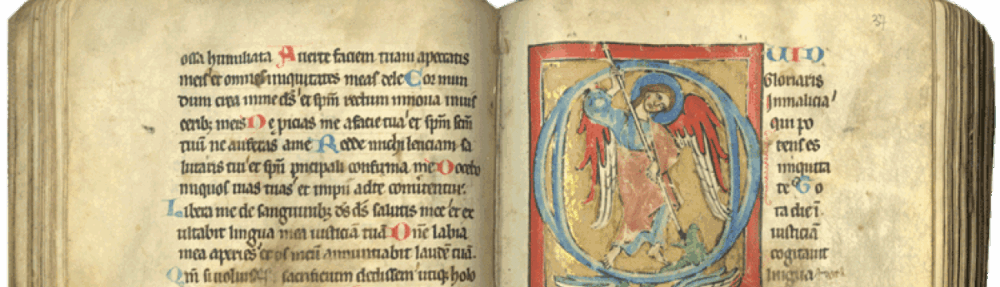
In the second chapter of The Book, Borsuk investigates the evolution of book content from the font to the binding and how that changed the way in which people approach books today. Borsuk begins with the origins of the modern codex, which lies with Gutenberg’s printing press in the 1440’s. But as Borsuk notes, “as much as we laud Gutenberg, he was not actually the first person to print with movable type,” instead, it was “Chinese engineer, Bi Shen who developed a technique for printing from clay type he carved by hand” (73). I appreciated this acknowledgement because, not only does it highlight the reality of the movable type’s history, but it also shows how book practices developed relatively independently, as explored in the previous chapter.
Today, when typing, plenty of people don’t even have to consider their font choices so seriously. Though we might change it from Arial to Times New Roman, or if we’re feeling silly, Papyrus or Comic Sans, the labor, artistry, and history of creating fonts isn’t taken into account. In this chapter of The Book Borsuk, when discussing the printing press, goes into how Gutenberg and others had to literally create their own font. This task was more than just designing how letters would appear, but also how. The metal cast had to be strong enough to withstand the force of a printing press but not so hard that it destroyed the paper it was going on. In Gutenberg’s case, he “formulate[ed] his own alloy of tin and lead” (66) that was strong and had a low melting point. Borsuk then explains the complicated process of creating the stamps for the movable type, which was a lot to take in. With this page-long explanation, I realized the convenience of modern screens, keyboards, and printers. Gone are the days of arduous labor that required people to handcraft a single letter and put their full weight into pressing those handcrafted stamps onto handcrafted paper with an ink that was also made by hand. I think because of our disconnect with the labor that goes into the crafting of a book, in addition to its more automated route of creation, the path to fetishization of the book becomes easier.