In Chapter 3 of The Book, Borusk engages with the idea of a book rather than the concrete materiality of what makes a book, as explored in the previous chapters. Borsuk explores the idea of a book by going into numerous examples of artists’ books which ultimately “highlight the ‘idea’ [of a book] by paradoxically drawing attention to the ‘object’ we have come to take for granted” (pg. 113). Reading this chapter reminded me of our first book lab, where we questioned the qualifications of a book by looking at various book forms, from a book in a can to a triptych of poetry. This chapter expanded on the idea of the first lab as Borsuk introduces us to Stéphane Mallarmé, Ed Ruscha, Alison Knowles, Michael Snow, and many more who play with the form of a book and the effects of the space of a book on their art or literature.
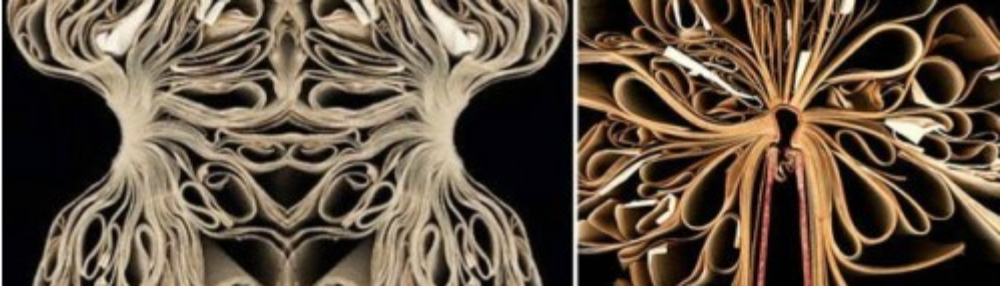
After reading Chapter 3, it was interesting to read the interview between Prof. Pressman, Brian Dettmer, and Doug Beube, as Dettmer and Beube explore their artistic processes, but not through a necessarily literary lens, as has been presented for the majority of the readings, and certainly not through an artists’ book lens. I thought it was interesting how, when asked about their work in relation to artist books, both Dettmer and Beube rejected this categorization of their work. But once, Dettmer explained his perspective on how “artists’ books use the book as a canvas and the work exists and operates within the context of a book,” and Beube said, “artists’ books still function as books… In contrast, in my work, I challenge the way we interact with and think of these objects,” I understood why they were so adamant about their distinctions as doing bookwork rather than creating artists’ books. When considering books like House of Leaves or Nox, both still work to tell their written story, but in an enhanced way. But the bookwork that Dettmer and Beube do focuses on how one can play with the form of a book and “to think differently about the media we use” (Brian Dettmer).
With each class and reading, I am being taught and reminded that books are more than blocks of text; they are an entryway into a conversation about the society they were made in, the time period of publishing and distribution, and cultural significance. When interacting with a book, more questions are being brought up in my head and it’s interesting to see where my mind takes me and how much more I look for in a book. I enjoyed learning about how people have pushed the boundaries of what a book is, as it brings new life to books and inspires art.