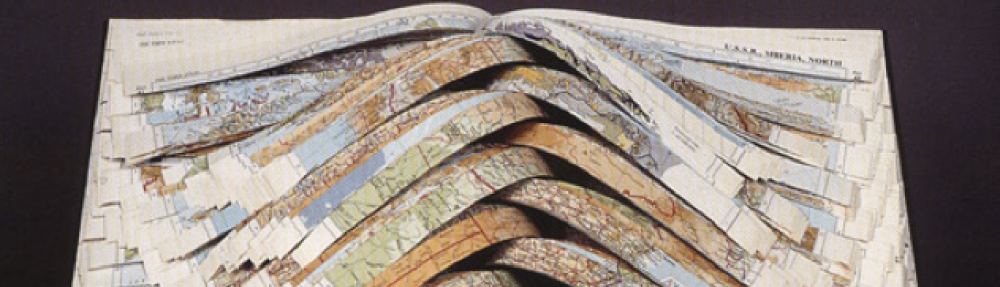
The expansiveness of The Book as an idea, as an interface, as art, as an all-encompassing medium to which is molded for us, by us, to serve our needs. I found so many things intriguing in this reading, namely the expansiveness of the book as an Interface and how the page seems to be, not only a filtration system for human thinking but a shapeshifting medium at that. At the very basis, I like how Bonnie Mak grounded the page in its existence as being more than just mattering due to meaning or significance, “To matter is not only to be of importance, to signify, to mean, but also to claim a certain physical space, to have a particular presence, to be uniquely embodied.” (3) Similarly in Megg’s History of Graphic Design, there was sections of extensive research about how art expanded, evolved, and therefore become a direct influence to political and idealogical movements.
The idea of art being a proponent of ideological and social change isn’t new, but the literal influence of the page as space and a literal reflection of a harmonious future is. The De Stijl movement in particular stuck out, “Schoenmakers defined the horizontal and the vertical as the two fundamental opposites shaping our world, and called red, yellow, and blue the three principal colors. Mondrian began to paint purely abstract paintings composed of horizontal and vertical lines. He believed the cubists had not accepted the logical consequences of their discoveries; this was the evolution of abstraction toward its ultimate goal, the expression of pure reality.” (931-932) Art and Modern Art itself has really pushed the boundaries of its own medium (Comtemporary art/Abstract art) but I never really thought about its implications in terms of the evolution of the page as space and material. Abstract Art seems to be a space that can not only push the bounds of Art itself but also expand our thoughts and ideas upon which we frame or facilitate societal needs, demands, and exploration. Mak states, “Readers interpret text, space, and image, as they are inclined, but the meanings that they formulate are predicted upon the materiality of each carefully designed page.” (21)
The page has never been so multifaceted in my eyes, let alone The Book itself. I can now see the correlation between the page and so many other different ideas (Politics, the humanities, Science, etc.). It is an all-encompassing medium, both changing and willing to change for our (humanity’s) sake. The expansiveness of the book just keeps growing exponentially, much like Borges’s short story it feels infinite. For me, a quote that really highlighted just how grand a vision artists have in their art to not only influence art itself but people, was on page 937 of Megg’s History of Graphic Design: “Malevich and Mondrian used pure line, shape, and color to create a universe of harmoniously ordered, pure relationships. This was seen as a visionary prototype for a new world order. The unification of social and human values, technology, and visual form became a goal for those who strove for a new architecture and graphic design.”