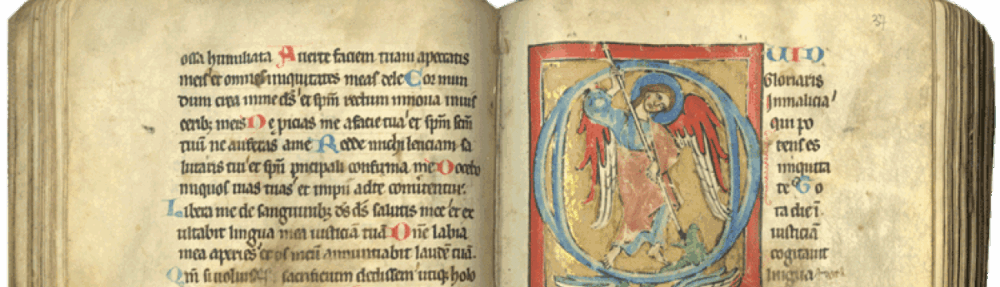
It has become relatively clear that we can base the time period of a book on its physical body. Of course, these time periods could range hundreds to thousands of years, but the way we read shows us how we’ve adapted. Although it wasn’t necessarily explicitly spoken on, humans are constantly looking for the easiest, most efficient ways to do things. This includes reading.
In The Broadview Introduction to Book History, Michelle Levy and Tom Mole explain the four epochs of book history. Even before the first epoch of books, we read from scrolls and, because of Christianity, codices became more commonplace. Second, after hundreds of years, “the printing press…made it possible to produce large numbers of (reasonably) accurate copies much faster” (xv). Because printed matter was so much quicker, it was also much more expensive. However, the third epoch occurred over several years as the prices decreased and the prints were continuously used. Finally, we stand in the fourth epoch, with digitized books we can hold in our back pocket.
In one way or another, the media adapts to our human adaptations. Therefore, we are carrying this evolving matter through our history as we find newer ways to transport information. Yet, as Professor Pressman notes, “media do not replace one another in a clear, linear succession but instead evolve in a more complex ecology of interrelated feedback loops” (“Old/ New Media”). Unlike being able to define the eras of books throughout history, it is difficult to determine the difference between the old and the new uses of books. I find this very fascinating especially since we have no way of knowing just how changed our method of reading will be 100 years from now. What used to take thousands and hundreds of years to develop can occur in decades.
While it’s clear that the digitization of books is a current phenomenon, I wonder how long it will be until we switch to something else entirely.