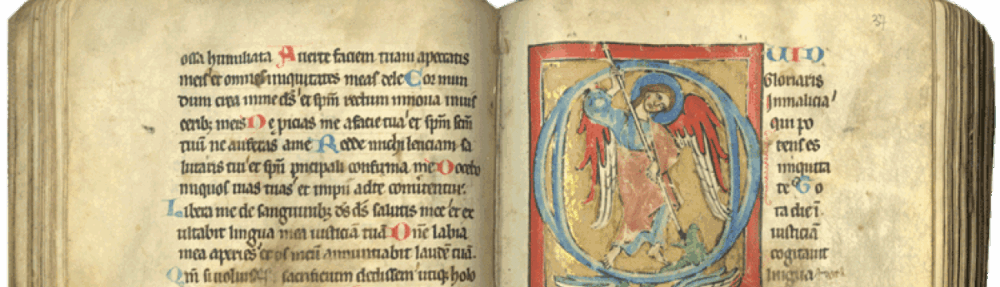
Museum Regalis Societatis (1681) is bounded by a loose spine– one that is separating from the text. The hard cover layers are peeling from the corners, revealing that the book has not undergone any type of restoration; the edges of the book are uneven and the trim of the paper is not symmetrical; the paper is tinted in various shades of yellow and brown due to oxidation. Throughout the text, there are multiple fonts– Times New Roman being the most prominent one. The margins are wide and the foldouts appear to be of a fibrous material– making it seem as if it were a copperplate engraving.
Let me not start at the origin of the codex nor at the content of it, but at the materialistic characterization of the media. Printed in 1681, Museum Regalis Societatis: or, A Catalogue and Description of the Natural and Artificial Rarities belonging to the Royal Society is a book whose physicality is an amalgamation of cultural apparatuses. It is an object conformed by a loose binding, where the spine is separating from the text and does not demonstrate any signs of restoration—leaving the text in its original form. The roughed-out edges reveal several layers of boards that create the front and back covers. The pages are tinted in shades of yellow, white, and brown, more than likely due to oxidation—a natural process in the life cycle of paper. The material of the paper is texturized—almost with a fibrous feel to it. The sides of the pages appear uneven, though it is unclear if this is a manufacturing irregularity, an alteration through the centuries, or simply wear and tear. The pages demonstrate further irregularities: some corners are cut off, and some pages are not fully symmetrical, demonstrating both the imperfections of handcrafting and the limits of technology at the time. The typography used on the cover page is a combination of five fonts—all conveying different messages to the reader, or at the very least creating the illusion of hierarchy between text, reader, and font. The margins are ample—about two and a half inches throughout. Initially, margins could have been intended for annotations, but the text demonstrates no sign of marginalia; all visible sides are unmarked. This suggests that this copy most likely belonged to an academic institution rather than serving as a personal copy for study. The book is structured: there is a preface, a table of contents written in cursive, and divisions of content into parts, sections, and chapters—each with distinct typography. There is a clear distinction between subject matter; in this instance, the contents are divided into plants, minerals, animals, and human anatomy. Every subject is differentiated by distinct typographical choices, creating a visual hierarchy and emphasizing what was deemed of greater importance at the time of assembly. At the end of the book, there are several foldout pages composed of a different material. They are printed on thicker, smoother paper, creating a deliberate distinction between image and text. The images have a certain texture to them—an engraved feeling—and are printed in black and white. The lines are sensitive to the touch, suggesting copperplate engraving, a method prominent at the time this book was assembled. Beyond the illustrations, there is a section titled “Some Notes Upon the Tables,” providing explanations regarding the material being presented. In the final pages, there is an extended list of authors, collaborators, and patrons, demonstrating how the text functions as a social amalgamation of shared knowledge and experience, particularly among the higher orders of society.
Althusser states that ideology is rooted in ritualistic behaviors rather than in a set of ideas—behaviors that have been interpellated through Ideological and Repressive State Apparatuses. This framework echoes the social and cultural conditions that shaped the creation and use of Museum Regalis Societatis, where the book itself becomes a material artifact representing the institutional value of intellectual curiosity. Furthermore, the assembly and the reproduction of this text acts itself as a ritual– it reproduces ideology on a continuum for the higher orders of society– placing knowledge in a place of exclusivity. It reflects the socio-cultural context of the period in which this artifact was produced, examining how knowledge, power, and hierarchy are constructed—often problematic, often laudable. It is manifested in the nature of its taxonomy; it creates power through its authorship and institutional control– it creates a separation of power between the individual accessing the text and converges the reader, author and text. Knowledge is demonstrated through the nature of the text– The variety of fonts creates a hierarchy, one that places emphasis and value on the subjects being presented in the book—fonts that hail the reader differently depending on what is deemed valuable and what is not; subtly becoming a tool of ideology– it organizes ideas visually and interpellates to the reader how information should be categorized and prioritized. Paradoxically, it mirrors social hierarchies. The unmarked pages, meanwhile, provide readers with a sense of academic moral authority, suggesting that such texts were intended for institutional use rather than personal study. The meticulous division and structure of the different subjects demonstrate that the Royal Society valued order and organization—particularly within the realm of science. This order is further displayed in the foldout anatomical pages, where text and visuals converge, making the reader an active participant with the book. The physical act of unfolding and examining these pages transforms the book into a shared experience rather than a static object. And, it reminds the reader that knowledge is presented as a physical act rather than one meditated through ideas– it blurs the boundaries between voyeurism and objects. Ultimately, Museum Regalis Societatis serves as a microcosm of seventeenth-century ideology, exhibiting the social structures and power dynamics that shaped class, access, and knowledge. It materializes the cultural hierarchy of the time and encodes different power structures– allowing the status quo to define the authority and value of this media. Under Althusser’s framework, this book is a product and the embodiment of ideology. The physical characteristics of this book are rituals of knowledge and authority.
Midterm– Reproduction of knowledge and power
Reply