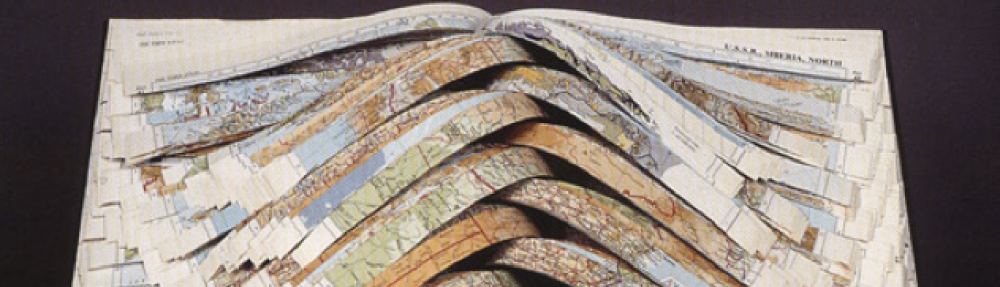
While reading both texts for this week, there was a specific quote that caused me to question why ‘new’ media is made/pursued. The quote is as follows: “Yet the work of the new is precisely what inspires us to reconsider the old and to recognize the intersections and convergent histories of old and new” (Pressman 1). This flip of thinking about ‘new’ and ‘old’ media from the perspective of new to old is what caused the question of why people decide to make ‘new’ media to surface in my brain. And the answer I came to is that the ‘new’ media often has an aspect that ‘old’ media does not, and that aspect generally makes the dissemination of ideas and knowledge (etc.), faster, easier, more efficient, and more widespread. People decided to advance their existing media into ‘new’ media to achieve those aforementioned goals of faster, easier, more efficient, and more widespread distribution of ideas and knowledge (etc). Because people naturally want to share their ideas and knowledge. While I read the Broadview text first, the quote in Dr. Pressman’s article caused me to look back to the first reading, and connect it with the previous question and answer. In the Broadview text, each new iteration of media/technological advancement (scrolls, codex, printing press, decrease in printing cost, and the addition of the internet) had a shorter timeline than the previous (also stated previously in class). This is due to the why question posed at the beginning of this blog, and its subsequent answer. The more advanced things got, the quicker information spread, and people were able to come up with new ideas in a quicker/easier fashion, that then become ‘new’ media. While the book as a medium can be considered ‘old’ media to some degree, even something like sprayed edges and more creative cover designs adds a ‘new’ element that causes those books to be more widespread and in a way ‘new’ media because it has become more than ‘just’ a book. (I’ve definitely bought a book just because I liked the sprayed edges and cover design—I actually really enjoyed the book, but originally bought it because of the book’s physicality as an object, or what Dr. Pressman would describe as bookishness). Sometimes, more people are likely to buy a book because of the aesthetics, but also end up genuinely enjoy the text or story inside, but it wouldn’t be as widespread if it wasn’t as attractive physically (some people do judge a book by its cover).
Tag Archives: Levy & Mole
When Books Change, So Do We
Reading Michelle Levy and Tom Mole’s The Broadview Introduction to Book History, one passage in particular about the codex stood out to me. In their text, Levy and Mole describe it as “portable, resistant to wear and tear“ and most importantly able to let the reader “flip back and forth between pages and […] move more easily between different sections of the text.“ While this description may seem very obvious to us at first, since this is how we have known books for years, thinking about how the codex was not actually the standard for such a long time really struck me. Taking a closer look at history, one can see that it actually took centuries to replace the scrolls.
This raised one big question for me: how much of reading is not about what we read, but about the form that allows us to read? With the scroll, reading was linear. You started at the top and moved downward. Very simple. With the codex, however, reading suddenly became more flexible. Now you could move forwards and backwards, skip ahead or compare two sections at once. This non-linear movement transformed reading into much more than just consumption. It became an act of navigation. The codex made it easier to divide texts into chapters and pages, to give precise references and to mark important places. In short, the format of the codex did not only shape the book itself, but also the intellectual habits that came with it.
What I find interesting is how similar this is to our current experience of digital reading. When reading online, you cannot only read in a straight line but also switch between various tabs, jump from one webpage and/ or text to another or scroll back and forth. Looking at it, the internet feels closer to reading a codex than reading a scroll. At the same time, it also contains elements of the scroll. Long pages that we read by scrolling down, like articles, news, blogs or comment sections. Digital reading feels like a hybrid which mixes the navigability and flexibility of the codex with the linearity of the scroll. However this parallel also makes me wonder, how fragmented reading can become before it begins to lose depth. If we constantly cross-check passages, open new tabs and shift our attention, do we risk losing focus? On the other hand, digital formats create new ways of thinking, just as the codex once opened new possibilities. They allow for faster comparisons, even broader connections and new forms of creativity.
In the end, what Levy and Mole show with the codex is that a book is not merely a container of words but also a technology that reshapes our relationship to knowledge. From scroll to codex, each form does not simply preserve text. It transforms how we read it. Ultimately, it is not about celebrating or fearing new formats, but about seeing how they slowly shape the way we read and even the way we think.
Imagining the Single Book
I think that most people in our day and age tend to think of books as a part of a larger whole. They’re things to be collected. They’re things to be placed upon shelves and organized in neat numerous rows either by author last name or spine color or the Dewey decimal system. To see a book all on its own seems so rare that my mind has difficulty even picturing it. I am sure that I have seen it, but there seems to be no good way to orient the display of a single codex on a shelf or on a desk, and it is equally difficult to imagine dedicating oneself to a single text.
But when we think about the history of reading (because to read them is the only rational reason to have any books at all) as something that has evolved over time, with various practices and methods, and we go back, perhaps, to the time of the first codified printing of Don Quixote, readers would have approached the text of the first modern, widely dispersed novel very differently.
As Levy and Mole explain in the introduction to The Broadview Introduction to Book History, “historians of reading sometimes distinguish between “intensive” and
“extensive” reading. Reading “intensively” means returning to a small number
of books again and again, whereas reading extensively involves reading
a much larger number of books (or other printed matter), and often reading
them only once” (xvii). They go on to explain that extensive reading is something of a novel phenomenon in the past hundred years and is a result of easily accessible printed material; “when books were very expensive and labour-intensive to produce (especially when they had to be copied by hand), most people had access to very few books. People often read these books intensively because they didn’t have access to any other reading matter. As a result, they came to know their books well and invested significant emotional energy in them” (Levy et al xvii-xviii). I like to imagine some simple, moderately well-off person in the mid seventeenth century going back to Alonso Quixano and the jousting of the windmills and the trot of Rocinante time and again by the glow of a lantern. There is no doubt that intensive reading of Don Quixote is nothing particularly unique, as it is probably the most studied novel of all novels, but to be that invested in that book because you have no other choice of reading material makes for a much different experience than that of the scholar who can understand why Steinbeck’s truck is named Rocinante in Travels With Charley, and who can tie Cervantes’ novel to numerous other works in the 400 years since its publication.
How does that type of reading alter the reader’s conception of the book itself? Are we still drawn to the same plot points? Do plot points then become of lesser importance? Are we more interested in language? Do we have time for more ornately written sentences? And are we more privy to social commentary, or are we less, with no (or few) other written works to compare to? Is the book something self-contained, as I believe we view it now, or does the book only become a launching pad for the more creative parts of our brain? Must we memorialize it and make it something more than a story?
The last two questions seem to have some answer. We can see it in the artworks of every part of the Spanish speaking world, and very much of the rest of it too. Don Quixote and Sancho Panza may be the most represented characters in sculpture and painting who are not religious figures. You can find them, if you look well, cast in bronze everywhere from remote regions of the Camino de Santiago in northern Spain to bustling downtown squares in Brussels, Belgium.
I would argue that intensive reading of Don Quixote, (and of other books of the early era of widely-available novels) of prolonged, nearly undivided attention to the story and the characters within, allowed readers to elevate them to something of a mythic status. There were artworks created, false sequels written, conversations in the public square, and this came from an inability to access other books.
Readers must have had a sense of infatuation with early novels, allowed themselves to fully exist in their worlds, used these stories as inspiration (not unlike religion), and this is something we’ve seen peter off through the centuries as readers have had access to more and more stories, whether that be in the form of books, television, cinema, video games, or other kinds of entertainment. We read now in a series of flings, ever moving on to the next thing that catches our eye, which in some ways may have led to our viewing them as “a thing to fetishize rather than to use,” as Jessica Pressman says in “Old Media/New Media” (1). Books exist in collections. They are housed in vast libraries. And so, a deep relationship with a singular set of characters and pages and words in a singular world is largely a thing of the past. They are largely ornamental except in the brief periods of time we have them cracked open.