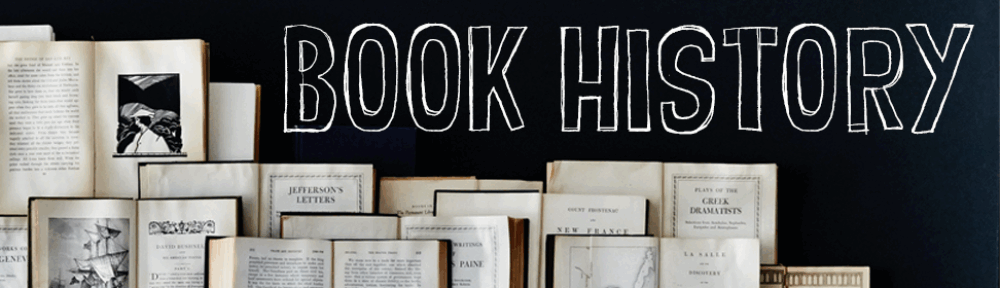
We have talked about books and what they mean and signify through bibliography. We have analyzed the physicality of books from the material of the cover and pages to the font styles. We have learned how to appreciate what we see AS a book rather than IN a book. However, how does all of this information from this media transition to our technological age? Remediation! Remediation is the answer to the Web, Facebook, Google, Kindle, and even the format of website designs. Everything originates from the remediation of books because, I don’t know if you know this but, books were a hit back in the day.
Yet, “bookishness” proves that they still matter. It is a form of preservation, expression, and identity. Being bookish is to identify with books in one way or another in an aesthetic sense. However, rather than recognizing books as media of knowledge, they are simply a way to express one’s interest or general aesthetic appeal with books. Therefore, someone could have a shelf of books and have never read a word on any page. Perhaps, these books provide a comfort and fill the empty spaces.
This form of identity powers change. As Dr. Pressman explains in her Bookishness, “Bookishness registers a sense of loss and promotes remembrance” (22). It is a history, a form of record-keeping, as bibliographers. Bookishness contributes to acknowledging lost history like a memorial. While most writers’ imprints on book history (and history in general, for that matter) has been lost or undocumented since we’ve began writing on stone, bookishness is another way to appreciate what we still don’t know. Whatever it may be, a scroll of paper or a scroll through one’s phone, it led us to the concept bookishness. While, yes, bookishness does contribute to the over-commodification of works of art and might take away from the uniqueness of originality, it also brings appreciation for that sense of originality in a digital age.
We are already moving on from simple technologies, which sparks fear in the humanities and society. The other day, I attended a Living Writers event here at SDSU and the author brought up the question of AI. She was not afraid of AI taking over her job because, however ‘intelligent’ AI might be, it has never lived through human experiences. It does not know the feeling of losing someone, it does not know how to brush its teeth (because it doesn’t have any!), it does not know what it means to be human. That is why, even in the face of a digital world, books are still here. Books are still important. Books are human history.