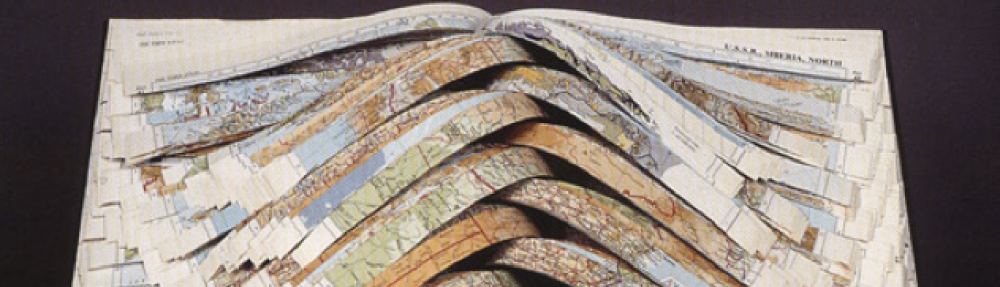
In Borsuk’s third chapter, “The Book as Idea,” the book is reintroduced as not only an ever-changing object but also a malleable concept shaped and impacted by technology, history, and culture. The key concept takeaway for me was that this mutable and evolving idea of the book is a form that will always reflect our human needs, available resources and materials, as well as our social systems, “Defining the book involves consideration for its use as much as its form. Our changing idea of the book is co-constitutive of its changing structure.”(195) With this notion we, as readers and thinkers are encouraged to refrain from thinking of “The Book” through objective lenses. As we progress through not only the book but our class as well, the idea of deconstructing the book as object becomes more pertinent. The separation, duality, and experimentation between materiality vs ideation intensifies and positions the book as a living concept, one that reflects humanity’s relationship with material technology and commerce.
Borsuk further pushes the idea of the book as conceptual and is, in a sense, teaching us to think about the book not as an artifact of craft but more as a field of inquiry. In the sub-chapter titled “The Book as Ephemeral,” Borsuk states, “Not only are their physical forms(including the tablet, scroll, codex, and variations) susceptible to decay, their power to spread ideas makes them vulnerable to censorship, defacement, and destruction, particularly motivated by ideological and political difference. Some artists’ books embrace this impermanence, inviting us to meditate on our fears that books might go up in smoke.”(179) Firstly, the idea of the vulnerability of the book really emphasizes that “bookishness” fetishization but it also paradoxically highlights the physical books obsoletion in the sense of art. There are e-books and audiobooks now, mass produced paperbacks. New mediums driven my commerce but also to meet the demands and needs of the consumer. This is history repeating itself, a drastic shift, worried thinkers, we have been here before; it gives more weight to the fact that we should look at book history as circular rather than linearly, And it is a peripherality to think that a book is just a book and that is why I love how Borsuk ended this chapter:
“It can, itself, serve as a kind of furnishing, offering as it does, a storage and filing system between its pages, in which we might press flowers, copy recipes, keep photographs, or compile clippings-habits of Renaissance readers that continue today. The book props up its neighbors, too, as we learn pulling books off the shelf and watching the adjoining volumes topple. It can take us down as well, since it’s portability makes it a handy projectile when the moment arises. Defining the book involves consideration for its use as much as its form. Our changing idea of the book is co-constitutive of its changing structure.”(195)