Books and Interface

This chapter of The Book speaks to and proves just how much readers may want to interact with the book, not merely be able to see its words, but hold, write on, and interface with it, Many of the “e-reader” inventions described by Borsuk are made to “emulate the physical book,” with features that “evoke the curved spine of a paperback.” (Borsuk, 232). Typically today the book, both physical and digital as we know are made for interaction that goes beyond just skimming eyes over letters, with the digital even having tools for bookmarking and annotation, while the physical keeps appropriate margins for the same purposes. Books with these features are made for what Borsuk describes as “handedness.” (234).

The book as an interface is something that permits and invites full immersion into it, not just immersion in the text provided, but in its shape, page, and utility. As a device it is a body that wants to and is meant to be used, have its pages turned until they are torn or have it’s screen pressed until it is cracked. The book will only continue to grow and evolve so long as it prioritizes the reader’s experience, improving and adapting to how a reader can read the book.

The Book Chapter Four

In Chapter four, the conversation of interfaces really interested me. Borsuk discussed how we encounter interfaces continually, on many different levels and devices, each being different and unique. She says-  “A good interface, according to human-centered design principles, is like Ward’s crystal goblet: a transparent vessel through which we access the information we want. This invisibility may be marked as utility, but it is not necessarily in our best interest” (page 116). As she discusses the invisibility of interfaces she says how this can harm us, as it limits our ability to understand them. She says this turns us into just consumers, and blocks the ability for us to make content. I thought this was an interesting observation, the Kindle being an example of this, its interface changing the way I read or consume a book. I knew this prior to reading this chapter, but thinking about it-it really does drastically change how I read. I feel like I skip through pages quicker and consume books faster on a Kindle or e-book device, then I would with a physical book. The difference in interface changes the difference in the content I’m consuming, I do not read the same way on a Kindle that I do with a physical book. This conversation about interfaces made me think more deeply about how I consume content on different devices, as well as how an interface in general changes the experience of the consumer. Each interface I consume has a different outcome than the rest, if I read a e book on a computer versus a Kindle, my engagement is deeper on the latter. I had not thought about how important an interface can be when consuming media, and how it overall changes my reading experience.

Another concept that fascinated me was the discussion of the “Physical Archive of the Internet Archive.” The text says “Physical Archive of the Internet Archive, housed in forty-foot climate-controlled shipping containers in Richmond, California, to maintain the books, records, and movies in their digital archive” (page 125). This caught my attention because I grew up 15 minutes away from Richmond, California, and I did not know this existed. I was intrigued with the fact that Borsuk was saying that libraries did not want physical books, which was a part of the creation of the internet archive. I had not thought about the fact that physical books were not wanted, I thought it would be the opposite, but it is interesting to read about how the internet archive was Birthed. A lot of books are being deaccessioned by libraries because the digital format now exists, which is sort of sad to think that digital versions are championing the print versions. Now that I know how I consume digital literature differently than physical literature, I prefer the latter. I enjoyed reading about the digitization of books and the interface as context to reading materials. 

Week 7: Carrión’s Bookworks

In a section titled, “The New Art of Making Books,” in this week’s chapter of The Book, Borsuk discusses Ulises Carrión’s concept of the bookwork. Borsuk gives a few definitions of such a work. Bookworks “refuse the book’s function while interrogating its form” (145), while encouraging authors and readers to pay more attention to both, and pay more consideration to the whole object. This definition was not entirely clear to me until I began digging in the Notes.

Borsuk mentions a video of Carrión speaking at The Evergreen State College in 1986. In the quoted section of the video, Carrión calls libraries, museums, and archives “perfect cemetaries for books” (145). This idea intrigued me, so I went looking for the rest of the video. While the link in the notes no longer works, I was able to find the video on YouTube.

This isn’t just a video of Carrión lecturing at a college class, though. According to Carrión’s own title cards, it is also, “A selection, both limited in scope and quite arbitrary, but nevertheless of great significance, of bookworks from Ulises Carrión’s Other Books and So Archive.” In the video, between brief clips of Carrión speaking, we get to watch him flip through bookworks from his personal archive.

In the video, Carrión describes his selection process for works entering the Other Books and So Archive. He says, “In order to present only bookworks, we have been forced to exclude a lot of artist books which don’t embody a statement on books in general” (31:33-31:51). This gave me a clearer understanding of bookworks. They’re not just artist books or non-traditional books or some ephemeral message of mindfulness. A bookwork is an object which specifically embodies a statement on books.

Borsuk, paraphrasing Carrión, says that, “Bookworks take on greater importance when the codex itself seems to be imperiled.” (145) The codex certainly seems to be imperiled today. If you look at BookTok, it seems like people would rather speed through stories than spend a lot of time deeply reading one book. If you look at Amazon, it seems like people would rather buy cheap, AI-generated “slop” than books written by humans. It’s a rough landscape to be looking towards as an aspiring book maker, but the challenges of this zeitgeist are also opportunities. In this era of AI slop, over-consumption, and the growing feeling that books are worthless, book artists are tasked with creating new bookworks which can embody a meaningful statement on these “worthless” objects.

Week 5: Book as Content and Commodity

In Chapter 1, “The Book as Content”, in Amaranth Borsuk’s, The Book, Borsuk walks us through our changing perception of books as content rather than object. Borsuk explains that, “we might generalize the historic moment at which the printed text arises as one of increasing intimacy between individuals and texts, which accounts, in part, for the form of the book as we know it today” (Borsuk, 83). The book, in the form we know it today, reflects the shift of books becoming not only a more intimate experience between book and reader, but also evolving around the needs of the reader. Instead of simply consuming information, actively engaging with the text, a “dialectical relationship” between reader and author became valued. 

This shift in perception allowed for books to become commodities. Borsuk explains that, “these reader-focused elements were just as important to marketing as to book use. They mark the codex as a commodity” (Borsuk, 88). “Authors and publishers activity courted this kind of dialectical relationship”, and began to consider not just the information books contained, but also how the physical design appealed to buyers. Features that we see today like open margins left space for and encouraged “active annotation–a visible and tactile engagement of mind with page”, making books more interactive and personal, and in turn increased desirability and market value (Borsuk, 89). As the needs of the reader changed, the form of the book did as well. The printing press allowed for books to be standardized, mass produced, and more accessible for a widening audience of readers. However, this also made books products to be designed and sold, rather than rare, sacred objects only found in monasteries and universities. The new commercialized market for books, shaped by consumer demand “played a key role in the commodification of the book and in our changing perception of it as content rather than object” (Borsuk, 109). 

Week 4: My Story with The Book of Kells

When I was 13, I went to Ireland and Scotland with my family. My dad’s half Irish so we wanted to explore our family roots and culture as it was important to my Grandparents to go, experience, and see other places. While we went to many places during our two-week trip, a city we all enjoyed was Dublin.

As my cousins, siblings, and I, were all teenagers at the time, we didn’t necessarily appreciate the constant walking tours of tombs, ruins, churches, and museums. And I, especially didn’t like that we stopped at least once a day to go to a bar. I got so mad one day that I made my family stop on the side of the road and go pet goats and sheep as penance. But Dublin, we all enjoyed.

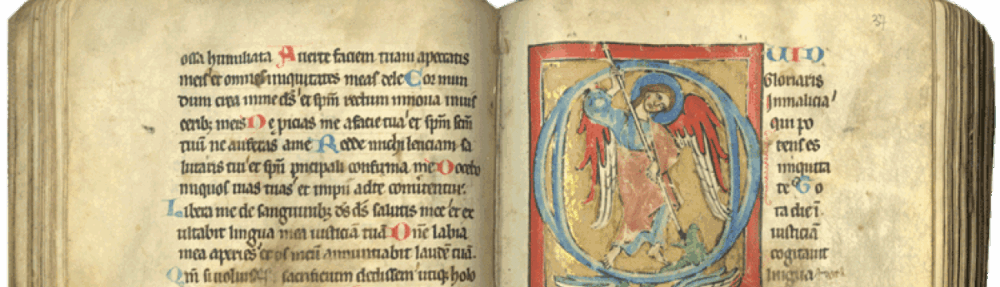
One stop we made was Trinity College, where we did a tour of The Old Library, holding volumes and stacks of old books. One such book we saw on the tour included with The Old Library was The Book of Kells, mentioned in Borsuk’s The Book Chapter 1. I didn’t quite understand the importance of it at the time, and I wasn’t in my book fascination and fetishization phase yet, but I can tell you that it is a beautiful book and a beautiful library. I was at the time intrigued with the images and manuscript drawings that weren’t in modern books.

After my siblings and I finished the tour walk-through quite quickly as we didn’t see the importance of seeing a random library, we were heavily scolded by our tour guide that waited outside. She stated “Education has been wasted on you. History has been wasted on you.” And while we didn’t understand her words and ignored her judgement at the time, I did get it years after.

What we ignored was history. We didn’t understand the importance of a religious book because we have millions now. Why would it be important? We didn’t understand the weight that manuscripts hold to the accessibility and history of knowledge and information sharing. That library and what it contains, is the history of the Church, it’s spread and power of information, which leads us to where we are now. It also shows how intricate details and drawings woven into writings has mostly been lost to time and aren’t used anymore.

She was right. We didn’t appreciate that we got to see a piece of history, literature, and culture, and a part of the system that helped the accessibility to knowledge because of Christian texts and copying.

I very much want to go back to see that library and book with the appreciation I do now. I think now I would be in there for hours admiring the work and sacredness of the texts and the beauty of the library. Every old piece of paper or writing or drawing isn’t just that, it’s a piece of history and one of the reasons we have the knowledge and critical thinking that we do now.
Books and Movement

Within the second line of the first chapter of the The Book, Amaranth Borsuk describes the book as a “portable data storage and distribution method,” (Borsuk 1). The book stores information within it, written and drawn to be distributed, throughout the text the importance of the book as a moveable object is frequently described. The papyrus scrolls of the Egyptians could literally move, bending and curling on their own, and their form could spread widely, being made from plant material and able to be traded and exported to other nations, allowing for movement of the papyrus. Easily and independently moved books were used by the Greeks and Romans as “pugillares,” which were “portable writing surfaces,” that could be held in just one hand (Borsuk 40). In later centuries within monasteries books moved and duplicated, “each copying texts by hand…Monasteries monopolized book production,” allowing for greater movement of books and their circulation, even if it was only within certain places or for certain commissioners. (Borsuk 48). Throughout history books as objects have been physically movable, able to change place and be transported and shared, not etched only to walls and stuck in only one location. Books must be a portable object to hold information in, however although in a literal sense not all books are moveable, some have been chained to their shelves or keep only in archives, the writing, the ideas and stories that they contain are mobile. Even if not in actual motion, the purpose of books, as “portable,” will always succeed because the material within them can circulate and be shared without the object itself needing to be moved, its data may always be distributed, therefore the book is always moving.

I really enjoyed the reading this week, I loved being able to explore the history and progression of the book as an object, how it has change and yet how it has stayed the same, how it maintains the shape of the codex but is now produced at a much faster pace. I am very excited to continue reading the rest of The Book.