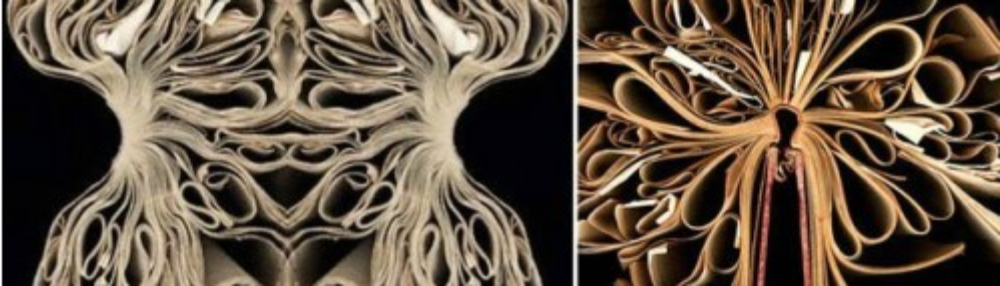
Within the first part of Bonnie Mak’s text, How the Page Matters, Mak states, “…the page has emerged as a safeguard for intellectual and artistic achievement” (Mak 3). But I believe the page is more than just a safeguard, it is also (something Dr. Pressman mentions a lot) a form of radical action, through the unique use of a page we reevaluate some of our core ideas and notions of the reality around us. For instance, if we think back to one of the special collection items we viewed last week, the astronomy foldable piece (if someone could remind me of its actual name and maker, I would deeply appreciate it because I am gelling right now), reimagines how we see the page. The individual triangles can be pages by themselves, or when it is all laid out it could be one big page, or when folded in a 3D shape the page itself can become 3D. These changes radically change our perception of reality. One thing can be many, and can shift between two states (like 2D to 3D). Both the piece and Mak’s text makes us think that if we don’t even know what a page is, then what do we really know about the world, society, and politics. There is this paradigm shift that deconstructs what we see and builds it anew. They both challenge and update what has commonly been seen as ‘normal,’ and leads to question things on a grander scale. The page can be a tool to bring about change not only in ourselves, but also in society (etc). This makes the page more than just a safeguard, more than a defensive tool, but also makes it an offensive tool that can make a real tangible change. Even making minutia changes to the page’s architecture can have profound impacts. Something as small as a margin can transform the way we take in or see knowledge. It also can change how we react to the content on the paper itself. One example I can think of is the use of margins, negative space, and words on a page that holds a poem to construct a specific shape. Or I also think about a page in a kid’s book that mimics the shape of the content or vice-versa. For instance, if the page is made into an apple shape, no matter the content you will automatically think of an apple, and also try to relate it to the content on the page itself. By deliberately changing the architecture of the page, one takes a radical action to change the readers’ thoughts and perceptions of the world.
More Than a Safeguard
4