Insectorum Theatrum: Bibliography
- Physical Bibliography
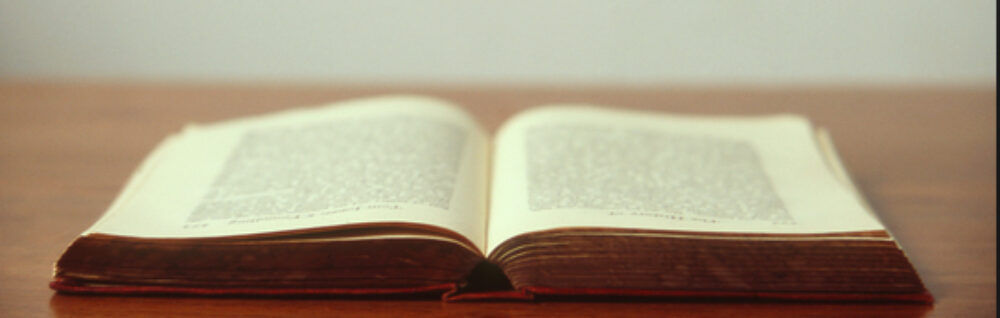
The Insectorum Sive Minimorum Animalium Theatrum, also known as The Insectorum Vitae, is a historic entomology book by Thomas Mouffet in 1634. It is a compilation of works by Edward Wotton, Conrad Gessner, Thomas Penny, and Mouffet himself. The book is bound in calf-skin. There is a distinct odor to the book as well as various pages with a yellowish hue. This particular first edition third issue variant is one of three imprints. The binding itself is dark brown with various marks of abrasions and natural wear. There is leftover dye staining on the cover near the lower end of the spine. Along its spine, at the crux of the crease there is visible protruding damage; I have noted it is reminiscent of splinters. The vellum of the binding has marks of wear and tear, while the leaves, held horizontally on the inside, opposite the spine, shimmer just ever so slightly. The book is rough to the touch, coarse, and grainy.
The outer pages, from the bottom of the book, are of different shades. I note a tinge of green on the lower half, and on the upper, a rustic, sun and oxygen-exposed look. The upper half of the outside of the pages is a darker shade, almost black on one half. The crease on the spine of the cover is cracked all the way down and through. There are eight vertical lines of both gold and fading gold decorum along the spine, as well as the title in gold with a square burgundy background. Both the headband and tailband have minor tearing. The face side binding is protruding at the top because of the aforementioned tear along the spine on the front cover side. When analyzing the text horizontally, the belly of the text, or the pages, has a wavy appearance due to water damage. Small amounts of marginalia are noted on the inside cover as well as throughout the text. The marginalia found within the pages of the leaves is printed, whereas the marginalia found on the inside cover and on the inside of the back cover are handwritten. Inside cover has an ex libris plate noting San Diego State’s ownership of this specific copy. The edges of most pages are dark. The joint of the spine has created a sort of shelter on the inside/hinge, where debris has accumulated over time. Most pages have minor, unknown dark-stained spots. The binding and text are original, with no signs of repairs or major alterations. The half-title page/woodcut title vignette has multiple high-quality illustrations of various insects and arachnids. There is a tear in said page, on the right side towards the middle; the torn piece is hidden, making it look like a hole. I have noted that towards the end, on the last four pages, one of the woodcuts includes two seahorses.
The text is written in Latin using a print-like text face, Roman(Antiqua) font. There is a red stain on the third leaf with a tinge of red bleeding through on multiple pages thereafter. There are multiple high-quality woodcuts of various arachnids and insects on various pages, while the last four are completely dedicated to these woodcuts. All pages are intact, but errors in paging are: numbers 286-295, which are omitted. The leaves are in decent condition, with minor staining and minimal damage. No faded text nor tears at the ends of the pages. The pages themselves are made of parchment paper. The edges of the text block are plain, and there are illuminated initials at the beginnings of multiple text blocks(non-colored). Black and white woodcut illustrations are integrated throughout the text in remarkable accuracy. There are a few Greek quotes with Latin translations at times. There are two pages in which different colors of ink are used to make small marks, reminiscent of a checklist. The color is a soft red, resembling the color orange.
- Analysis of Origins and Arachnids
After many years of delays, The Insectorum Theatrum was published by Theodore de Mayerne and printed by Thomas Cotes in London while being sold by bookseller William Hope. Now, while Thomas Mouffet is the first name printed as an author, in reality, Moffet compiled the works of others, namely his late friend’s Thomas Penny’s work and “According to his introduction he put the work in order, gave it literary style, cut out ‘more than a thousand tautologies and trivialities’ and added over a hundred and fifty illustrations.” Not only were significant changes made at the behest of Moffet, but according to Swann, much of Penny’s work was diluted or, worse, destroyed. (Swann 169). Historical context adds a complex layer of both content and authorship and illustrates many of the conceptual ideas we have come across this semester. The purpose of this analysis is to examine how a questionable ‘scientific’ man analyzed and edited a text, one that has been stitched together and altered, ‘frankensteined’, coming to a fascinating fruition.
While doing my research, I came across an article titled, “Thomas Mouffet’s Theatrum Insectorum, 1634” detailing the history of this book’s journey to being published and it was the author’s, Philip Swann’s, first paragraph that completely caught my eye: “’From him (Mouffet) one might expect everything to be brilliant and perfected, as he had contributions from such great helpers, such great names as Wotton, Gesner, de 1’Ecluse, Penny, Knivett, Bruer and others. In fact he composed his whole Theatrum with such confusion and lack of order that he appears as a very poor compiler of the material he obtained from others and is no credit at all to such great men. But not only was he almost ignorant of the subject, he also expresses it quite barbarously’, wrote Martin lister to John Ray in 1667.’”(169) As mentioned, this book is a compilation of various works and sketches by many early entomologists, and it is the first English book dedicated to entomology itself. With such a subject, one would think that this text would have the utmost precision and careful journey to publishing. Yet, due to the death of Penny and the amount of various works from multiple authors, the Insectorum Theatrum is a rather convoluted text with a very interesting infancy.
II A). –A Convoluted and Blurred History
Thomas Penny, who was Mouffet’s most important source, was born in Lancashire, England, studied at Cambridge, and later, after giving up his career in the church, dedicated himself to medicine and natural history. It is here that his interest turned from botany to entomology. During his travels and research, Penny came across Conrad Gessner, a Swiss entomologist. Shortly before Gesnner’s death, Penny obtained many of his insect sketches and manuscript notes. Penny then returned to England and became a physician, and during these years, he became close friends with Mouffet. During the last fifteen years of his life, Penny devoted himself to amassing the material partially preserved in the Theatrum. He received contributions from multiple experts, including the European scholars de l’Ecluse, Jean Bauhin, and Camerarius, who all sent illustrations and observations. Swann notes that Penny was the perfect man to compile all contributions, including his own, “’There is perhaps no other of the early botanists who has his command of terse and exact phrasing, who employs technicalities so precisely, or who can give so clear and vivid a classification of the chief points in any species.’5 It was unfortunate for Science that he died in 1588 leaving his unpublished work on insects in the hands of Mouffet.”(169). A rather scathing comment on Mouffet’s ability to see the works inception seems unwarranted but in hindsight, Mouffet wasn’t simply trying to finish his dear friend’s work, “Mouffet states in his preface that Penny ‘ had spent… much money for the plates engraving’; this would suggest that the latter had brought the work closer to completion than his editor claimed. The presence of the proofs together with an engraved title-page and the manuscript licence to print raises another problem. It has been suggested that there was an edition of the work at Frankfurt in 1598.’9 No copy of it is known, and its publication seems extremely doubtful. Topsell, however, in his Histoire of Serpents of 1608 prints a section on spiders by Doctor Bonham, which is basically a polished and somewhat contracted version of Mouffet’s text in English. Bonham must therefore have seen either the manuscript or an edition previous to that of 1634.”(Swann 170). It seems Mouffet was likely trying to take credit for his friend’s work and publish it as soon as possible, as I am sure he was aware that the book, if published, would have been the first English text dedicated to Entomology. In 1658, John Rowland published an English appended version of the contracted Topsell version and, “The translation is competently but rather crudely done and compares unfavourably with Bonham’s contracted version found in the same volume.”(Swann 170). So the history and journey the book has had seems arduous, and the lack of faith in Mouffet is starting to seem warranted, but to be certain, we have to analyze how he himself framed and organized all the information, as well as the woodcuts.
II. B- Observations on Spiders
In my analysis of the specific chapters on Arachnids, I will be referring to Rowland’s version, which still retains Mouffet’s original prose and organization(for his sections). Chapter eleven starts with various claims about spiders and their habits, and ends with an interesting division of spiders, “Mouffet ends with a confused division of spiders into groups that may be summarised as follows:
“(Swann 170).
The sentence is at the very least a confused and rudimentary diagram of groups of spiders. Chapter twelve doesn’t fare much better in its assertion of various types of spiders, Swann comments:
“Mouffet has extracted every possible reference to them in the greco-roman writers and tried, not very successfully, to put them together. He gives first a long account of the various kinds of Phalangium, most of his material coming from Aetius, Aelian, Aristotle or Nicander. Some of his descriptions probably originated with venomous insects and only one seems worthy of quotation; ‘it is round, and black, and shining, and globelike’, this would suggest a Latrodectus species. Thrown into the middle of this section is the story that there is a phalangium which ‘being cut, they say that two worms are found, which bound to women before conception in a crow’s skin, will keep them from conceiving: and this vertue of them will continue for a year, as Cecilius hath left it written in his Commentaries.’”(170)
Towards the end of the quote, the 17th century’s superstitious mind makes itself known. And continues to do so in almost hilarious fashion with the specific and ‘exotic’ concoctions for cures from bites: “’… a snail bruised raw, and drunk with asses milk.’ ‘Take wilde Cumin one acetabulum, bloud of a sea-tortoise four drams, rennet of a Hinde or Hare three drams, kids bloud four drams, make them with the best wine, and lay them up; the dose is the quantity of an olive, in half a Cyathus of wine.’ ‘Out of Nicander. Rosin of the turpentine, pine or pitch tree, drank or swallowed, is exceeding good, which Gesner and Bellonius say they learned by experience, to be true.’”(Swann 171). Swann then states that during his latter years, Penny suffered from asthma and took woodlice crushed in wine to try and stop it, yet it didn’t cure him, so Mouffet prescribed him to inhale fumes of sulphur, and that apparently cured him. So aside from just observing arachnids and insects, Mouffet decided to add apparent cures that work for both spider bites and asthma. And despite the subject, the methods and concoctions explicated are not only dated but completely erroneous.
The following chapters include fables to show the spider’s good fortune, and Mouffet’s long-winded prose which sounds muhc more like the syntax of a 16th century poem or story rather than an academic piece of writing, “”The skin of it is so soft, smooth, polished and neat, that she precedes the softest skin’d Mayds, and the daintiest and most beautiful strumpets, and is so clear that you may almost see your face in her as in a glasse; she hath fingers that the most gallant virgins desire to have theirs like to them, long slender, round, of exact feeling, that their is no man, nor any creature that can compare with her.’”(Swann 171). It is clear that this was a text of its time and that many of the topics discussed weren’t so much scientific as they were simply the beliefs of these men. A last example of this downright dated way of thinking comes in chapter fifteen, where Swann notes, “Having set the above down in reasonable fashion Mouffet now returns for the last two pages to cramming in every possible quotation from the greco-roman writers. The object this time is to demonstrate that spiders were created for man’s use as well as his education, and there follow numerous medical preparations employing either the unfortunate spider or her web: ‘Some catch a spider with their left hand, and bruise her in Oyl of Roses, and drop some of it into the ear of the same side the tooth akes, and Pliny saith it is a cure.’”(Swann 172). Mouffet continues this thought and chastises his fellow physicians for seeking new drugs and ‘medica exotica’ when a spider concoction could do all that and more, apparently.
In all honesty, I never expected a historical book on Entomology to be so dated in theory. While one could simply observe and report, Mouffet had to ingrain his thoughts and ideas into a text that frankly wasn’t his to begin with. Even more so, many reported him to be a lousy editor and not even interested in Entomology at all. I think for me, I never expected for a text of this scientific significance to have this background, and it’s incredibly important to realize that these texts are much more than what we see. “The natural world for Mouffet was finite and created by God as a static entity. His interest in animals is largely confined to his desire to demonstrate their didactic and utilitarian purpose.” (Swann 172). Regardless of its scientific inaccuracies, if there’s anything I learned in this class, it’s that these texts are a time capsule, a raw and authentic look at how and why people thought the way they thought, “But the work still has great value and interest; for if we have lost the work of Gesner and Penny we still have a very vivid insight into the way a sixteenth century man of Science saw spiders.”(Swann 172). This was genuinely a story I never thought I would read from such a ‘straightforward’ text, but I was completely taken aback as soon as I read the history behind its author(s).
Works Cited
Swann, P. H. (1973). Thomas Mouffet’s Theatrum Insectorum 1634. britishspiders.org.uk. https://britishspiders.org.uk/system/files/library/020806.pdf
Link to Google Docs version to see the diagram omitted after paragraph 7: https://docs.google.com/document/d/1LE27hyRmZ7hR2S8Q5oXRy2qC7rEpN7USkTYYNZ0tC-k/edit?usp=sharing