Bookishness

Reading Dr. Pressman’s book, “Bookishness: Loving Books in a Digital Age,” felt like the perfect capstone to this class in the way that everything fell into place and how the book related to many of our discussions. At the beginning of the semester, we discussed how books were once a new technology that sparked wariness and various discussions about their impact. Now, centuries later, a new conversation has spread about our ventures into the digital space and how it would affect books. “On page 26, Pressman writes, “Five hundred years after Gutenberg’s invention, we have become used to books as accessible, ever-present commodities and personal comforts. We forget that the book was once the new media, raising concern about its potential power.” Within this quote, Pressman acknowledges the commodification of books, the evolution of book technology, and how power is deeply entwined with it. Since the beginning of the semester, we have discussed the commodification of books and how it has become a main aspect of books. Books became portable, marketable, and desirable, which is seen in the way that books have become an aesthetic. Anything could be rebranded with the image of a book and it would sell. Another point that Pressman addresses is how books have evolved over time inclduing views on them. During a time where everything is saturated with books and bookish content, it is easy to forget that books were once a new technology that fed many fears. Pressman includes a quote from Victor Hugo’s “The Hunchback of Notre Dame” where the Claude Frollo declares that the book will kill the church and its influence. Despite being centuries ago, the sentiment has remained the same in which we see this same fear as we venture into digital spaces. Finally Pressman ackknowledges the power that books hold. At first glance, it is easy to ignore the importance of books and how they can shape people. She writes, “experimental novels play with the materiality of the book to present narrative allegories that figure the digital as monstrous and the book as a powerful weapon against it.” Books hold an incredible power that challenge the digital realm and it is clear in Pressman’s book that she wants to express this notion.

“Unpacking my Library”

Walter Benjamin’s “Unpacking My Library” offers a unique and personal look into the life of a book collector, prompting us to reconsider what it means to truly “own” a book and what it means to be a book “collector”. It is a wonderful final reading for this class. Benjamin begins by stating that “I am unpacking my library. Yes, I am. The books are not yet on the shelves, not yet touched by the mild boredom of order” (Benjamin, 59). A chaotic scene for new discovery within one’s own archive is set. 

What struck me is how Benjamin distinguishes between collecting and a collection. He emphasizes that a true collector’s passion “borders on the chaos of memories” and that the act of collecting is tied to stories and histories rather than just utility or monetary value. A collector does not simply collect books for their content or value, but for the deeper meaning each item holds. Benjamin explains, “The most profound enchantment for the collector is the locking of individual items within a magic circle in which they are fixed as the final thrill, the thrill of acquisition, passes over them” (Benjamin, 60). Each book becomes a vessel of memory and discovery, as a way for the collector to see through objects into their unique past. Our midterm project, writing the biography of a book, taught us this, exhibiting how the materiality of books are more than vessels for written content, but artifacts with their own rich histories and stories to tell. Benjamin also highlights the unpredictability of acquiring and collecting books, where even catalogued items may offer surprise or new information. Benjamin recounts discovering a rare illustrated book he had never thought of owning, describing it as a freedom given to a lonely book. For him, the “true freedom of all books is somewhere on his shelves” (Benjamin, 64).  This resonated with me, especially after our studies of archives, where we have found how exciting it can be to discover unexpected connections, histories, and the unique lives of objects. 

In “Unpacking my Library”, Benjamin reminds us that collecting and creating one’s own archive is not passive, but an emotional and physical endeavor. Our collections are reflections of our passions and memories which can be found in the content of our books and the pages themselves. This class, and Benjamin’s reading, inspires me to explore deeper into my own archive of books to uncover, or rediscover, something new.

The Books Who Breathe

This is my first time engaging in a Walter Benjamin reading and, to begin, his writing style is beautiful. It lacks pretentiousness while conveying a full-bodied story. What I got from *Illuminations* is a telling of how the value of a book can come in many different ways from the text, as evidenced by the act of collecting. Benjamin describes important information beyond the text, such as “dates, place names, formats, previous owners, bindings and the like: all these details must tell [the collector] something–not as dry, isolated facts, but as a harmonious whole” (63-64). All of these can provide some value for the collector, thus demonstrating that value does not come from any single place. Rather, it is ascribed by the collector themselves.

The creation of meaning by a dialogical relationship between book and author is beautifully stated by Benjamin: “I am not exaggerating when I say that to a true collector the acquisition of an old book is its rebirth” (61). The wording of “rebirth” is important here because it is not the creation of a completely new entity. “Rebirth” is a recreation or reiteration of something that previously existed–thus it is the recreation from the same book. In Benjamin’s writing, the book can not be reborn without the collector. Albeit in a more dramatic and morbid manner, this concept reminds me of an excerpt from an essay written by Jacqueline Rose for the London Review of Books: “After all, if I can’t exist without you, then you have, among other things, the power to kill me”. Both of these writers acknowledge life as perception. For Benjamin, the rebirth of the book is dependent on its’ perception by the collector. In other words, for a book–or a person–to be re-born or alive, then it must be perceived.

Week 13: Book Collecting Chaos

Reading Walter Benjamin’s “Unpacking My Library” really made me think about what it means to truly own something versus just having it. Benjamin opens his essay by quite literally unpacking his book collection, and right away he admits he’s not going to give us some organized tour through his shelves. Instead, he invites us into “the disorder of crates that have been wrenched open, the air saturated with the dust of wood, the floor covered with torn paper” (59). There’s something really honest and kind of refreshing about this. It’s like he’s not pretending his collection is some perfectly curated thing.

What really interested me was Benjamin’s idea that collecting is fundamentally irrational. He writes about how “every passion borders on the chaotic, but the collector’s passion borders on the chaos of memories” (60). This isn’t about building a useful library or even necessarily reading all the books. It’s about the memories attached to each one. Where you found it, who owned it before, the thrill of finally tracking down that one edition you’d been searching for. As someone who still has books from middle school that I’ll probably never reread in my life time, I get this. They’re not just objects, they’re like physical markers of different moments in my life.

The tension Benjamin describes between order and disorder in collecting really resonated with me. Collectors want to organize and catalog everything, but the actual experience of collecting is messy and emotional and sometimes totally random. You don’t always acquire books in a logical order. Sometimes you just stumble upon something that feels right in the moment.

What I found kind of profound was his point about renewal through collecting. He argues that acquiring an old book is like giving it a new life, pulling it out of obscurity and making it part of your world. In our age of digital everything and minimalism, there’s something almost rebellious about accumulating physical books and caring deeply about which edition you have or where it came from. Benjamin’s essay makes me wonder if we’ve lost something by treating books as just functional objects.​​​​​​​​​​​​​​​​

Childlike Wonder

If this class and these last two readings have taught me anything, it is to approach the physical aspects of books, their history, and subsequent possible future with a childlike wonder. In the humdrum of certain classes, and constant pressure to be serious about the grades my perfectionist brain yearns to achieve, as well as the social expectations bearing down on my shoulders to be a serious adult, my research/assignments—while still interesting—become drained of color. The information and the search for information feels more like a means to an end rather than the end itself, and the process itself becomes a challenge to rush through and away from. There is no genuine wonder within my learning sometimes.

But with the experience I have now, and especially this quote from Unpacking My Library, “Among children, collecting is only one process of renewal; other processes are the painting of objects, the cutting out of figures, the application of decals-the whole range of childlike modes of acquisition, from touching things to giving them names…everything said from the angle of a real collector is whimsical,” I am reminded to see with the eyes of a child just discovering something (Benjamin 61-62). It is this childlike wonder that carved the path for the “Bookwork” mentioned on pages 8-9 in Dr. Pressman’s book intro. The sculptors utilized what Benjamin describes as “childlike modes of acquisition.” They touch and shape the book into something new, coming at it with a childlike wonder that makes it their own.

The midterm and these readings made me realize I am still able to have that childlike wonder without the seriousness clouding the work. I can discover things and be excited from those discoveries, and not do it just for a grade but because I genuinely am in awe from the information. It was the physical inspection—the holding, touching, and the turning of the pages—of Copernicus’s book, along with the discovery of questions, that reignited that childlike wonder spark in my brain. I wasn’t sorting through a vast amount of research with no direction, but instead a path that was being revealed to me for the first time that made me want to dig deeper.

It’s like going from being oxygen deprived to your lungs being drenched in O2. I felt excitement and wonder during school for the first time in a long time, and I’m glad these readings actually put it into perspective for me. Now going forward, I’ll make sure this child like wonder stays with me, no matter what I choose to do in the future.

Week 13: Joy in My Messy Book Collection

In “Unpacking My Library,” Walter Benjamin reflects on the emotional and almost intimate relationship collectors have with their books. He explains that the true value of a collection lies not in reading the books but in the personal history surrounding them. As he writes, “every passion borders on the chaotic” and the passion of a book collector is marked by fond memory and affection more than utility or practicality (60). This idea resonates deeply with the way I relate to my own small but growing collection.

Like Benjamin, I don’t always acquire books because I intend to read them right away. Instead, I often pick one up because I’ve either heard great reviews, it’s been gifted to me, or simply because I liked the way the cover looked. Benjamin writes that collectors often have a relationship with books that is more about the story of acquisition than the text itself. He writes  “the thrill of acquisition” in collecting becomes a central feeling, as each book carries a unique experience and relationship between the book and its owner (60).

This is exactly how my own collection works. I store books away on a shelf, thinking that I’ll get to them later, and then I completely forget about them until I clean my room. When I rediscover them, I feel a sudden sense of joy not just because I’m finally about to read them, but because each book reminds me of where it came from. My books hold memories of past moments, people, and places. The joy I feel from stumbling upon my books relates to Benjamin’s argument that collections are biographies in object form. The books gifted to me especially hold emotional sentiment. Their value is not connected to the words on the page but rather to the person who gave them to me. My personal experience of book collecting is similar to Benjamin’s notion that a collection is an archive of one’s memories serving as a personal narrative or timeline. My shelves might be messy, and I haven’t read a lot of the books I own, but their value comes from what I experience in life.

Nearness – Staying Close to Books in a Digital World

“Bookishness is about maintaining a nearness to books.” (p. 10) Nearness. There’s something quiet but powerful in the way Pressman uses that phrase. She isn’t talking about how much we read or how deeply we understand a text. She is talking about something simpler. Being close to books, keeping them around us, letting them shape the spaces we live in. And that idea immediately made me think about why books still matter in a world where so much has moved to screens.

For Pressman, this physical closeness becomes a kind of language. The book doesn’t need to be opened to speak, it communicates simply by being there. A shelf full of novels, a stack on a nightstand, even a single book placed on a desk can create a certain atmosphere. It changes how a room feels. It changes how we feel in the room. Nearness becomes emotional. It suggests comfort, stability, or even a small sense of grounding in a digital world that is constantly shifting and moving. But Pressman pushes this idea even further. She reminds us that bookishness isn’t only about what we surround ourselves with, it’s also about who we become through it. “‘Bookishness’ comes from ‘bookish,’ a word used to describe a person who reads a lot (perhaps too much). When coupled with ‘-ness,’ the term takes on a subtle new valence.” (p. 10) Suddenly bookishness is not an action but a state of being. It becomes part of how we present ourselves, how we are read by others and how we imagine our own identity.

And I see this everywhere. Books on shelves in the background of Zoom calls. So-called “shelfies” on social media. Pinterest boards full of libraries people will never visit, saved simply because of the aesthetic. It’s all an attempt to stay close to books, even when the books themselves have become partly digital and partly symbolic. Nearness moves from the physical world into the online one and the objects we keep or the images we share still say something about us. What I find interesting is how natural this feels. We don’t usually think about why a room looks different when it has books in it. We don’t question why a shelf can make a space feel warmer or more personal. But Pressman makes visible something we usually take for granted. Books shape the environments we build and the selves we project. To be “bookish” today doesn’t mean reading all day. It means choosing to stay close to the idea of the book. Its presence, its weight, its quiet promise of time and attention.

In a world where everything is fast and fleeting, nearness becomes its own kind of resistance. It’s a small way of holding on to something steady. And maybe that’s why bookishness feels so relevant now. Not because we are reading more, but because we still want our lives to feel like there’s space for books in them.

Revisiting My Fascination with the Book

This week’s readings, especially Bookishness have forced me, in many ways, to return to the very first blog post of the semester in which described my own relationship to the book. Books and bookshelves have long been a staple in my life, and I have lugged around the same collection of books from apartment to apartment to house to house and in six or so moves left and right across the country. I feel very much like the collector in Walter Benjamin’s “Unpacking my Library.” I’ve been collecting first editions and rare books for a long time, and I’ve come to them in myriad ways. Often, it is books that somehow, bafflingly, garner “no interest, no bid, and the book was put aside,” but unlike Benjamin’s protagonist, I did not wait but leapt at the opportunity to find a book “in the secondhand department and [benefit] from the lack of interest” (65). I once found a 1929 first edition copy of A Farewell to Arms in an antique store for $12. On the free books shelf in the lounge in the Arts and Letters building I have found, rather recently, a first edition, dust jacketed copy of The Things They Carried, a first edition of Anthony Swofford’s memoir Jarhead, and a few weeks ago in a thrift store in Idaho I found a signed (!!) first edition copy of Anthony Doerr’s Cloud Cuckoo Land for four bucks.

These things carry immense value to me beyond the monetary. In large part, this is due to the culture of bookishness and the time I was brought up in. For much of my adolescence the conversation surrounding print’s impending death was very loud and very present: “A history of normative values associated with literary media … transferred to a new site of conflict: print versus digital” (Pressman 16). As a young boy you naturally must choose a side in any argument or debate or conflict, and so I chose print. In the midst of this conversation, it is important to note that I grew up extremely rural and had dial-up internet until 2012, which very likely swayed things for my mother and I, making it impossible to quickly download files, play games online, watch YouTube, etc. We did not even get cell service at the house. You had to walk up to the top of the hill for to get bar or two.

Regardless, I became a staunch supporter of printed media. I begged my mother for a Sports Illustrated subscription in the misguided belief that I could be the one to stave off the demise of the printed magazine. “If they don’t print it, and only post it online, how will I read?” I remember lamenting.

“The history of the book is about power and politics,” as Dr Pressman writes in chapter one of Bookishness (33). And, at the time, only the powerful and the well-off and the urban could afford the kind of all-the-time connectivity we saw have such a rapid uptick in the aughts and 2010s. I was none of those, and so for me, printed media became a thing that I consumed because I was poor, because we could not afford then the fancy newfangled things that people were claiming would upend the world order. It is interesting that this has now flipped on its head, that many of the poorest in this nation and around the world have access to internet and the technologies that were once unobtainable. That now, following the “death” many in the news once warned us of, print is doing just fine. It is not the same as it was, and many magazines and publishing houses have shuttered, but there is still a market for these things I once feared would become obsolete.

Through all this, I have held on to these books (and added many more), though their meaning has changed over the years, and, like Banjamin’s protagonist, these books have come to me by many avenues. There is a level of intellectual projection done by them. The crowd I often find myself surrounded by is frequently shocked that I read at all, let alone that I am a writer. There are memories in them. Many were passed down from my mother, who stole them from the LD Bell High School library in 1979. Her name is still on the card on the frontispiece. They have been gifts from friends, colleagues, family members. I have found them on the street. I have spent amounts I wouldn’t like to disclose on a few of them. I have stolen others from friends’ libraries. I have written some of them. My friends and my teachers have written others. I have come to them or they to me in many ways, but what is central is that these books remind me of a world into which I was born and which now seems as if it hardly exists at all.

The digital age has completed its ascent, and I latch on to the book out of nostalgia, familiarity, or fear. There is something comforting in looking at their many-colored spines as I write this. I could not have that same comfort on a device, no matter how they rearranged the front screen of the Books app. All of these varied feelings simply cannot be applied to a phone, to a screen, something that when we buy it, we know will someday soon become obsolete, because what the digital grants us in access it strips from us in permanence.

Will my grandchildren one day fire up my laptop and go through my files, watch some of the movies I have downloaded, play some of the computer games? Hell no. Let’s not lie to ourselves. But I do like to believe, if only because I have done it, that one day they might lift a book out from the shelf that was once in their grandfather’s collection, and open it and find his name and turn the same pages that my hands have turned. There is some kind of immortality in that, no?
May Books never leave us

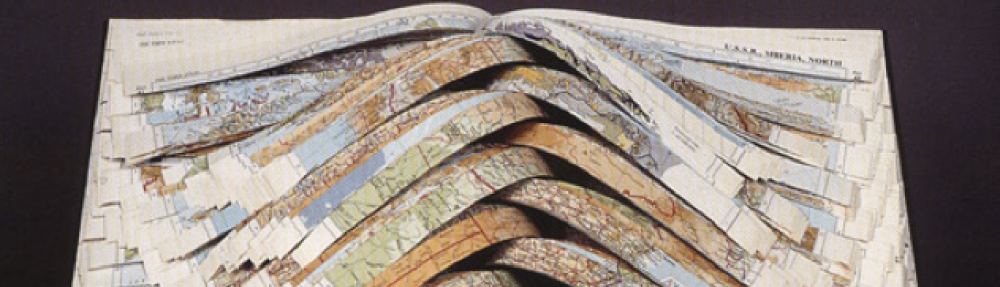
In her work “Bookishness: Loving Books in a Digital Age,” Jessica Pressman describes a fascinating paradox. We live in a time when we no longer need books, but love them more than ever. Although the traditional physical book is far outdated as a reading technology, we are surrounded by a new culture of book worship. Pressman calls this phenomenon bookishness: “creative acts that engage the physicality of the book within a digital culture.”

This phenomenon can be found everywhere: book sculptures, cell phone cases that look like old books, in so-called “shelfies” on social media, or in laptop bags with a leather book look. The aesthetic appearance, especially of old books, fascinates many people. It is more than just pure nostalgia. It is a cultural response to the loss of closeness, materiality, and identity in the digital world. While we find ourselves in an era of constant connectivity, we longingly seek the concentration, privacy, and tranquility that we find in books. Pressman writes: “The book has historically symbolized privacy, leisure, individualism, knowledge, and power. This means that the book has been the emblem for the very experiences that must be renegotiated in a digital era.” Books have become symbols, physical markers of identity. Pressman describes how people today use books (or images of them) to show belonging and taste, for example through bookshelves as Instagram stories or in the background as decoration in cafés or in their own homes. The possession, or even just the display, of books becomes a gesture. It is proof of cultural depth, education, perhaps even resistance to superficiality.

The work emphasizes that this love of books is not backward-looking, but productive. Bookishness transforms books into art, design, or performance. When artists cut, fold, or digitally recreate books, they make it clear that books live on, not as a medium for reading, but as a medium for thinking and feeling. We also saw this in the interview between Jessica Pressman and Doug Beube and Brian Dettmer, who use books as art to convey a certain criticism of a particular medium. In the end, bookishness is not a nostalgic retreat, but a new form of engagement with the digital. She writes: “Loving books in a digital age is personal and communal… claiming a bookish identity can constitute an act of rebellion.” We love books not because they are useful, but because they no longer have to be. 

Week 13: Books to Read or Collect

When does a book reader become a book collector? Most who read, who pursue reading as a hobby, will borrow, or buy, and own books. They will have a bookshelf or bookshelf’s to display and keep their books, bit are they collectors of them or just owners? While reading Unpacking My Library, by Walter Benjamin, I became interested in the process by which someone becomes a collector of books rather than simply a reader of them. Through the reading I figure that the collection of books, not only the ownership of them, is intentionally, one has to state that they are a collector of books in order to be one.

If a reader has a large number if books in their library it is not a collection until they deem it one, until they do it is a group, library, or an assembly, not an intentional collection. To collect books is to appreciate them and see them beyond the material they hold, but as Benjamin describes, to love them as , “the scene, the stage, of their fate.” (Benjamin, 60). There is a difference between a person who says that they love reading and books and a person who says they love books and owning them, one is a reader, one is a collector. A person who reads may be a collector, but there is not always a certainty that a collector is a reader.

I have realized that I am teetering on the verge of becoming a collector of books, not just a reader of them. I used to only buy books if I intended to read them immediately, as a reader I have had rules for my shelves, just as he had ruled that “no book was allowed to enter [them] without the certification that [he] had not read it.” (62). But the rules I have for my book ownership are changing, I now have begun to buy multiple editions of the same book, or have bought books that I will read “one day,” even if a planned date for reading is non-existent. I want to have books not just to read, but because I like having books, I am becoming a collector, my library of books is now a collection of chosen books, not just an assemblage of literary devices.