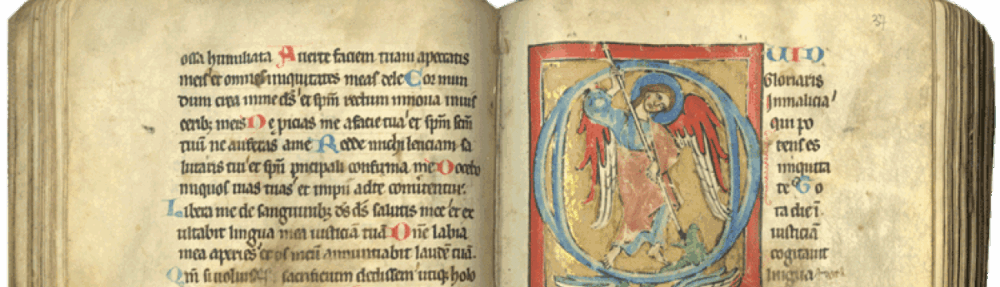
Books themselves function as an artifact that is vital to our shared human experience–they have become a necessity as our needs have progressed over the course of time; this is further exemplified when analyzing the materialistic culture behind literature and books. Amoranth states, “The book, after all, is a portable data storage and distribution method, and it arises as a by-product of the shift from oral to literature culture, a process that takes centuries and is informed through cultural exchange” (Amaranth 16). Because we have transitioned from an oral to literature culture it demonstrates our underlying values– we desire to archive knowledge; books have not only cultural value but are a tool– similar to usb’s and hard drives, books act in a similar manner– they store and share information– information that will be passed on to future generations of readers and scholars. And, this can be viewed from a wide array of cultures– from Mesopotamia’s clay tablets to religious scriptures; each culture has created a necessity to reliably store and disseminate ideas. Furthermore, the fact we have moved from oral to written information signify that written literature is a culture adaptation from our needs– intrinsically, making language fixed for the time period in which the writings take place. This is a result from an amalgamation of fixed cultural apparatuses and exchange from different global values that emerge from our shared experience and values. This is evidenced by the digital humanities– once again, as a society we have evolved and adopted new means of written literature; physical books have evolved into pdfs and ebooks. We have created a necessity and a solution based on our needs. It is easier to download books and annotate them via a pdf reader rather than having to hunt them down at different bookstores– it is almost instantaneous– which again, demonstrates how our culture has shifted– looking for instant rather than delayed gratification.
Tag Archives: week 3
The Book
When reading chapter one of The Book, I was intrigued by the history of how the book has evolved as an object. From rock, to clay, to the papyrus scroll, etc- the book has changed forms so many times throughout our history. I knew that paper and the book evolved, but I had not realized how or why these technologies were created. To record history yes, but more importantly it seemed writing and reading was a big way to show off your education or high status in society. On page 15 of The Book it says “Unlike today’s libraries, the collection was developed not as a public good, but as a symbol of King Ashurbanpal’s stature and scholarly achievement. Evidence suggests the library was also consulted by priests, professionals, and members of the learned class- some tablets are inscribed with threats to would-be thieves demanding borrowed tablets be returned the same day.” This quote stood out to me because of the discussion of status and education like I mentioned earlier, but also the discussion of libraries. We talked in class today about how libraries have changed and what a library is has changed. The SDSU library (shoutout Trinity who mentioned this) has no books. It does, but you don’t see them unless you are searching for them. When I think of a library I have always thought about it as a home for books, or a quiet place where you go to check out a book. Now a library, like the Love library, is a place to study, chat, eat, and sit. Old libraries were used for the educated and the wealthy, not for the public, which is such a weird concept to think about because to me the library is the most public shared space I can think of. Books are meant to be shared and discussed, they are not meant to sit on shelves unread. I go to the library everyday of the week to do my school work, but in my four years of being here I have never checked out a book- I do that at the bookstore, where you pay for the book. In high school the library is how I always thought it was- a quiet place to rent out/read books, college libraries are very different. I am not sure when this changed or why, or maybe they were always like this. But until the discussion we had today I had never even thought about this fact. The library of my youth is drastically different from the library of my now. I guess this is like the book itself as an object, the library a place that used to hold them, that has changed as well after time. Now I am more motivated to actually check out a book here at SDSU and check out the stacks, but before this class I have never done so in my college experience. I can’t even remember the last time I went to an actual library with books.
The Broadview Introduction to Book History
After reading the introduction to this text I was very intrigued with the discussion of the different types of reader, and seeing how I felt that I resonated with both types. “Immersive reading might mean that you are incapable of stopping to add a note, and even that you are able to read without being distracted by your environment” versus “Hyper-reading includes searching, filtering, skimming, and hyper-reading all the ways in which we might read a newspaper, magazine or website” (pages 7&8). Hyper-reading versus immersive reading are two types of reading that I think I fluctuate between. Sometimes I hyper-read when I am reading an article or text for class that is super long, or sometimes I will immersive read it if I need to fully understand and think about the text. It also depends if I am reading for a class or because I want to, sometimes I want to get through something fast and I will just hyper-read it. When thinking about these two different types of reading- that I had never heard about before- I realized how much I really use these types of reading in everyday life. That was super interesting to read about and then apply to my life, as I think it’ll help me better fluctuate the two when I need to the most.
That was not the only concept that intrigued me in this text, but also the general conversation about what makes someone a good or valuable reader. “The history of reading also raises questions about the nature or quality of attention itself” (page 6). We have sort of talked about this idea in this class, but I have also talked about it in my other classes as well. I find it interesting how some people think that someone can be “good” at reading. I do not think there is a “good” way to read, reading is good in general. I do not think one type of reading is more valuable than the other- like immersive versus hyper-reading- as both are valuable just in different situations. I think all genres are valuable as well, and just because someone might not think its valuable doesn’t mean it isn’t to someone else. This idea of superior reading or the “right” or “good” way to read is mind-blowing to me, as I had never thought that there is a wrong or write way. The superior complex some people have when it comes to reading, like nonfiction book vs a romance book, Is funny to me. Why would reading one think make you “better” or “right.” I think you can find value in reading both, reading in general is mind stimulation. Overall, this text made me think more about what voluble reading is to me, which is everything.
The Big Difference Between Old Media and New Media
Michelle Levy and Tom Mole’s introduction to The Broadview Introduction to Book History gives a comprehensive overview of what to expect and what you should know before reading the upcoming pages.
I found myself thinking about books as a form of technology while reading this text. The modern technology I am most familiar with is computers, which also has epochs that reflect books. The transition from scrolls to the codex could be seen as a form of making written technology more efficient. Similarly, computers were initially massive, clunky, and much slower than a persons’ calculations. Over time, they became efficient and cheaper to produce (as reflected by Gutenberg’s printing press).
More and more people begin to work with computers as they become more accessible. Computers go from something that could only be found in the military to something only in the university. From there, it gradually becomes more accessible to the point that it is in most homes. This accessibility (as reflected in the fourth epoch of books) creates what could be argued as a “computer culture” in the West, exemplified by the graphic below.

Where this parallel breaks down is in the fourth epoch, “when print faces competition from an array of new media” (xvi). That may very well be because we haven’t reached that point yet. It could also be argued that the competition is AI. I would disagree with this, however, because AI does not seem to be a radically new technology. Rather, it is an example of the massive increase to the computational power as a result of Moore’s Law.
I am unsure how to feel about the concern that screens make us “worse” readers and putting a value judgement on “extensive” versus “attentive” reading. As mentioned in Professor Pressman’s article, Old Media/New Media, Marshall McLuhan says that “we march backwards into the future” (1). Is there something inherently bad about reading a few works extensively as opposed to many superficially? Could the end product be the same? Does it matter? Could it be, that our nostalgic love for books is painting how we see reading in the modern age? These are all questions that I am not sure I have the answer for yet.
Why invent ‘new’ media?
While reading both texts for this week, there was a specific quote that caused me to question why ‘new’ media is made/pursued. The quote is as follows: “Yet the work of the new is precisely what inspires us to reconsider the old and to recognize the intersections and convergent histories of old and new” (Pressman 1). This flip of thinking about ‘new’ and ‘old’ media from the perspective of new to old is what caused the question of why people decide to make ‘new’ media to surface in my brain. And the answer I came to is that the ‘new’ media often has an aspect that ‘old’ media does not, and that aspect generally makes the dissemination of ideas and knowledge (etc.), faster, easier, more efficient, and more widespread. People decided to advance their existing media into ‘new’ media to achieve those aforementioned goals of faster, easier, more efficient, and more widespread distribution of ideas and knowledge (etc). Because people naturally want to share their ideas and knowledge. While I read the Broadview text first, the quote in Dr. Pressman’s article caused me to look back to the first reading, and connect it with the previous question and answer. In the Broadview text, each new iteration of media/technological advancement (scrolls, codex, printing press, decrease in printing cost, and the addition of the internet) had a shorter timeline than the previous (also stated previously in class). This is due to the why question posed at the beginning of this blog, and its subsequent answer. The more advanced things got, the quicker information spread, and people were able to come up with new ideas in a quicker/easier fashion, that then become ‘new’ media. While the book as a medium can be considered ‘old’ media to some degree, even something like sprayed edges and more creative cover designs adds a ‘new’ element that causes those books to be more widespread and in a way ‘new’ media because it has become more than ‘just’ a book. (I’ve definitely bought a book just because I liked the sprayed edges and cover design—I actually really enjoyed the book, but originally bought it because of the book’s physicality as an object, or what Dr. Pressman would describe as bookishness). Sometimes, more people are likely to buy a book because of the aesthetics, but also end up genuinely enjoy the text or story inside, but it wouldn’t be as widespread if it wasn’t as attractive physically (some people do judge a book by its cover).
Week 3: Intertwined Archaeal of New/Old Media
Our class readings this week felt like an awakening moment for me. For the past two weeks, I found myself perplexed by the discussions we’ve had in class. Not because the information being shared was a foreign concept, but because I was peering through a narrow-minded lens stating that the shift between new media to old media is a linear historical narrative.
Dr. Pressman unveils in her essay “Old/New Media” the term “bookishness” where the new digital media carves the new purpose for the traditional codex. Books are no longer depicted as holders for information, but as works of art, aesthetic objects, or even a multimedia experience. The simplistic linear ideology of “out with old and in with the new” is challenged as new media reinvents and adapts the purpose and perception of old media. Therefore, creating a boundless cycle of relativity to the term “new media.”
Reflecting on this, I began to connect Dr. Pressman’s idea to the digital text we debriefed las week, Mark Marino’s Marginalia in the Library of Babel. Marino’s work highlights how media forms are always shaped by the cultural perceptions of what is “new” or “current” media. For example, new media mindsets have encouraged us to regard books as objects of desire with symbolic and artistic value. On the other hand, less formal forms such as annotations in the margins or simple yellow Post-it notes inside a book do not carry the same level of prestige. While books are held to the highest of regard because of the ideals set by “new media,” personal annotations are viewed as disposable, even though they also contribute to the layered history of texts are used and interpreted.
Here I remain curious and my questions still remain. What determines the hierarchy of celebrated and dignified medias? How are we to excavate an object of knowledge knowing that it will continue to be ever changing? Or even how will marketing ventures utilize the study of book history to their advantage?
Why Click on This?
If I were to count on my fingers how many times I’ve accepted a terms & conditions agreement with zero knowledge of what that actually implies, I’d have to be an octopus. Well, maybe you can’t call suckers fingers, which would also mean tentacles aren’t arms, but is that really relevant? Was anything in that introduction of value? I’d bet, and with regard to Michelle Levy and Tom Mole’s “Introduction” from The Broadview Introduction to Book History, only a couple of those words were retained by you, the reader. In this effect (if it worked), an element of “hyperreading” is displayed which prompts the question: Why do we value the information we retain?
Readers pick and choose largely on the degree of difficulty or enjoyment they find in the writing. I mention these two together because oftentimes, they coincide. In 2018, A study using PISA found across nearly half a million 15-year-olds, “higher reading enjoyment reduces the perceived difficulty (cognitive load) of a task, which in turn improves reading achievement.” As I had prematurely assumed, a book’s readability is not lowered by a dislike of difficulty, but a preference for something more understandable. There appears to be a sweet spot of challenge and joy. For example, if I were learning Spanish, or anything really, it would be preferable to read in relation to my skill set. But that much is clear: there’s a reason I’m not enrolled in a Spanish level 500 class.
This first sentence is a big claim preceding lines of evidence and reasoning supporting said claim. The second sentence’s relevance always tends to fall in the shadow of the first’s. This is somewhat understood, and probably plays into the primary effect, which is the idea that beginnings make a more vivid and substantial impression in our mind, rather than beginnings or ends. I looked into this while investigating the “F pattern” scanning method mentioned in the text. Though it’s also understood through conditioning. In education, we’re taught the CER method. And in practicing hyperreading, why read further if the claim doesn’t intrigue you?
There is an influence from the writer on the information retained, not solely the reader. This can come in many forms, like I mentioned first, a lengthy terms & agreements section that you “scroll through” meanwhile you’re just trying to play Subway Surfers. Though I made the connection in the very sentence detailing it in the introduction. It goes, “This kind of reading seems qualitatively different from what has been described as ‘hyperreading…’ all ways in which we might read a newspaper, magazine, or website (Hayles, Broadview Reader in Book History [hereafter BRBH] 491-510.” As I’m sure you just did, I skimmed over the citation without a second thought. Even if I was intensively reading beforehand, my mind made an unconscious switch, which I believe was intentional by the author. This showcase is more explicit than sneaky tactics lurking in our media today, though it’s a clear example.
Most of what I’ve said is probably adrift from you by now. Whether you haphazardly scanned it, deemed you already knew it, or flat-out disliked it, most will fade away into your endless pile of information overload. Though maybe, for some odd reason, with nothing to do with anything I’m saying, you’ll remember an octopus.
The Many Parts of the Whole Book
The Broadview Introduction to Book History by Michelle Levy and Tom Mole begins by explaining the origins of the book. Known as a codex, they were pages bound together along a spine with a cover. It took some time for them to become the predominant tool for sharing written information over the scroll, but religions, particularly Christianity, helped popularize the codex. The chapter continues with a brief description of book history as a subject of study. Different cultures and groups of people all found different ways to study the book. In France, the beginning of book history studies focused on the circulation of books and their effect on large historical events. In Germany, the focus was on the history of how books were published and distributed. Literary students looked at the book in a different way than a historian, or information studies students, or an art historian, or an economist. And now, digital humanities and media studies scholars are again, looking at the book in a new perspective.
After reading this section, I thought about everything that goes into a book. Sure, the content, author, and cover are important, but I’ve realized that I haven’t spent too much time pondering all of the other aspects of a book. How did this information become a physical object in my hands? Trees were grown with the intention of becoming paper, and that paper has been dyed a certain color, cut to a certain size, and text, that someone decided to write and someone else decided that the public would benefit from having said information, was printed on said paper. The font was picked, the font size was picked, the font color was picked. And not without careful thought and consideration, they were specifically chosen by people who believed that the specific typeface would enhance the text. Hardcover or paperback, or both, or neither. Artists designed the cover to be appealing, but different types of books are appealing for different reasons. Designers made covers for both a romance novel and a self-help book. And once the book has been designed it still needs to be produced and distributed throughout the world. It has to be priced, high enough to pay all of the people involved in the process, but low enough for people to buy.
I’ve thought about the politics of books. How could I not? With calls of censorship and book banning I’ve always viewed the politics of books strictly through the lens of the content of the book. But politics doesn’t just mean culture wars. Everything that exists is political, and political is not a negative term. I look forward to beginning my studies on book history!
Not the Old or the New but the Old and the New.
I have reflected on how “old” media has influenced the shape and creation of “new” media, but I have never actively considered how the new reframes our thinking and perspective on the old. In, Johns Hopkins Guide to Digital Media and Textuality, Pressman presents comparisons from other scholars on how old media might be analyzed through our understanding and use of our current media and technology. The postal service America’s Antebellum period is defined as a “precursor to our contemporary digital social network,” these two medias are not sperate, but related to each other in both directions, the postal service is like the social network, and the social network is like the postal service. Old media is not just what came before the new, but also an actual previous version of it. This illustrates how current new media and technology has always been desired and in development, however its previous iterations have had to be created before it.
New media is not necessarily just new, but newer, I think of it like a software update, Media 2.0. New media is not a complete reinvention of the old, but growth upon it that creates a large network of interconnected and related devices that have sprung from each other. The comparison between what is old and what is newer can of course be applied to objects outside media, a NEW iPhone when compared to its previous generations is not new, just newer, a person would not be lost on how to use a new phone, because they are familiar with the old one and vise versa, just as a person would likely quickly realize how to use and view old or new media based on their familiarity with one or the other.
Bouncing between word, text, and the signifieds– Josue Martin
The impression given by the “new media” is somewhat enigmatic– acting as a binary with what the old media constitutes– meditating in the intricacies of time and technology and, allows us to deconstruct the relationship between these two processes (thanks Derrida). In Derrida’s Archive Fever, A Freudian Impression, he is concerned with the archive– a term that has various meanings; one that is concerned with two topics–the principles of nature or history and physical and historical processes. Both principles and concepts shelter themselves as he mentions, “The concept of the archive shelters in itself, of course, this memory of the arkhe. But it also shelters itself from this memory which it shelters: which comes down to saying also that it forgets it” (Derrida 2). The paradox described by Derrida where the archive both shelters and forgets resonates with Dr. Pressman’s emphasis regarding “new” and “old media”. The terms “new” and “old media” are not fixed but shift as they are social-culturally adaptive– meaning that their definition is relative to the time period in which they are being discussed as media itself is not linear nor stable. For example, let us remember the beeper— in its time, it was a revolutionary method of communication that made other communication devices “old”. And, it is now a system that is considered obsolete– demonstrating that newness is not an absolute but contingent on new modes of inscription. This is further illustrated by Bolter’s and Grusin’s writings, “comes from the particular ways in which they refashion older media and the ways in which older media refashion themselves to answer the challenges of new media”. The paradox described in the archive demonstrates the conventions of recursive media/ life cycles– we preserve to forget and forget to preserve, deconstructing two mutually formative processes that demonstrate how different modes of media are concerned with social-cultural values rather than its materialistic characteristics. This suggests that media is not linear nor fixed but adapts and evolves by reinscribing new modes of inscription that surpasses its predecessors– not materialistically but shifting its focus from a cultural paradigm.