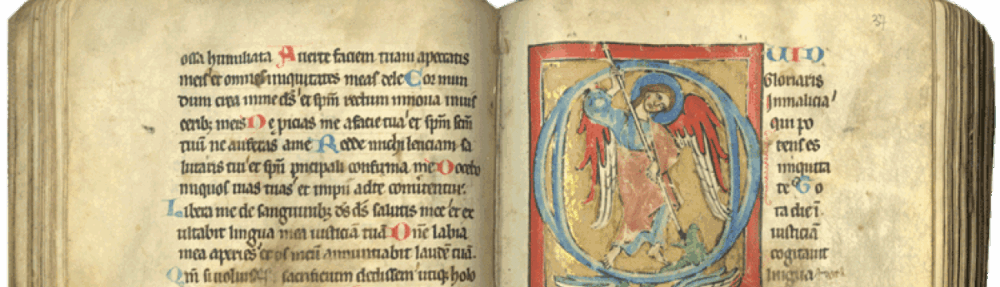
While exploring the further reading section of What is Bibliography, I stumbled on one excerpt in particular, the one from W. W. Greg’s Bibliography – A Retrospect (1945). What he writes instantly reminded me of the thought process I had last week when I was reading Chapter 2 of Borsuk’s The Book. There Borsuk compares the codex to a human body, with a spine, a head, and even a tail (The Book, 77). I think while Greg technically makes a different comparison, they still connect very well.
Greg describes bibliography as “the study of books as material objects irrespective of their contents.” For him, the goal is “to reconstruct for each particular book the history of its life, to make it reveal in its most intimate detail the story of its birth and adventures as the material vehicle of the living word.” I find it interesting that he talks about a book as if it had a biography. The words “birth” and “adventures” make it sound very much alive. They turn the book into something with its own story, separate from the words printed inside. Suddenly, the bent spine, the faded paper, or the scribbled notes in the margins all become traces of the book’s life.
Borsuk makes a similar point in a different way. Her comparison of the codex to a body also takes the book out of its role as a container. With a spine, a head, and a tail, the book looks like something with presence, something we hold and interact with like a living form. What makes this especially interesting to me is that it connects so directly to what I thought about last week. In my last blog, I reflected on how Borsuk’s metaphor made me realize that a book is not just information but something we meet, almost like a companion. The hinge of the cover, for example, pulling open the first page like an invitation, felt to me like the book was active, as if it greeted us. Reading Greg’s description, that thought immediately comes back to me. He gives the book not just a body but a life story. Putting the two together, the book becomes a being that has both a form and a past. It has a presence we can feel and a biography we can trace. This is why Greg’s passage stood out to me so much, as it reminded me of my own realization from last week.
In the end, both writers remind me that reading is more than just taking in words. Each book has its own presence, shaped by the people who produced it and the readers who left their marks on it. To open a book is not only to read its text. It is also to meet a life that has already been lived.