Our class readings this week felt like an awakening moment for me. For the past two weeks, I found myself perplexed by the discussions we’ve had in class. Not because the information being shared was a foreign concept, but because I was peering through a narrow-minded lens stating that the shift between new media to old media is a linear historical narrative.
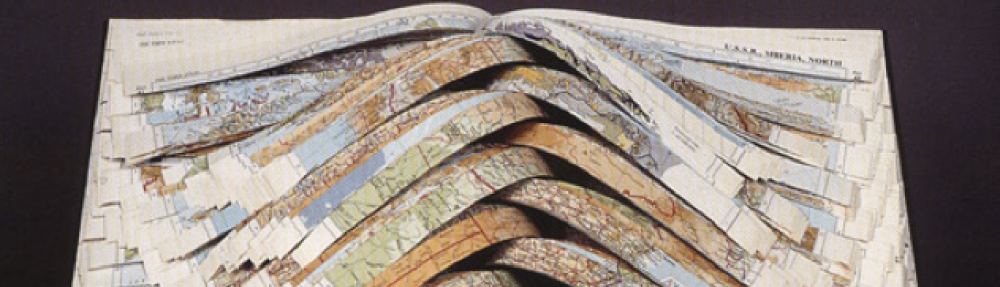
Dr. Pressman unveils in her essay “Old/New Media” the term “bookishness” where the new digital media carves the new purpose for the traditional codex. Books are no longer depicted as holders for information, but as works of art, aesthetic objects, or even a multimedia experience. The simplistic linear ideology of “out with old and in with the new” is challenged as new media reinvents and adapts the purpose and perception of old media. Therefore, creating a boundless cycle of relativity to the term “new media.”
Reflecting on this, I began to connect Dr. Pressman’s idea to the digital text we debriefed las week, Mark Marino’s Marginalia in the Library of Babel. Marino’s work highlights how media forms are always shaped by the cultural perceptions of what is “new” or “current” media. For example, new media mindsets have encouraged us to regard books as objects of desire with symbolic and artistic value. On the other hand, less formal forms such as annotations in the margins or simple yellow Post-it notes inside a book do not carry the same level of prestige. While books are held to the highest of regard because of the ideals set by “new media,” personal annotations are viewed as disposable, even though they also contribute to the layered history of texts are used and interpreted.
Here I remain curious and my questions still remain. What determines the hierarchy of celebrated and dignified medias? How are we to excavate an object of knowledge knowing that it will continue to be ever changing? Or even how will marketing ventures utilize the study of book history to their advantage?
Hi Micaela! This is a great response to our readings this week. I would have to agree with you that books are considered a more artistic or aesthetic idea of one’s personality, becoming more known for their materiality rather than what they contain. I have to confess, I do collect physical copies of books that I read because I find them more archaic per se as well as just the fact that reading a printed book is a much better experience than on the computer. However, I also enjoy the idea of creating new out of the old, like what we saw in class today.
Even though physical books are sadly becoming a thing of the past and e-books and audiobooks are much more popular and more easily accessible, people still value the old. I think what the “new” is bringing us is a greater appreciation for the old, as we take a moment to step back and observe how great the old is. It’s nostalgic, it’s warm, and I think that’s why it has become a part of people’s personalities. On a similar note, people are changing the old, bringing more attention to it, reshaping it. What we saw in class today isn’t done on the computer. You cannot pick up a can and read a book out of it on the computer. You cannot appreciate the sensations a physical book can bring you.
It is hard to determine what celebrates the hierarchy of media, but it’s safe to say that technology and the digital world is certainly impacting it.