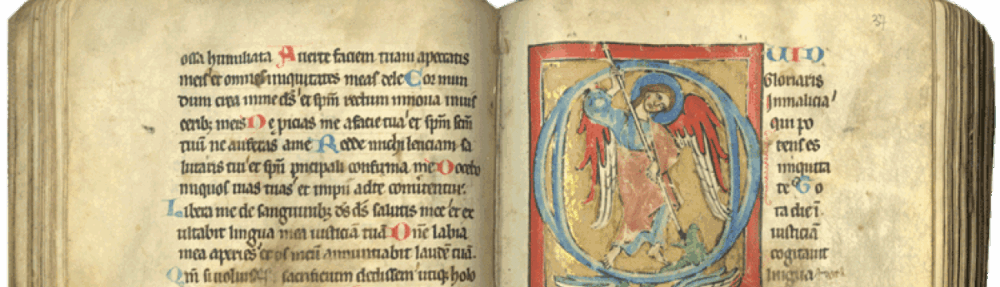
When I read Amaranth Borsuk’s The Book, Chapter 1, one sentence really caught my attention: “Content does not simply necessitate its form, but rather writing develops alongside, influences, and is influenced by the technological supports that facilitate its distribution.” (p. 17, ll. 17-18)
At first I had to read it twice because the English is a bit heavy, but what it means is actually simple. Books and texts don’t just find a form because of their content. Instead, the medium itself, like clay tablets, papyrus scrolls, codices, or today’s e-books, shapes how we write and what we write. And at the same time, writing pushes those technologies to change too.
I think this is super interesting because we often believe that content is the main thing and the medium doesn’t matter. But if I think about my own reading habits, it’s clearly not true. For example, when I read on my phone, I definitely skim more and jump around. When I read a paper book, I am more focused, I even underline or make notes. So the form totally changes my behavior and also the way the author can reach me.
Borsuk also points out that throughout history, different forms didn’t just replace each other. Scrolls and codices coexisted for a long time, just like today I read both on my phone and in paperback. It’s funny, because when I came here for exchange, I couldn’t bring many books in my suitcase, so I rely more on my e-books on my iPhone. But when I go to the library, I really enjoy holding a physical book again. I wouldn’t say one is better, but they feel completely different and change my relationship with the text.
This makes me think about how new platforms influence writing styles today. Twitter/X with its character limits made people write in short, sharp bursts. TikTok captions and comment sections encourage different rhythms, more visual, more fragmented. Even academic reading changes when you can search PDFs instantly instead of flipping through pages. None of this is neutral.
So maybe the big lesson is that the book or text is not just about content, but always about the interaction between content and form. Borsuk helps us see that the “death of the book” is not really happening, it’s just transforming again. And maybe in 100 years, students will look back at our e-books the same way we look back at scrolls. As just one stage in the long, messy coexistence of forms.
Hi Alin, I like your post!
It is interesting how book technology changes did not happen rapidly, rather, they became integrated into the public at different rates (but rarely immediately). I really liked how you connect the difference between e-books and books to tablets versus scrolls versus codices, etc. There totally is a connection to be made there and it makes it so much easier to understand how people at the time may have felt with emerging technologies.
Additionally, it was very thought-provoking how you bring up the medium of social media as an influence on writing style. It is such a radically new form of storytelling and conveying information that I think it would be incorrect to call it a book in any way, it is entirely its own thing yet shares similar content. It is fairly far removed from the lineage of books while conveying much of the same or similar information that books (and their lineage) does. I wonder what it would look like to study social media in a similar way that we study books. There is no physical medium, so I suppose we would need to focus on key user interface decisions like website aesthetic, maximum word count, formatting options, etc. I think this could be a very interesting class in of itself!
Best,
JJ